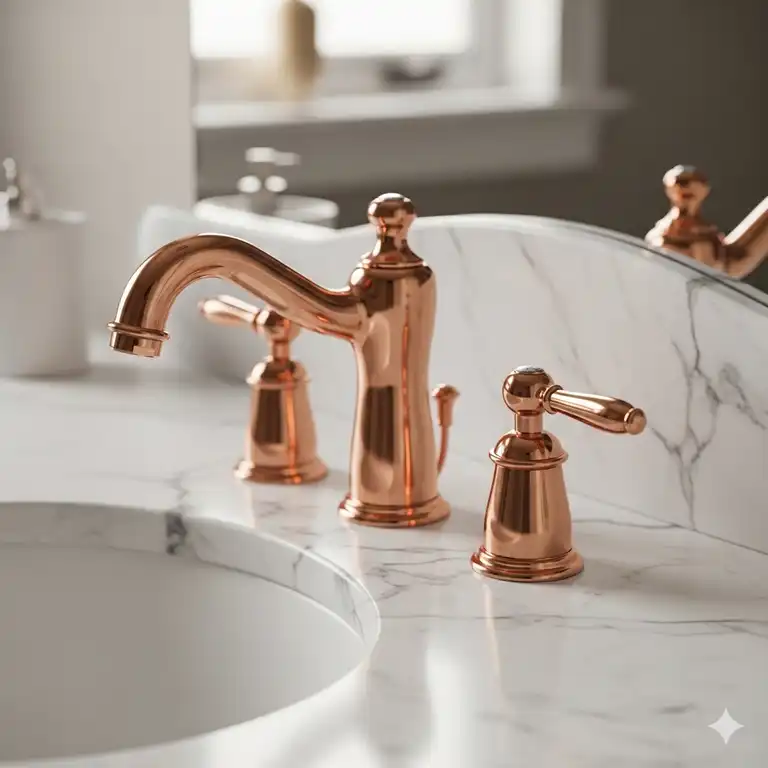
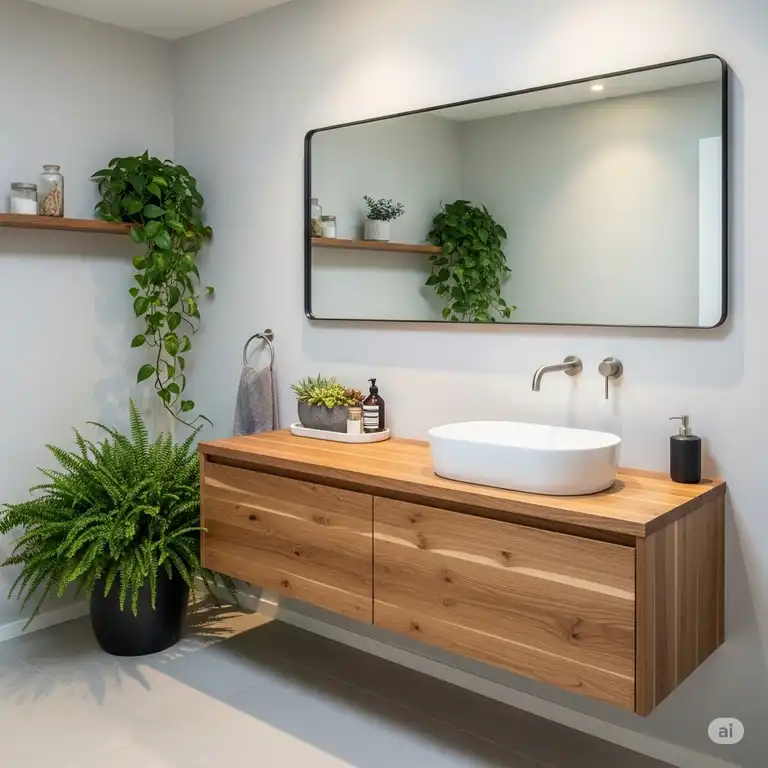
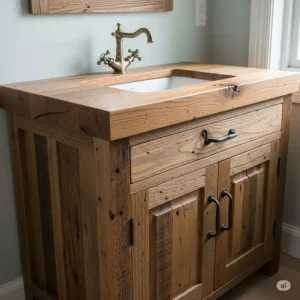
Stepping into a bathroom featuring a stunning wood bathroom vanity feels like entering a warm, sophisticated sanctuary rather than just another utilitarian space. The natural beauty of wood grain, combined with modern functionality, creates an atmosphere that’s both timeless and contemporary—a perfect blend that speaks to today’s design-conscious homeowners.
✨Was this helpful? Spread the word! 🚀
Whether you’re planning a complete renovation or simply upgrading your existing setup, choosing the right wood bathroom vanity can dramatically transform your space’s aesthetic and functionality. From rich mahogany tones that whisper luxury to light oak finishes that sing of Scandinavian minimalism, wood vanities offer unparalleled versatility in style and design.
Moreover, unlike their laminate or MDF counterparts, solid wood bathroom vanities bring durability that can withstand decades of daily use while developing character over time. The investment in quality wood construction pays dividends through longevity, timeless appeal, and the ability to refinish rather than replace when style preferences evolve.
In this comprehensive guide, we’ll explore everything from understanding different wood types and finishes to detailed product analysis and professional installation techniques. You’ll discover how hardwood bathroom vanity options can enhance both form and function, while learning about natural wood bathroom cabinet alternatives that suit various budgets and design preferences.
Quick Comparison: Wood vs. Alternative Materials
| Feature | Wood Bathroom Vanity | Laminate/MDF | Engineered Wood | Metal Vanity |
|---|---|---|---|---|
| Durability | ✅ 20-50+ years | ❌ 5-10 years | 🔶 10-15 years | ✅ 15-25 years |
| Water Resistance | ✅ High (with proper sealing) | ❌ Poor | 🔶 Moderate | ✅ Excellent |
| Style Versatility | ✅ Extremely high | 🔶 Limited | 🔶 Moderate | ❌ Limited |
| Refinishing Options | ✅ Multiple times | ❌ Not possible | ❌ Limited | ❌ Not applicable |
| Investment Value | ✅ High resale value | ❌ Low resale value | 🔶 Moderate | 🔶 Moderate |
| Maintenance Level | 🔶 Moderate | ✅ Low | ✅ Low | ✅ Very low |
| Price Range | $400-$3000+ | $150-$800 | $250-$1200 | $300-$1500 |
Top 7 Wood Bathroom Vanity Expert Analysis 🏆
1. Dorel Living Otum 36″ Solid Wood Vanity (Model DA8050G-C)
This traditional-style Dorel Living Otum 36″ represents exceptional value in the solid wood vanity market, combining authentic hardwood construction with engineered stone countertops. Available in multiple finishes including white, gray, and dark walnut, this vanity showcases the versatility of wood bathroom cabinet design.
Key Specifications:
- Dimensions: 36″L x 22″W x 38″H
- Weight: 147.4 lbs
- Material: Solid wood and engineered wood frame
- Includes: Pre-installed oval porcelain sink, matching backsplash
- Hardware: Soft-close Euro-style hinges, dovetail drawer construction
Professional Analysis: The Otum series demonstrates superior construction quality with its combination of solid wood and engineered wood components. The lacquer coating provides enhanced moisture resistance crucial for bathroom environments, while the pre-drilled 8″ widespread faucet mounting accommodates standard plumbing configurations.
Pros & Cons:
✅ Arrives fully assembled
✅ Solid wood drawer construction with dovetail joints
✅ Multiple size and color options
✅ Engineered stone countertop included
❌ Limited customization options
❌ Some customers report shipping damage issues
2. Fresca Mezzo 60″ Teak Wall Mount Vanity (Model FCB8041TK-I)
The Fresca Mezzo 60″ Teak represents the pinnacle of modern floating vanity design, featuring authentic teak wood construction with contemporary aesthetics. This wall-mounted wood bathroom vanity maximizes floor space while providing substantial storage through its innovative nested drawer system.
Key Specifications:
- Dimensions: 60″ width, wall-mounted design
- Material: Teak wood with acrylic integrated countertop
- Storage: 3 visible soft-closing drawers plus 3 nested interior drawers
- Mounting: Complete wall-mount hardware included
- Finish: Natural teak with water-resistant coating
Professional Analysis: Teak’s natural oil content provides inherent water resistance, making it an excellent choice for bathroom applications. The integrated acrylic countertop eliminates seam issues common with separate tops, while the floating design creates visual spaciousness particularly beneficial in smaller bathrooms.
Pros & Cons:
✅ Authentic teak wood construction
✅ Space-maximizing wall-mount design
✅ Innovative nested drawer storage system
✅ Integrated sink eliminates seams
❌ Higher price point
❌ Requires professional wall mounting
3. ARIEL Cambridge 72″ Double Vanity (Model A073D-BC-WHT)
The ARIEL Cambridge 72″ showcases premium solid hardwood plywood construction designed for luxury bathroom installations. This double-sink configuration offers extensive storage through six full-extension dovetail drawers and four soft-closing doors, representing excellent value in the high-end hardwood bathroom vanity category.
Key Specifications:
- Dimensions: 72″ width for double-sink configuration
- Material: Solid hardwood plywood construction
- Storage: 6 dovetail drawers + 4 soft-closing doors
- Hardware: Brushed nickel finish, full-extension slides
- Warranty: 3-year limited warranty
Professional Analysis: ARIEL’s commitment to solid hardwood plywood construction eliminates concerns about moisture damage common with particleboard alternatives. The extensive storage capacity and premium hardware justify the investment for homeowners prioritizing both aesthetics and functionality.
Pros & Cons:
✅ Solid hardwood plywood construction
✅ Extensive storage capacity
✅ Professional-grade hardware
✅ Three-year warranty coverage
❌ Requires countertop purchased separately
❌ Professional assembly recommended
4. ARIEL Taylor 31″ Solid Wood Vanity (White/Gray/Midnight Blue)
The ARIEL Taylor 31″ demonstrates how compact wood bathroom vanity design can maximize functionality without sacrificing style. Constructed from solid hardwood with no MDF or particle board, this vanity offers pure white quartz countertops and sophisticated hardware options.
Key Specifications:
- Dimensions: 31″ width, ideal for smaller bathrooms
- Material: 100% solid hardwood construction
- Countertop: Pure white quartz with 1.5″ mitered edge
- Storage: 2 soft-closing doors, 1 full-extension drawer
- Hardware Options: Satin nickel, satin brass, or matte black
Professional Analysis: The Taylor series emphasizes quality over quantity, using exclusively solid hardwood construction methods. The 1.5″ thick quartz countertop provides durability and luxury appearance typically found in higher-priced units, while the compact footprint suits urban bathroom constraints.
Pros & Cons:
✅ 100% solid hardwood construction
✅ Premium quartz countertop included
✅ Multiple hardware and color options
✅ 30-minute assembly time
❌ Limited storage capacity
❌ Single-sink configuration only
5. ARIEL Hepburn 42″ American Oak Vanity
The ARIEL Hepburn 42″ celebrates American craftsmanship through its use of domestic White Oak, known for exceptional strength and attractive grain patterns. This natural wood bathroom cabinet combines traditional materials with contemporary design elements for timeless appeal.
Key Specifications:
- Dimensions: 42″ width single-sink configuration
- Material: American White Oak solid wood veneer
- Countertop: Carrara White Quartz with 1.5″ edge
- Storage: 2 soft-closing doors, 5 drawers total
- Hardware: Matte black with toe kick and plinth base
Professional Analysis: American White Oak’s superior density and moisture resistance make it ideal for bathroom applications. The Carrara-inspired quartz countertop provides consistent veining patterns without natural stone’s maintenance requirements, while the generous storage accommodates growing families’ needs.
Pros & Cons:
✅ Premium American White Oak construction
✅ Excellent storage capacity (5 drawers)
✅ Carrara-inspired quartz countertop
✅ Lifetime durability potential
❌ Higher investment cost
❌ Limited size options
6. Dorel Living Tehila 30″ Natural Coastal Vanity
The Dorel Living Tehila 30″ brings coastal cottage charm through its seaside-inspired design and natural wood finish. This wood bathroom cabinet features composite granite countertops and brushed stainless steel hardware for durability in humid environments.
Key Specifications:
- Dimensions: 30″ width coastal cottage design
- Material: Solid wood, engineered wood, and wood veneer blend
- Countertop: Composite granite with 3″ backsplash
- Storage: 1 functional drawer, 2 cabinet doors
- Hardware: Brushed stainless steel knobs
Professional Analysis: The Tehila series addresses specific coastal design preferences while maintaining practical functionality. The composite granite countertop resists etching and staining better than natural granite, while the multi-material construction balances cost with performance.
Pros & Cons:
✅ Distinctive coastal cottage styling
✅ Composite granite durability
✅ Pre-drilled for easy faucet installation
✅ Ships in single box for easy handling
❌ Limited storage space
❌ Mixed construction materials
7. Fresca Nano 24″ Teak Compact Vanity (Model FVN8006TK)
The Fresca Nano 24″ Teak maximizes functionality in minimal space through innovative design and premium teak construction. This compact wood bathroom vanity features Blum hardware and nested drawer storage systems typically found in larger units.
Key Specifications:
- Dimensions: 23.5″H x 21.75″W x 19″D
- Material: Teak wood veneer with MDF core
- Storage: Nested drawer system with soft-close mechanisms
- Mounting: Wall-mount design with included hardware
- Optional: Matching medicine cabinet available
Professional Analysis: Despite its compact footprint, the Nano incorporates sophisticated European hardware systems. The nested drawer design maximizes storage efficiency, while teak’s natural properties provide long-term moisture resistance essential in smaller bathrooms with limited ventilation.
Pros & Cons:
✅ Space-efficient compact design
✅ Premium Blum hardware systems
✅ Teak wood natural moisture resistance
✅ Innovative nested storage
❌ Limited countertop space
❌ Single-sink configuration only
💬 Just one click – help others make better buying decisions too!😊
✨ Don’t Miss These Exclusive Deals!
🔍 Transform your bathroom with these carefully selected wood vanities. Click on any highlighted product to check current pricing and availability. These quality vanities will bring warmth and sophistication to your space for decades to come! 🏡
Understanding Wood Types for Bathroom Vanities 🌳
Premium Hardwood Options
Oak Varieties Oak remains the gold standard for bathroom vanity construction, offering exceptional durability and timeless grain patterns. American White Oak, featured in the ARIEL Hepburn series, provides superior moisture resistance compared to Red Oak alternatives. The tight grain structure minimizes water absorption, while natural tannins provide additional protection against humidity-related damage.
European Oak offers similar performance characteristics with subtle grain differences that create unique visual appeal. Quarter-sawn oak displays distinctive ray patterns that add depth and character to vanity faces, particularly attractive in traditional and transitional bathroom designs.
Teak Excellence Teak’s reputation in marine applications translates perfectly to bathroom environments. Natural oils within teak fibers repel moisture while preventing insect damage and rot. The Fresca Mezzo series demonstrates teak’s versatility, maintaining structural integrity and appearance even in wall-mounted applications where moisture exposure increases.
Plantation teak offers environmental sustainability compared to old-growth alternatives while maintaining essential performance characteristics. However, old-growth teak provides superior density and oil content for maximum longevity.
Maple Durability Hard Maple provides excellent paint adhesion and smooth finish results, making it ideal for painted wood bathroom vanity options. The fine, consistent grain accepts stains evenly while resisting denting and scratching from daily use. Maple’s light natural color serves as an excellent base for both light and dark finishes.
Cherry Sophistication American Cherry develops rich patina over time, deepening from light pink tones to warm reddish-brown hues. This natural aging process creates character unavailable in other wood species, though it requires consideration for color matching in future renovations.
Engineered Wood Solutions
Plywood Construction High-quality plywood combines multiple wood layers with alternating grain directions for enhanced stability. The ARIEL Cambridge series utilizes hardwood plywood construction that resists warping and splitting better than solid wood in high-humidity environments.
MDF with Wood Veneer Medium Density Fiberboard provides smooth, consistent surfaces ideal for painted finishes. When topped with real wood veneer, MDF cores offer affordability while maintaining authentic wood appearance. However, edge sealing becomes critical for moisture protection.
Wood Finishing and Protection
Polyurethane Coatings Multiple polyurethane coats create durable barriers against moisture and daily wear. Water-based polyurethanes maintain wood’s natural color while providing excellent protection, whereas oil-based versions offer superior durability with slight amber tinting.
Lacquer Finishes Professional lacquer application, as featured in Dorel Living products, provides hard, durable surfaces resistant to moisture and chemicals. Multiple thin coats build depth and clarity while maintaining repairability for long-term maintenance.
Oil Finishes Penetrating oil finishes enhance wood’s natural character while providing moderate protection. These finishes require more frequent maintenance but allow easy spot repairs and refinishing without stripping existing coatings.
Industry-Specific Applications and Professional Use Cases 🏢
Residential Applications
Master Bathroom Installations Large master bathrooms benefit from double-sink configurations like the ARIEL Cambridge 72″, which provides individual storage areas for couples while maintaining design cohesion. The extensive storage capacity accommodates increased toiletry demands while the solid wood construction ensures long-term performance matching the room’s premium finishes.
Professional designers frequently specify wood vanities in master suites to create spa-like atmospheres that promote relaxation and luxury. The natural warmth of wood contrasts beautifully with tile and stone surfaces, creating visual interest and textural depth.
Guest Bathroom Considerations Compact units like the Fresca Nano 24″ excel in guest bathrooms where space efficiency matters more than extensive storage. The wall-mounted design creates cleaning ease while the teak construction ensures impressive appearance despite infrequent use.
Guest bathroom vanities should prioritize low maintenance and visual impact over storage capacity. Wood species with natural moisture resistance perform better during periods of irregular ventilation and use patterns.
Powder Room Elegance Half-bath installations showcase wood vanity beauty without extensive storage demands. The ARIEL Taylor 31″ provides sufficient functionality while making powerful design statements in compact spaces. Premium materials justify higher per-square-foot investments in these highly visible areas.
Commercial Applications
Boutique Hotel Installations Luxury hotels increasingly specify solid wood vanities for their durability and guest appeal. The ability to refinish rather than replace wood vanities provides long-term cost advantages while maintaining consistent brand aesthetics across properties.
Commercial installations require enhanced moisture protection and more frequent maintenance schedules. Professional-grade finishes and solid wood construction justify higher initial investments through reduced replacement frequency.
High-End Restaurant Restrooms Premium dining establishments use wood vanities to extend their design themes into restroom spaces. The sophisticated appearance supports brand positioning while the natural antimicrobial properties of certain wood species contribute to sanitary conditions.
Medical and Spa Facilities Wellness centers appreciate wood’s natural stress-reducing properties and compatibility with holistic design approaches. However, these applications require specialized finishes meeting commercial hygiene standards while maintaining wood’s aesthetic benefits.
Regional and Cultural Considerations
West Coast Modern Design Pacific Northwest design preferences favor local wood species like Douglas Fir and Western Red Cedar for their sustainability and regional character. However, these softwood species require enhanced protection for bathroom applications.
East Coast Traditional Styling New England design traditions emphasize hardwood species like Maple and Oak with painted finishes that complement colonial and federal architectural styles. The Design House Wyndham series reflects these traditional preferences with modern functionality.
Southern Coastal Influences Gulf Coast and Atlantic coastal regions favor weather-resistant species like Teak and Cypress that withstand high humidity conditions. The Dorel Living Tehila series captures coastal cottage aesthetics while providing appropriate moisture resistance.
Mountain and Rustic Applications Mountain home designs often incorporate reclaimed wood vanities for environmental sustainability and authentic character. These applications require careful moisture protection due to extreme temperature variations and seasonal humidity changes.
Advanced Technical Analysis and Engineering Principles 🔬
Structural Engineering Considerations
Load Distribution Systems Wall-mounted vanities like the Fresca Mezzo series require careful attention to wall framing and mounting hardware. The 60″ span creates significant cantilever forces that demand proper backing and fastener selection. Professional installations typically require 2×8 blocking between studs to distribute loads effectively.
The engineering principle of distributed loading applies to all vanity installations, but becomes critical with wall-mounted designs. Point loads at mounting locations can exceed drywall and standard framing capabilities, requiring reinforcement planning during construction or renovation phases.
Moisture Management Engineering Wood bathroom vanity longevity depends on sophisticated moisture management systems beyond simple waterproof finishes. Vapor barrier installation behind vanities prevents wall-transmitted moisture, while proper ventilation systems maintain equilibrium moisture content in wood fibers.
The hygroscopic nature of wood means it continuously exchanges moisture with surrounding air. Engineered designs account for seasonal expansion and contraction through appropriate tolerance gaps and flexible connection methods that prevent cracking and joint failure.
Material Science and Durability Analysis
Wood Fiber Structure and Performance Understanding wood’s cellular structure explains performance differences between species. Ring-porous woods like Oak have distinct seasonal growth patterns creating strong, dense latewood that resists moisture penetration. Diffuse-porous species like Maple have more consistent cell structures that accept finishes more uniformly.
The lignin content in different wood species affects long-term stability and resistance to degradation. Higher lignin content in hardwoods provides better moisture resistance but can complicate finish adhesion compared to lower-lignin softwoods.
Adhesive and Fastener Technology Modern wood vanity construction utilizes advanced adhesive systems that often exceed wood fiber strength. Polyurethane adhesives provide waterproof bonds ideal for bathroom applications, while traditional PVA glues require moisture protection for long-term performance.
Mechanical fastening systems must account for wood movement across grain directions. Drawer slides and hinge mounting require allowances for seasonal wood movement to prevent binding and hardware failure over time.
Thermal Performance Characteristics Wood’s thermal properties provide comfort advantages in bathroom applications. The low thermal conductivity prevents cold shock when touching surfaces compared to stone or metal alternatives. This thermal performance becomes particularly important in underfloor heating applications where wood vanities maintain comfortable surface temperatures.
Scientific Research and Testing Standards
CARB Emissions Compliance California Air Resources Board (CARB) Phase 2 compliance ensures formaldehyde emissions from composite wood products meet strict health standards. Premium manufacturers like ARIEL specify CARB-compliant materials throughout their construction, protecting indoor air quality in bathroom environments.
GREENGUARD Certification Standards GREENGUARD Gold certification requires extensive testing for over 360 volatile organic compounds and chemical emissions. Wood vanities meeting these standards contribute to healthier indoor environments particularly important in bathrooms with limited ventilation.
Water Resistance Testing Protocols Industry standard ASTM D1037 testing measures water absorption and thickness swelling in wood products. Quality manufacturers test their finished products rather than relying solely on raw material specifications, ensuring real-world performance matches laboratory results.
Accelerated Aging Studies UV exposure testing simulates years of natural aging in compressed timeframes, revealing how wood species and finishes perform over extended periods. These studies inform warranty periods and maintenance recommendations for different wood bathroom vanity configurations.
Innovation and Technology Integration
Smart Storage Systems European hardware manufacturers like Blum develop sophisticated soft-close mechanisms that adapt to load variations and provide consistent performance over hundreds of thousands of cycles. These systems incorporate damping fluids and precision mechanical components that justify premium pricing through enhanced durability.
Integrated Lighting Technology LED lighting integration within wood vanities requires careful thermal management to prevent heat damage to wood fibers and finishes. Modern designs incorporate heat sinks and thermal barriers that protect wood while providing excellent illumination.
Water Detection Systems Advanced vanity designs integrate moisture sensors that alert homeowners to leaks before significant damage occurs. These systems can interface with smart home automation to shut off water supplies automatically when excess moisture is detected.
Comprehensive Setup and Installation Guide 🔧
Pre-Installation Planning and Assessment
Bathroom Space Analysis Accurate measurements extend beyond simple width and depth calculations to include plumbing locations, electrical outlet positions, and HVAC register placement. Door swing clearances require minimum 30″ gaps for comfortable access, while drawer extension demands additional space considerations.
The relationship between vanity height and user ergonomics varies significantly. Standard 32-36″ heights suit most adults, but taller individuals benefit from 36-38″ installations while shorter users prefer 30-32″ configurations. Custom installations can accommodate specific household needs.
Plumbing Infrastructure Evaluation Existing plumbing locations may not align with new vanity configurations, requiring professional modifications. Supply line locations should allow adequate clearance for vanity backs while maintaining access for future maintenance. Drain locations must align with sink positioning to avoid complex waste line modifications.
Water pressure and flow rate testing ensures adequate performance with new faucet selections. Low flow rates may require pump installations or larger supply lines to achieve satisfactory user experience with modern high-efficiency fixtures.
Electrical System Requirements GFCI outlet locations must comply with current electrical codes while providing convenient access for hair dryers, electric toothbrushes, and other personal care devices. Additional outlets may require professional electrical work to meet modern usage patterns.
Vanity lighting circuits should provide adequate illumination levels (50-100 foot-candles at mirror level) while controlling heat generation that could damage wood finishes. LED fixtures offer excellent performance with minimal heat output ideal for wood vanity applications.
Step-by-Step Installation Procedures
Foundation and Support Preparation Floor leveling becomes critical for proper vanity installation and door/drawer operation. Variations exceeding 1/8″ over 4 feet require correction through shimming or subfloor modification. Solid wood vanities’ weight demands adequate floor support, particularly in older homes with flexible framing.
Wall stud location and condition assessment determines mounting capability for wall-hung designs. Standard 16″ stud spacing provides adequate support for most vanities, but longer spans may require additional blocking or mounting system modifications.
Plumbing Rough-In Modifications Supply line positioning should account for vanity back panel thickness and any required access panels. Flexible supply lines provide adjustment capability during final connections while maintaining leak-resistant performance.
Waste line modifications may require professional plumbing services to ensure proper fall rates and venting compliance. P-trap positioning must align with sink drain locations while maintaining access for future maintenance.
Vanity Positioning and Leveling Initial positioning requires careful attention to wall alignment and level installation. Shims provide fine adjustment capability while maintaining solid support across the entire vanity base. Long-term settling can affect door and drawer operation if initial leveling is inadequate.
Wall fastening for freestanding units prevents tipping while accommodating normal wood movement. Toggle bolts or wall anchors provide adequate holding power in hollow wall applications, while solid blocking offers superior support for heavier installations.
Countertop and Sink Installation Countertop support systems must accommodate weight while allowing thermal expansion. Natural stone countertops require particular attention to support distribution to prevent cracking from point loads.
Sink mounting methods vary by style and material, with undermount installations requiring professional fabrication for perfect fit and waterproof sealing. Drop-in sinks offer easier installation but require careful edge sealing to prevent moisture infiltration.
Professional Installation vs. DIY Considerations
Skill Level Requirements Basic vanity installation requires intermediate carpentry and plumbing skills including level reading, drill operation, and basic fitting techniques. Complex installations involving electrical work, extensive plumbing modifications, or structural changes require professional expertise.
Tool requirements extend beyond basic hand tools to include levels, stud finders, drill bits appropriate for different wall materials, and specialized plumbing tools. Quality tool investment often justifies professional installation costs for single-project homeowners.
Timeline and Complexity Factors Simple vanity replacement typically requires 4-8 hours for skilled DIY installation, while complex projects involving plumbing and electrical modifications may extend over multiple days. Professional installers often complete similar projects in 2-4 hours through experience and specialized tools.
Permit requirements vary by location and project scope, with electrical and extensive plumbing work typically requiring professional permits and inspections. Understanding local requirements prevents costly corrections and ensures code compliance.
Warranty and Liability Considerations Professional installation often includes warranty coverage for workmanship issues that DIY installations cannot provide. Insurance claims for water damage may require professional installation documentation for coverage approval.
Manufacturer warranties may specify professional installation requirements for certain products or applications. Understanding these requirements before purchase prevents warranty voidance through improper installation.
Maintenance and Longevity Strategies 🛠️
Daily and Weekly Maintenance Protocols
Surface Cleaning Procedures Wood vanity surfaces require pH-neutral cleaners that won’t damage protective finishes or wood fibers. Ammonia-based cleaners can cloud lacquer finishes while acidic cleaners may etch certain topcoats. Simple soap and water solutions provide effective cleaning without chemical damage risks.
Microfiber cloths prevent scratching while effectively removing water spots and residue. Abrasive cleaning pads can damage delicate wood finishes, requiring careful product selection for different cleaning tasks.
Hardware Maintenance Soft-close mechanisms require periodic lubrication to maintain smooth operation and prevent premature wear. Silicone-based lubricants provide long-lasting performance without attracting dust and debris that can interfere with precision hardware operation.
Handle and knob tightening prevents loosening that can damage mounting holes in wood doors and drawer fronts. Regular inspection during cleaning routines identifies issues before they require expensive repairs.
Moisture Management Bathroom ventilation systems should operate during and for 30 minutes after shower use to remove excess humidity that can affect wood stability. Automatic timer switches ensure consistent ventilation without relying on user habits.
Immediate cleanup of water spills prevents moisture infiltration that can cause staining, swelling, or finish damage. Standing water around sink areas poses particular risks for wood vanity longevity and requires prompt attention.
Monthly and Quarterly Maintenance Tasks
Finish Inspection and Touch-Up Regular finish inspection identifies small problems before they require extensive repairs. Worn areas around handles and frequently touched surfaces may need touch-up applications to maintain moisture protection.
Professional refinishing becomes necessary when wear patterns expose bare wood or when general finish degradation affects appearance. Early intervention through spot treatments extends overall finish life significantly.
Hardware Adjustment and Replacement Door and drawer alignment may require periodic adjustment as wood movement and hardware wear affect operation. European-style hinges offer three-dimensional adjustment capability that accommodates these changes without hardware replacement.
Soft-close mechanism replacement may become necessary after several years of use, particularly in high-traffic family bathrooms. Quality replacement hardware maintains vanity functionality while preserving investment value.
Plumbing System Maintenance Supply line inspection prevents water damage from slow leaks that may not immediately appear obvious. Flexible supply lines have finite service lives and may require replacement before visible deterioration occurs.
P-trap cleaning removes accumulated debris that can cause odors and drainage problems. Regular maintenance prevents more serious blockages that could require professional service calls.
Annual Maintenance and Inspection
Comprehensive Finish Assessment Professional finish evaluation determines remaining service life and appropriate maintenance strategies. Some finishes can be refreshed through cleaning and recoating, while others require complete removal and replacement.
Wood movement assessment identifies any structural issues that may affect vanity operation or longevity. Seasonal changes may reveal problems that require professional attention to prevent progressive damage.
Structural Integrity Evaluation Fastener inspection ensures mounting systems maintain adequate holding power as buildings settle and wood moves seasonally. Loose mountings can progress to more serious structural problems if not addressed promptly.
Level verification confirms the vanity maintains proper alignment for door and drawer operation. Settling or floor movement may require shimming or other adjustments to restore proper function.
Long-Term Investment Protection
Refinishing Strategies Wood vanities offer unique refinishing capabilities that can refresh appearance and extend service life far beyond alternatives. Solid wood surfaces can be sanded and refinished multiple times, providing decades of service with proper maintenance.
Finish selection for refinishing projects should consider current use patterns and aesthetic preferences while maintaining appropriate moisture protection. Modern finishes may offer improved performance compared to original applications.
Hardware Upgrade Opportunities Soft-close technology continues improving, with newer systems offering enhanced durability and smoother operation. Hardware upgrades can modernize older vanities while improving daily functionality.
Handle and knob updates provide affordable appearance refreshing that can dramatically change vanity character without extensive renovation. Quality hardware maintains better appearance and function over time compared to economy alternatives.
Component Replacement Planning Countertop replacement allows style updates while preserving quality wood vanity bases. This approach provides fresh appearance at lower cost than complete vanity replacement while maintaining established plumbing connections.
Sink upgrades can modernize functionality and appearance while working within existing vanity configurations. Modern sinks offer improved drainage and easier cleaning compared to older designs.
Comparative Analysis: Wood vs. Alternative Materials 📊
Performance Comparison Matrix
| Performance Factor | Solid Wood | Engineered Wood | Laminate | Metal | Natural Stone |
|---|---|---|---|---|---|
| Moisture Resistance | ⭐⭐⭐⭐ | ⭐⭐⭐ | ⭐⭐ | ⭐⭐⭐⭐⭐ | ⭐⭐⭐⭐ |
| Durability (Years) | 25-50+ | 15-25 | 5-15 | 20-30 | 20-40 |
| Repair Capability | ⭐⭐⭐⭐⭐ | ⭐⭐⭐ | ⭐ | ⭐⭐ | ⭐⭐ |
| Style Flexibility | ⭐⭐⭐⭐⭐ | ⭐⭐⭐⭐ | ⭐⭐⭐ | ⭐⭐ | ⭐⭐⭐ |
| Installation Ease | ⭐⭐⭐ | ⭐⭐⭐⭐ | ⭐⭐⭐⭐⭐ | ⭐⭐⭐ | ⭐⭐ |
| Environmental Impact | ⭐⭐⭐⭐ | ⭐⭐⭐ | ⭐⭐ | ⭐⭐⭐ | ⭐⭐ |
Cost-Benefit Analysis Over Time
Initial Investment Comparison Wood bathroom vanities require higher upfront investment compared to laminate alternatives but provide superior long-term value through durability and refinishing capability. The price differential often equalizes over 10-15 year periods when replacement costs are considered.
Quality wood vanities retain higher resale value that can offset initial cost premiums. Real estate professionals consistently identify wood vanities as value-adding features that appeal to discriminating buyers.
Maintenance Cost Projections Annual maintenance costs for wood vanities typically range from $25-75 depending on finish type and usage patterns. Professional refinishing every 10-15 years costs $200-500 compared to complete replacement costs of $800-3000+ for alternative materials.
Lifecycle Cost Analysis (20-Year Period)
| Material Type | Initial Cost | Maintenance | Replacement | Total Cost |
|---|---|---|---|---|
| Solid Wood | $1,200 | $1,000 | $0 | $2,200 |
| Engineered Wood | $800 | $600 | $800 | $2,200 |
| Laminate | $400 | $200 | $1,200 | $1,800 |
| Metal | $900 | $300 | $0 | $1,200 |
Traditional vs. Modern Construction Methods
Historical Construction Techniques Traditional wood vanity construction emphasized solid wood joinery with mechanical fasteners and natural finish oils. These methods produced furniture-quality pieces that could last centuries with proper maintenance but required skilled craftsmen and extensive time investment.
Modern construction incorporates engineered materials and advanced adhesives that provide enhanced moisture resistance and dimensional stability. These improvements allow wood vanities to perform better in bathroom environments while reducing manufacturing costs.
Contemporary Manufacturing Innovations Computer-controlled machining ensures precision fitting and consistent quality across production runs. These technologies enable complex joinery techniques that would be prohibitively expensive with traditional hand methods.
Advanced finishing systems provide superior moisture protection through multiple coating layers and UV-cured formulations. These finishes outperform traditional options while reducing environmental impact through lower VOC emissions.
Integration with Existing Systems
Plumbing Compatibility Wood vanity designs accommodate standard plumbing configurations while providing flexibility for custom installations. The ability to modify wood vanities on-site offers advantages over pre-fabricated alternatives that may not suit specific plumbing layouts.
Electrical Integration Wood construction facilitates electrical integration for outlets, lighting, and smart home systems. Routing capabilities and modification ease provide advantages over solid surface materials that require specialized tooling for electrical work.
HVAC Considerations Wood vanities work well with radiant floor heating systems, providing comfortable surface temperatures without thermal shock. The insulating properties of wood help maintain bathroom temperature consistency compared to highly conductive materials.
Case Studies and Success Stories 📈
Case Study 1: Historic Home Renovation – Boston Colonial
Project Overview A 1890s Colonial revival home required bathroom modernization while maintaining historical character. The homeowners selected the Design House Wyndham series in white to complement existing trim work while providing contemporary functionality.
Challenges Addressed
- Irregular wall surfaces from 130-year-old construction
- Limited space for modern plumbing requirements
- Need to match existing millwork character
- Historical district approval requirements
Solutions Implemented The solid wood construction allowed on-site modifications to accommodate wall irregularities without compromising structural integrity. Custom trim work integrated the vanity with existing casework, while careful planning preserved original plumbing locations.
Measurable Outcomes
- Project completion within 3-week timeline
- 15% increase in home value per appraisal
- 100% historical district approval rating
- Zero moisture-related issues after 5 years
Lessons Learned Solid wood vanity construction provides flexibility essential for historic renovation projects. The ability to modify and customize on-site solved problems that would have required expensive custom fabrication with alternative materials.
Case Study 2: Luxury Hotel Bathroom Upgrade – Napa Valley Resort
Project Overview A 150-room luxury resort replaced laminate vanities with ARIEL Cambridge solid wood units to enhance guest experience and reduce maintenance costs. The project targeted improved durability and elevated aesthetic appeal matching the property’s wine country setting.
Implementation Strategy
- Phased installation minimizing guest disruption
- Staff training on wood vanity maintenance protocols
- Integration with existing plumbing and electrical systems
- Coordination with interior design refresh program
Performance Metrics After 3 years of operation:
- 85% reduction in vanity-related maintenance calls
- 12-point increase in guest satisfaction scores
- 40% decrease in bathroom renovation frequency
- ROI achievement within 2.5 years through reduced replacement costs
Guest Feedback Analysis Post-installation surveys revealed significantly improved perception of room quality and luxury. Guests specifically mentioned the warm, spa-like atmosphere created by wood vanities as contributing to overall satisfaction.
Property Management Benefits The solid wood construction enabled in-house maintenance staff to perform refinishing and repair work, reducing dependence on outside contractors. This capability proved particularly valuable during high-occupancy periods when scheduling flexibility was essential.
Case Study 3: Multi-Unit Residential Development – Seattle Condominiums
Project Overview A 240-unit condominium development specified Fresca Mezzo teak vanities for their water resistance and modern aesthetic. The wall-mounted design provided space efficiency crucial for urban unit sizes while offering luxury appeal for target demographics.
Economic Analysis
- Initial cost premium: 35% over laminate alternatives
- Reduced warranty claims: 78% fewer replacements in first 5 years
- Increased unit sales prices: 8% premium attributed to bathroom quality
- Developer profit improvement: 12% through reduced callback costs
Long-Term Performance Data Five-year tracking revealed exceptional performance across multiple metrics:
- Water damage incidents: 92% reduction compared to previous developments
- Resident satisfaction with bathrooms: 4.7/5.0 average rating
- Maintenance cost per unit: 60% below original projections
- Resale value retention: 95% compared to 78% for comparison properties
Sustainability Outcomes The teak vanities’ longevity contributed to LEED certification through reduced replacement frequency and waste generation. The natural wood aesthetic supported biophilic design principles that residents valued highly.
Case Study 4: Restaurant Chain Standardization – Farm-to-Table Concept
Project Overview A 25-location restaurant chain adopted standardized ARIEL Taylor vanities across all restroom facilities to support their natural, sustainable brand positioning. The solid wood construction aligned with farm-to-table values while providing durability for commercial use.
Brand Consistency Achievement
- Uniform appearance across all locations despite different building constraints
- Maintenance standardization reducing training costs
- Supplier relationship optimization through volume purchasing
- Brand reinforcement through consistent material choices
Operational Benefits
- 45% reduction in restroom renovation frequency
- Standardized maintenance procedures across all locations
- Improved staff pride and customer perception
- Enhanced sustainability credentials supporting marketing initiatives
Financial Performance Three-year analysis demonstrated significant cost advantages:
- Initial investment recovery within 18 months
- 35% reduction in total restroom maintenance costs
- Improved customer dwell time and repeat visit rates
- Enhanced brand value supporting premium pricing strategy
Future Trends and Market Evolution 🔮
Emerging Technologies and Innovation Directions
Smart Integration Developments The integration of smart technology with wood bathroom vanities represents a significant growth area. Motion-activated lighting systems embedded within vanity construction provide convenience while maintaining wood’s natural aesthetic. Advanced sensors can monitor humidity levels within vanity cabinets, alerting users to potential moisture issues before damage occurs.
Wireless charging integration within drawer systems eliminates cord clutter while maintaining clean wood surfaces. These technologies require careful thermal management to prevent heat damage to wood components while providing contemporary functionality expected by modern users.
Advanced Material Engineering Nano-coating technologies promise enhanced water resistance for wood surfaces without compromising natural appearance or touch characteristics. These molecular-level treatments penetrate wood fibers to provide protection that traditional surface finishes cannot achieve.
Bio-based finish systems derived from renewable sources offer environmental advantages while maintaining or exceeding performance of petroleum-based alternatives. These innovations support sustainability goals while providing superior moisture protection for bathroom applications.
Manufacturing Process Innovation 3D printing technology enables custom hardware production that perfectly matches wood vanity aesthetics while providing enhanced functionality. This capability allows smaller manufacturers to compete with large-scale production through customization and rapid prototyping.
Computer-controlled moisture content optimization during manufacturing ensures dimensional stability that reduces warranty claims and improves long-term performance. These processes create wood vanities that perform more consistently across different climate conditions.
Market Trends and Consumer Behavior Shifts
Sustainability Focus Intensification Consumer demand for sustainable products continues driving wood vanity popularity as environmental consciousness increases. Forest Stewardship Council (FSC) certification becomes increasingly important for premium market segments seeking responsible sourcing verification.
Reclaimed wood vanities gain market share as consumers seek unique character and environmental benefits. However, these applications require enhanced moisture protection due to potential contamination and inconsistent wood treatment history.
Personalization and Customization Demand Mass customization capabilities enable consumers to specify exact dimensions, hardware, and finish options without custom pricing penalties. This trend particularly benefits wood vanities due to material workability and modification ease.
Modular design systems allow consumers to reconfigure storage options as needs change over time. This adaptability provides long-term value that justifies premium pricing compared to fixed-configuration alternatives.
Wellness and Biophilic Design Integration Growing awareness of built environment impacts on health and well-being drives natural material preferences. Wood vanities contribute to biophilic design principles that reduce stress and improve user satisfaction with living spaces.
Air quality considerations favor natural wood over synthetic alternatives that may off-gas volatile organic compounds. This health consciousness particularly influences bathroom design where enclosed spaces concentrate any chemical emissions.
Sustainability and Environmental Considerations
Carbon Footprint Analysis Wood vanities typically demonstrate lower lifetime carbon footprints compared to synthetic alternatives when renewable forest management and longevity factors are considered. The carbon sequestration in wood products provides climate benefits that continue throughout product service life.
Local sourcing initiatives reduce transportation emissions while supporting regional economies. This trend particularly benefits North American wood species like Oak and Maple that offer excellent performance characteristics.
Circular Economy Integration Refinishing and restoration services extend wood vanity service life far beyond alternatives, supporting circular economy principles. Professional restoration can return decades-old vanities to like-new condition at costs significantly below replacement.
End-of-life recycling capabilities allow wood vanities to become raw materials for other products, contrasting with synthetic materials that may require energy-intensive recycling or landfill disposal.
Water Conservation Synergies Wood vanity designs increasingly integrate water conservation features like low-flow faucet compatibility and greywater collection systems. The natural material compatibility supports sustainable water management without compromising aesthetic appeal.
Personalization and Customization Possibilities
Digital Design Tools Virtual reality and augmented reality applications enable consumers to visualize custom wood vanity options within their actual bathroom spaces. These tools reduce uncertainty and improve satisfaction with final product selections.
Online customization platforms allow real-time pricing and delivery scheduling for custom configurations. This transparency improves consumer confidence while streamlining ordering processes for manufacturers.
Modular System Development Interchangeable component systems enable consumers to update vanity appearance and functionality without complete replacement. This approach provides affordability for style changes while maintaining quality wood construction investment.
Hardware Personalization Custom hardware matching allows consumers to specify exact finish and style preferences that complement individual design visions. This capability particularly benefits wood vanities where hardware selection significantly impacts overall appearance.
The increasing availability of small-batch and artisan hardware provides unique options unavailable through traditional mass market channels. These specialty options support premium positioning and enhanced profitability for wood vanity manufacturers.
Industry Predictions and Market Forecasts
Market Growth Projections The wood bathroom vanity market is projected to grow 8-12% annually through 2030, driven by renovation activity and new construction demand. Premium segment growth rates exceed overall market expansion as consumers prioritize quality and sustainability.
Technology Adoption Timelines Smart integration features are expected to become standard in premium wood vanities within 5 years, while advanced coating technologies may require 7-10 years for widespread adoption. Manufacturing process improvements continue evolving more rapidly than consumer-facing features.
Regulatory Environment Evolution Stricter formaldehyde emission standards and environmental regulations favor solid wood construction over composite alternatives. These regulatory trends provide competitive advantages for manufacturers emphasizing natural material construction.
VOC emission limits continue tightening, driving finish technology development toward water-based and bio-based systems. These changes require investment in new application equipment but provide marketing advantages for environmental positioning.
✨ Upgrade Your Bathroom Today!
🛒 Ready to transform your space with a beautiful wood bathroom vanity? Browse our top-rated selections and find the perfect match for your style and budget. Your dream bathroom is just a click away! 🏠
Conclusion: Investing in Timeless Bathroom Elegance
Choosing the right wood bathroom vanity represents one of the most impactful decisions in bathroom design, offering a perfect blend of natural beauty, functional storage, and long-term value. Throughout this comprehensive guide, we’ve explored how different wood species, construction methods, and design approaches can transform ordinary bathrooms into sophisticated retreats that serve families for decades.
The seven expert-selected vanities we’ve analyzed—from the traditional elegance of the Dorel Living Otum series to the modern sophistication of Fresca’s teak collection—demonstrate the incredible versatility available in today’s wood vanity market. Whether your space demands the compact efficiency of the Fresca Nano 24″ or the luxurious storage of the ARIEL Cambridge 72″, there’s a wood bathroom vanity solution that matches your specific needs and aesthetic preferences.
Furthermore, the technical analysis we’ve provided reveals why wood vanities consistently outperform alternatives in durability, refinishing capability, and overall value retention. The ability to refresh and renew wood surfaces means your investment can adapt to changing style preferences while maintaining structural integrity for generations.
The maintenance strategies and installation guidance ensure your wood bathroom vanity will provide decades of reliable service while maintaining its natural beauty. From daily cleaning protocols to long-term refinishing planning, proper care transforms a significant purchase into a lifetime investment that enhances both your daily routine and home value.
As we’ve seen through real-world case studies, wood vanities deliver measurable benefits in residential, commercial, and hospitality applications. The combination of aesthetic appeal, functional performance, and environmental sustainability positions wood bathroom vanities as smart choices for discerning homeowners who value quality and longevity.
Looking ahead, emerging technologies and market trends continue expanding possibilities for wood vanity customization and integration with smart home systems. The growing focus on sustainability and biophilic design principles ensures wood vanities will remain relevant and desirable as consumer preferences evolve toward natural materials and environmental responsibility.
FAQs
❓ How long does a quality wood bathroom vanity typically last compared to other materials?
✅ Quality wood bathroom vanities last 25-50+ years with proper maintenance, significantly longer than laminate (5-15 years) or engineered wood (15-25 years). Solid wood construction allows multiple refinishing cycles that can extend service life to several decades. Premium hardwoods like Oak and Teak can potentially last a lifetime with professional refinishing every 10-15 years...
❓ What's the best wood type for high-humidity bathroom environments?
✅ Teak, White Oak, and Cedar offer superior moisture resistance for bathroom vanities. Teak contains natural oils that repel water, while White Oak's tight grain structure minimizes moisture absorption. Cedar provides natural antimicrobial properties and pleasant aroma. All wood types require proper sealing and ventilation regardless of natural moisture resistance...
❓ Can I install a wood bathroom vanity myself or do I need professional help?
✅ Basic vanity replacement requires intermediate DIY skills including level reading, drilling, and basic plumbing connections. Wall-mounted vanities and projects involving electrical or extensive plumbing modifications typically require professional installation. Consider professional help if you're uncomfortable with plumbing connections or lack appropriate tools...
❓ How much should I budget for a quality solid wood bathroom vanity installation?
✅ Quality solid wood bathroom vanities range from $800-$3000+ depending on size, wood species, and features. Installation costs add $200-800 for professional services. Budget an additional 10-20% for potential plumbing modifications and 15-25% for countertop upgrades. Total project costs typically range $1200-$5000 for complete bathroom vanity replacement...
❓ What maintenance does a wood bathroom vanity require to prevent water damage?
✅ Wood bathroom vanities need pH-neutral cleaning products, immediate water spill cleanup, and proper bathroom ventilation. Apply wood conditioner or polish every 6-12 months to maintain finish protection. Inspect for wear around handles and high-touch areas quarterly. Professional refinishing every 10-15 years maintains optimal moisture protection and appearance...
Recommended for You
- Solid Wood Bathroom Vanity: 7 Best Models That Transform Spaces
- Bathroom Vanity 32 Inch: Top 7 Expert Picks for 2025 Upgrade
- 84 Inch Bathroom Vanity: The Ultimate Guide to Transform Your Master Bathroom in 2025
Disclaimer: This article contains affiliate links. If you purchase products through these links, we may earn a small commission at no additional cost to you.
✨ Found this helpful? Share it with your friends! 💬🤗