If you are staring at your dated 1990s bathroom and dreaming of a spa-like retreat, you aren’t alone. In 2026, the “wellness-at-home” trend has shifted from a luxury whim to a standard home requirement. However, before you rip out that fiberglass alcove unit, you need to understand the financial chasm between a basic replacement and a deep-soak upgrade. The cost of installing a large soaking tub vs standard tub 2026 is about more than just the price tag on the porcelain; it’s about the structural integrity of your floor and the capacity of your water heater.
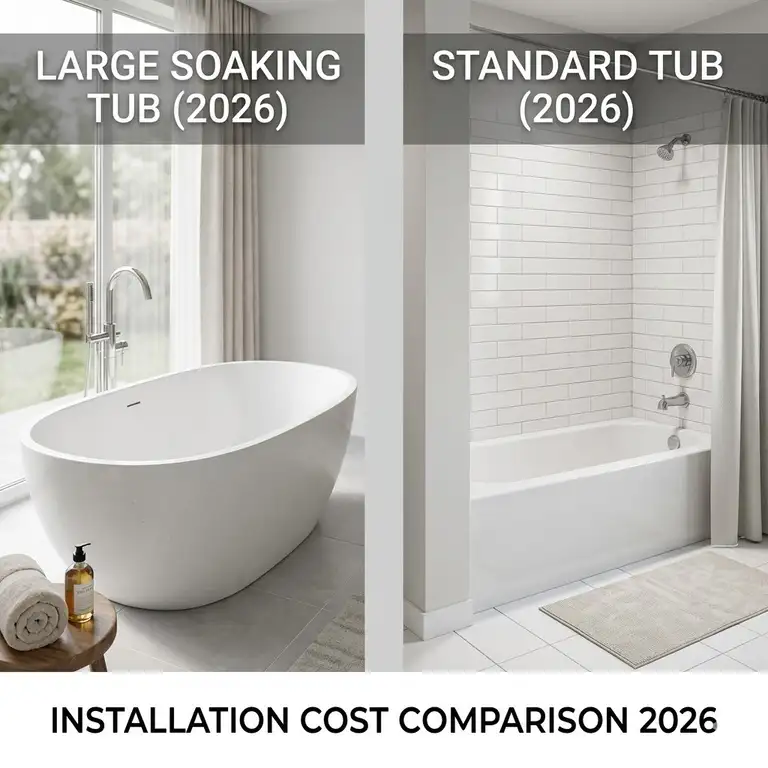
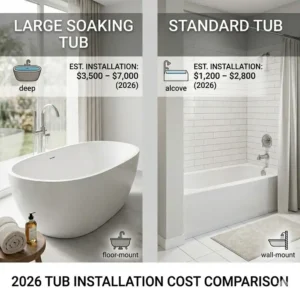
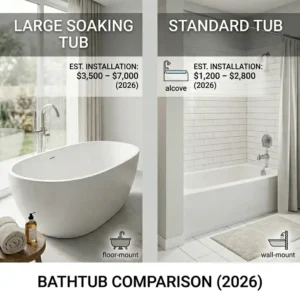
What is cost of installing a large soaking tub vs standard tub 2026? In 2026, a standard tub installation typically ranges from $1,200 to $2,800, including labor. In contrast, a large soaking tub installation often costs between $3,500 and $7,500 due to required floor reinforcement, high-end fixtures, and complex plumbing relocations necessitated by larger dimensions…
In my experience helping homeowners navigate these renovations, the “soaking tub sticker shock” usually doesn’t come from the tub itself. It comes from the realization that a 60-gallon standard tub weighs about 500 lbs when full, while a 100-gallon soaking tub can exert over 1,000 lbs of pressure on your floor joists. Today, we’re breaking down every cent of that difference so you can decide if the extra depth is worth the extra debt.
Quick Comparison Table: Standard vs. Soaking Tub Installation
| Feature | Standard Tub (Alcove) | Large Soaking Tub (Freestanding/Deep) | Best For |
| Average Unit Cost | $400 – $900 | $800 – $3,500 | Budget vs. Luxury |
| Installation Labor | $800 – $1,500 | $1,500 – $4,000 | Quick Swap vs. Custom Build |
| Water Capacity | 35 – 50 Gallons | 60 – 100+ Gallons | Efficiency vs. Immersion |
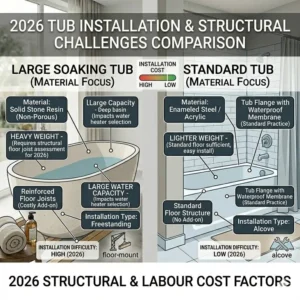
| Floor Reinforcement | Rarely Required | Often Required ($500+) | Second-Floor Safety |
| Plumbing Complexity | Existing Lines Usually Fit | Relocation Often Needed | Retrofit vs. Total Remodel |
Looking at the comparison above, the standard tub remains the king of efficiency and lower entry costs. However, if your goal is full-body immersion, the soaking tub’s higher price point is justified by its superior depth and heat retention. Buyers should note that the “hidden cost” of the soaking tub often lies in the $500–$1,000 floor reinforcement typically required for older homes or second-story bathrooms.
💬 Just one click — help others make better buying decisions too! 😊
Top 5 Tubs for 2026: Expert Analysis
1. Kohler K-1123-0 Archer 5-Foot Acrylic Bath
The Kohler K-1123-0 Archer is the “goldilocks” tub of 2026, bridging the gap between a standard alcove and a true soaking experience. It features a patented Slotted Overflow that allows for a significantly deeper water level without needing a massive, oversized footprint.
-
Key Specs: 60″ x 32″ footprint with a 15-inch soaking depth.
-
Real-World Meaning: Most standard tubs only allow 10-12 inches of water; this extra 3 inches means your shoulders actually stay underwater.
-
Expert Opinion: This is the best choice for homeowners who want the soak but don’t want to reinforce their floors or move plumbing lines. It fits in a standard alcove but feels like a luxury upgrade.
-
Customer Feedback: Users consistently praise the lumbar support, though some note the acrylic can feel “flexible” if not bedded properly in mortar.
-
Pros: Fits standard alcoves; deep soak capacity; affordable luxury.
-
Cons: Requires specific Kohler drain (sold separately); acrylic surface can scratch if cleaned with abrasives.
-
Price Range: Around $700–$950.
2. Woodbridge B-0002 67″ Freestanding Soaking Tub
If you have the floor space, the Woodbridge B-0002 is a showstopper. It is a contemporary freestanding model designed specifically for high-volume immersion and modern aesthetic appeal.
-
Key Specs: 67″ Length, 60-gallon capacity, double-walled acrylic.
-
Real-World Meaning: The double-walled design acts like a thermos, keeping your bath water hot for up to 40% longer than single-walled cast iron or steel.
-
Expert Opinion: I recommend this for master suites where the tub is a focal point. What most buyers overlook is the weight—at 60 gallons, you’re looking at nearly 600 lbs total. Ensure your subfloor is up to the task!
-
Customer Feedback: Highly rated for its “easy to clean” finish and the fact that it includes the pop-up drain and overflow.
-
Pros: Incredible heat retention; sleek modern look; easy installation for a freestanding unit.
-
Cons: Large footprint requires a big bathroom; plumbing must come through the floor.
-
Price Range: $850–$1,100 range.
3. American Standard 2941002.020 Studio Soaking Tub
For those restricted to a standard alcove but craving more depth, the American Standard Studio offers a minimalist, deep-sump design that maximizes internal space.
-
Key Specs: Acrylic with fiberglass reinforcement, 18-inch height.
-
Real-World Meaning: The square-ish interior provides more legroom than traditional tapered “standard” tubs, making it feel larger than it actually is.
-
Expert Opinion: This is a “contractor’s favorite” because it’s incredibly sturdy for an acrylic tub. It’s perfect for families who need a tub for kids but want a deep soak for themselves at night.
-
Customer Feedback: Positive marks for the slip-resistant floor, though some find the minimalist edges a bit sharp for leaning against.
-
Pros: Very durable; fits standard 60×32 openings; excellent value-to-depth ratio.
-
Cons: Basic aesthetic; non-textured surface can be slippery without a mat.
-
Price Range: Around $550–$750.
4. Signature Hardware 913217 Sanford Cast Iron Clawfoot Tub
For the traditionalist, the Signature Hardware Sanford represents the pinnacle of 2026 vintage-revival style. This is a heavy-duty, lifetime-guarantee piece of equipment.
-
Key Specs: Porcelain-enameled cast iron, 60-inch length, 43-gallon capacity.
-
Real-World Meaning: Cast iron is nearly indestructible and provides a “solid” feel that acrylic simply cannot match. It won’t creak or flex when you step in.
-
Expert Opinion: Warning! This tub weighs 300 lbs empty. The cost of installing a large soaking tub vs standard tub 2026 becomes very real here because you almost certainly need a professional crew and structural joist sistering.
-
Customer Feedback: Owners love the “heirloom” quality, but many mention the high cost of the specialized floor-mounted faucets required.
-
Pros: Will last 50+ years; unmatched classic style; holds heat once the iron warms up.
-
Cons: Extremely heavy; very expensive to ship and install.
-
Price Range: $1,800–$2,600 range.
5. Empava 67 in. Acrylic Freestanding Bathtub
The Empava 67 in. Acrylic is the budget-conscious way to achieve the “soaker look” without the four-figure price tag. It’s a lightweight but deep freestanding option.
-
Key Specs: 67″ x 29″ x 28″, 58-gallon capacity.
-
Real-World Meaning: Its narrow profile allows it to fit into tighter “luxury” bathrooms where a wider Woodbridge might not.
-
Expert Opinion: The spec sheet won’t tell you this, but because it’s lighter-weight acrylic, you must secure it to the floor with silicone or it will shift when you sit down. It’s a great “house flip” or “guest suite” upgrade.
-
Customer Feedback: Generally positive, though some users reported the drain hose provided is a bit flimsy and should be replaced with a PVC hard line.
-
Pros: High-end look for less; fits narrow spaces; deep water level.
-
Cons: Feels lighter/thinner than premium brands; included hardware is “budget” quality.
-
Price Range: Under $750.
✨ Don’t Miss These Exclusive Deals!
🔍 Take your bathroom remodel to the next level with these carefully selected products. Click on any highlighted item to check current pricing and availability. These tools will help you create a spa-like oasis your family will love!
Practical Usage Guide: Installing Your Tub for Longevity
When you decide to bridge the gap in the cost of installing a large soaking tub vs standard tub 2026, the installation process dictates how long your investment lasts. Whether you choose a $600 standard or a $3,000 soaker, follow these expert optimization steps.
Step 1: The Mortar Bed Secret
One of the biggest mistakes in DIY and even low-end pro installs is skipping the mortar bed. Acrylic tubs, regardless of price, can flex under the weight of a person plus 50 gallons of water.
-
The Pro Tip: Mix a standard bag of mortar to a firm consistency, pile it on the subfloor, and set the tub into it. This creates a rock-solid base that prevents the “creaking” sound and stops the acrylic from cracking over time.
Step 2: Insulation for Heat Retention
Standard tubs lose heat through the thin walls. If you are installing a large soaking tub, you want that water to stay hot.
-
The Hack: Before closing up the wall or setting the tub, spray expanding foam or tuck fiberglass insulation around the tub’s exterior shell. This effectively turns your tub into a giant Thermos, reducing the need to “top off” with hot water mid-soak.
Step 3: Proper Drainage Alignment
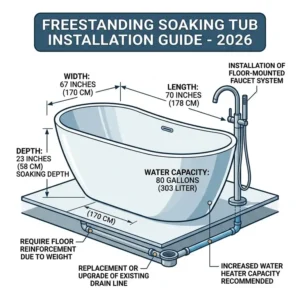
Freestanding soakers often use “flexible” drain kits. Avoid these if possible. In 2026, building codes in many states are tightening around the use of corrugated drainage. Always aim for a hard-piped P-trap setup to prevent hair clogs and slow drainage, which is a common complaint in deep-well tubs.
Problem → Solution Guide: Overcoming Installation Hurdles
Homeowners often underestimate the logistical nightmare of upgrading from a standard tub to a soaking model. Here are the most common pain points and how to solve them.
-
Problem: The Tub is Too Heavy for the Second Floor.
-
Solution: Consult a structural engineer. Often, “sistering” the joists (adding a second 2×10 or 2×12 alongside the existing ones) under the tub area provides the necessary support for around $500–$800.
-
-
Problem: Your Water Heater Runs Out Before the Tub is Full.
-
Solution: Most standard 40-gallon water heaters cannot fill a 70-gallon soaking tub. If you’re upgrading the tub, consider a tankless water heater or a “booster” valve that mixes hot and cold at the source to extend your capacity.
-
-
Problem: The Tub Doesn’t Fit Through the Door.
-
Solution: This sounds silly, but it’s a real issue with 67″+ soakers. Check the “turning radius” of your hallways and the width of your bathroom door. You may need to remove the door frame or, in extreme cases, bring the tub in through a window during a full remodel.
-
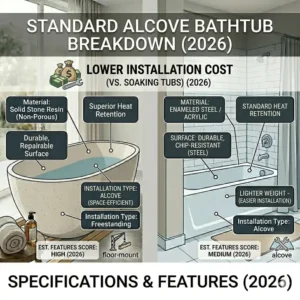
How to Choose: The Decision Framework for 2026
Choosing between a standard and a soaking tub isn’t just about money; it’s about your lifestyle and the physical constraints of your home. Use this criteria to make your final call.
-
Evaluate Your Frequency of Use: If you only take a bath once a month, the cost of installing a large soaking tub vs standard tub 2026 might not be worth the $3,000+ premium. Stick with a high-quality standard alcove like the Kohler Archer.
-
Check Your Floor Joists: If you live in an older home with 2×8 joists, a cast iron soaker is a no-go without massive structural work. Go for a lightweight acrylic freestanding model.
-
Consider Your Resale Timeline: If you are selling in 2-3 years, a standard tub is safer. It appeals to families with small children. If this is your “forever home,” the soaking tub offers a ROI in personal wellness that a standard tub can’t match.
-
Measure Your Body: This sounds obvious, but “soaking” is relative. If you are 6’2″, a 60-inch “standard” tub will never be comfortable. You need the extra length of a 67-inch model to truly benefit from the upgrade.
Common Mistakes When Buying a Tub in 2026
The most frequent error I see is buyers focusing solely on the “look” of the tub without checking the integrated overflow height. You can buy a tub that is 24 inches tall, but if the overflow drain is set at 12 inches, you’ve just bought a very expensive standard tub. Look for “deep soak” overflows that sit higher on the tub wall.
Another mistake is ignoring the drain location. Standard tubs have a dedicated left-hand or right-hand drain. Many soaking tubs have a “center drain.” If you switch from a right-hand alcove to a center-drain soaker, you will have to jackhammer your concrete slab or cut into your floor joists to move the plumbing. This single mistake can add $1,500 to your labor costs.
Finally, don’t forget the faucet requirements. A standard tub uses wall-mounted valves that are relatively cheap. A freestanding soaking tub requires a floor-mounted “tub filler.” In 2026, a high-quality floor-mounted filler can cost $400–$1,200, which is often as much as the tub itself!
Plumbing & Water Heater Impact: The Hidden Utility Cost
When calculating the cost of installing a large soaking tub vs standard tub 2026, most people forget the utility bill. A standard tub uses roughly 35 gallons of hot water. A large soaking tub can easily swallow 80 gallons.
According to the EPA WaterSense guidelines, water conservation is becoming a major factor in home valuations. Filling a 100-gallon tub daily isn’t just a luxury; it’s a significant environmental and financial commitment. If you are on a well system, ensure your pump and recovery rate can handle the sudden draw. If you are on city water, check your local tiered pricing—frequent soaking could push you into a higher bill bracket.
Furthermore, your existing 1/2-inch plumbing lines may take 15–20 minutes to fill a massive tub. To avoid the water getting cold before the tub is even full, many experts recommend upgrading to 3/4-inch supply lines for large soaking units. This is a “behind the walls” cost that most people don’t anticipate.
Long-Term Cost & Maintenance: Acrylic vs. Cast Iron
The material you choose during your 2026 remodel will dictate your maintenance schedule for the next decade.
-
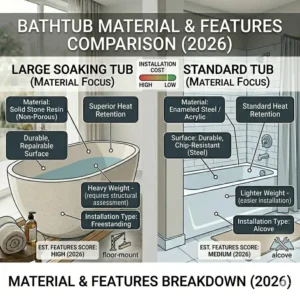
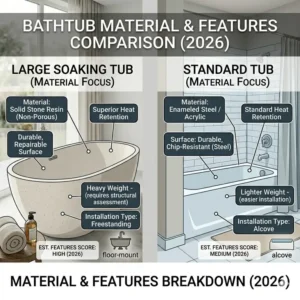
Acrylic: This is the most common choice for soaking tubs because it’s lightweight and warm to the touch. However, it can dull over time and is susceptible to staining from hair dye or bath oils. You must use non-abrasive cleaners to keep the shine.
-
Cast Iron: The “buy it for life” option. It’s incredibly easy to clean and holds its gloss for decades. However, if the enamel chips, the iron underneath will rust, necessitating a professional (and expensive) reglazing.
-
Solid Surface (Resin): Emerging as a 2026 favorite, these tubs are made of a stone-and-resin composite. They are heavy, feel like real stone, and are “solid” throughout, meaning scratches can be sanded out. However, they are the most expensive to buy and install.
For most homeowners, high-quality acrylic remains the best balance of initial cost and long-term durability.
Resale Value: Will You Get Your Money Back?
Does a soaking tub increase home value more than a standard tub? The answer depends on your neighborhood. In high-end “luxury” zip codes, a master bath without a soaking tub is seen as a deficiency. In these cases, you might see a 60–70% ROI on the installation cost.
In mid-range suburban neighborhoods, a standard tub in the kids’ bathroom is essential, and a soaking tub in the master is a “nice to have.” If you have to choose only one tub for the house, make it a standard-sized deep soak like the Kohler Archer. This satisfies the “need” for a tub for children while providing the “luxury” of a soak for adults, maximizing your potential buyer pool.
Referencing the IAPMO plumbing codes, always ensure your installation is permitted. Unpermitted bathroom additions—especially those involving structural changes for heavy tubs—can actually decrease home value during a home inspection.
DIY vs. Professional Installation: Can You Save?
Can you DIY the cost of installing a large soaking tub vs standard tub 2026?
For a standard alcove replacement, a skilled DIYer can save roughly $1,000 in labor. It’s a straightforward “unhook and re-hook” process.
However, for a large soaking tub, especially freestanding models, I strongly recommend professional installation. The precision required for floor-mounted valves, the necessity of checking floor loads, and the potential for massive water damage if a 100-gallon tub leaks make the $2,000 pro fee a form of insurance. In 2026, many insurance companies are actually requiring professional sign-off on “high-capacity water vessels” in residential homes to maintain coverage.
✨ Don’t Miss These Exclusive Deals!
🔍 Ready to transform your bathroom? Whether you choose a standard tub or a deep soaker, the right fixtures make all the difference. Check the current availability of our top-rated tubs and fillers below!
Conclusion
The cost of installing a large soaking tub vs standard tub 2026 reflects a choice between utility and luxury. While a standard tub is the practical choice for most families, costing around $2,000 all-in, the soaking tub is an investment in your home’s “spa” potential. Expect to pay closer to $5,000 once you account for the tub, specialized faucets, and necessary structural reinforcements. Regardless of your choice, focusing on proper installation—specifically mortar bedding and insulation—will ensure your new tub remains a source of relaxation rather than a source of maintenance headaches.
FAQs
❓ How much weight can a standard second-floor bathroom handle?
✅ Most modern homes are built to support 40 lbs per square foot. However, a full soaking tub can exceed this. Always consult a structural engineer if the tub’s filled weight exceeds 800 lbs in a concentrated area…
❓ Does a soaking tub require a special drain?
✅ Often, yes. Tubs like the Kohler Archer require a “slotted” overflow drain. Freestanding tubs usually need a specific “island tub drain” to connect to the floor plumbing properly…
❓ Can I use my existing water heater for a 70-gallon tub?
✅ A standard 40-gallon tank usually isn’t enough. You will get about 28 gallons of hot water before it runs cold. You likely need a 50-gallon tank or a tankless system…
❓ Is acrylic better than cast iron for heat retention?
✅ Acrylic feels warmer to the touch immediately. Cast iron takes longer to heat up, but once the metal is warm, it holds the temperature for a very long time. For short 20-minute baths, acrylic is better…
❓ What is the minimum bathroom size for a freestanding tub?
✅ You generally need at least 12 inches of clearance around the tub for cleaning and aesthetic purposes. This usually requires a bathroom of at least 80–100 square feet…
Recommended for You
- Best Compact Freestanding Tubs vs Corner Tubs 2026 Comparison: 7 Key Differences You Must Know Before Buying
- 7 Best Floor Mount Tub Filler With High Flow Rate 2026: Expert Guide
- What is a microbubble therapy bathtub and benefits 2026: 7 Best Tubs
Disclaimer: This article contains affiliate links. As an Amazon Associate, I earn from qualifying purchases. If you purchase products through these links, we may earn a small commission at no additional cost to you.
✨ Found this helpful? Share it with your friends! 💬🤗