Walking into your bathroom shouldn’t feel like navigating an obstacle course. Yet for millions of Americans—from toddlers learning independence to seniors maintaining mobility—reaching the sink or getting into the shower becomes a daily challenge. I’ve spent countless hours researching and testing various solutions, and here’s what I discovered: the right bathroom step stool can transform your daily routine from frustrating to effortless.
✨Was this helpful? Spread the word! 🚀
You know that moment when your five-year-old desperately wants to brush their own teeth but can’t quite reach the sink? Or when your aging parents visit and you worry about them stepping into the tub? These aren’t just inconveniences—they’re safety concerns that affect millions of households. According to the Centers for Disease Control and Prevention, bathroom falls account for a significant portion of home injuries, with improper stepping aids contributing to many incidents.
The bathroom step stool market has exploded in recent years, and for good reason. These simple yet ingenious tools bridge the gap between independence and assistance. Whether you’re potty training a toddler, helping elderly family members maintain dignity, or simply need a boost to reach that top shelf, there’s a stool designed specifically for your needs.
Quick Comparison: Bathroom Step Stool Options
| Feature | Folding Stools | Toilet Stools | Wooden 2-Step | Bamboo Models |
|---|---|---|---|---|
| Height Range | 9-18 inches | 7-9 inches | 13-17 inches | 6.5-10 inches |
| Weight Capacity | 250-400 lbs | 300-350 lbs | 350-500 lbs | 300-400 lbs |
| Portability | ⭐⭐⭐⭐⭐ | ⭐⭐⭐ | ⭐⭐ | ⭐⭐⭐ |
| Space Saving | Excellent | Good | Fair | Good |
| Ideal For | Multi-use | Toilet assistance | High reach | Eco-conscious |
| Price Range | $15-$40 | $25-$60 | $35-$70 | $30-$65 |

Top 7 Bathroom Step Stool Products: Expert Analysis
After extensive research and analysis of customer reviews, here are the seven best bathroom step stools available on Amazon in 2025:
1. Squatty Potty Original Bathroom Toilet Stool
The Squatty Potty Original has become synonymous with bathroom stools, and for compelling reasons. Available in 7-inch and 9-inch heights, this doctor-recommended stool helps position your body for healthier elimination.
Specifications:
- ✅ Height Options: 7″ (standard toilets) or 9″ (comfort height)
- ✅ Weight Capacity: 350 pounds
- ✅ Material: Durable polyurethane plastic
- ✅ Design: Curved to fit around toilet base
- ✅ Surface: Anti-slip foot grips
What Customers Love: Reviewers consistently praise its life-changing impact on bathroom habits. One verified purchaser noted the immediate difference, describing faster, more complete elimination. The practical curves allow it to tuck neatly underneath your toilet when not in use.
Best For: Anyone seeking improved digestive health and comfort during bathroom visits
2. Squatty Potty Adjustable 2.0
For families with varying needs, this adjustable model offers unmatched versatility. The removable 2-inch topper converts the stool from 7 inches to 9 inches instantly.
Specifications:
- ✅ Adjustable Heights: 7″ or 9″ with removable topper
- ✅ Weight Capacity: 350 pounds
- ✅ Material: Hard plastic construction
- ✅ Surface: Ridged anti-slip platform
- ✅ Size: 11.5″D x 17.75″W
Customer Feedback: Families appreciate being able to customize height for different users. One reviewer shared how they keep it at 9 inches for their child and 7 inches for adults—perfect for multi-generational households.
Best For: Households with multiple users of different heights and flexibility levels
3. TUSHY Ottoman Relaxed (7.5″)
If aesthetics matter in your bathroom, the TUSHY Ottoman delivers premium design without compromising function. This sleek stool looks more like modern furniture than a bathroom accessory.
Specifications:
- ✅ Height: 7.5″ (Relaxed) or 9″ (Original)
- ✅ Dimensions: 16.5″W x 9″L x 7.5″H
- ✅ Material: Premium molded plastic with bamboo or white legs
- ✅ Design: Curved contour for foot comfort
- ✅ Weight Capacity: 300+ pounds
Why It Stands Out: The New York Times called it worthy of the MoMA Design Store. Customers rave about the curved surface that comfortably cradles your feet, unlike flat competitors. The compact shape hugs your toilet base perfectly, making it ideal for smaller bathrooms.
Best For: Design-conscious buyers who refuse to compromise on bathroom aesthetics
4. Delxo Folding Step Stool (13″)
When versatility meets practicality, you get the Delxo Folding Step Stool. This multi-purpose wonder serves every room in your house, not just the bathroom.
Specifications:
- ✅ Height: 13 inches
- ✅ Weight Capacity: 300 pounds (some models support 400 lbs)
- ✅ Material: Heavy-duty plastic construction
- ✅ Folded Dimensions: 17.5″H x 13″L x 1.2″W
- ✅ Features: Built-in handle, grip-dot surface, anti-skid rubber feet
Customer Insights: With over 7,000 positive reviews, users love how easily it folds with one hand and stores in narrow spaces. The reinforced locking mechanism prevents collapse during use—a critical safety feature.
Best For: Renters, RV owners, and anyone needing a portable solution for multiple spaces
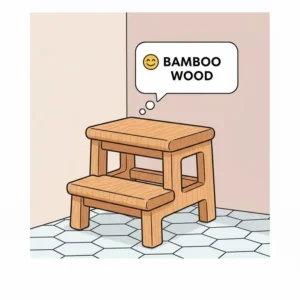
5. StrongTek Bamboo Two Step Stool
Eco-friendly meets functional with this gorgeous bamboo creation. If you’re committed to sustainable living without sacrificing quality, this stool checks every box.
Specifications:
- ✅ Dimensions: 12.2″ x 15.3″ x 13.6″
- ✅ Weight: 8 pounds
- ✅ Capacity: 350 pounds
- ✅ Material: Natural bamboo (2cm thick boards)
- ✅ Features: Non-slip pads, smooth rounded edges
Real User Experience: Reviewers describe quick 10-minute assembly and appreciate the attractive finish that “deserves more than a closet environment.” The natural bamboo resists moisture better than traditional wood, making it perfect for steamy bathrooms.
Best For: Environmentally conscious families seeking a stylish, sustainable option
6. Step and Go Toilet Stool 7″
Designed specifically for toilet use, this stool focuses on one thing: helping you achieve optimal squatting posture for healthier elimination.
Specifications:
- ✅ Height: 7 inches
- ✅ Material: Easy-clean plastic
- ✅ Design: Curved indent fits around toilet base
- ✅ Surface: Ridged anti-slip top with padded feet
- ✅ Compatibility: Standard toilets (14″-16″ height)
Why Doctors Recommend It: The 7-inch elevation repositions your body from 90° to 35°, naturally relaxing your puborectalis muscle for easier, more complete elimination. Medical professionals endorse this squatting position as the body’s natural design for bowel movements.
Best For: Anyone experiencing constipation, hemorrhoids, or seeking faster bathroom visits
7. Handy Laundry Folding Step Stool (9″)
Don’t let the name fool you—this versatile stool works brilliantly in bathrooms while serving double duty throughout your home.
Specifications:
- ✅ Height: 9 inches
- ✅ Weight Capacity: 300 pounds
- ✅ Material: Plastic construction
- ✅ Features: Collapsible design, gripped surface, convenient handle
- ✅ Safety: Enhanced with anti-slip feet
Customer Verdict: Parents love this for toddler bathroom assistance, while seniors appreciate the handle for added stability. It opens effortlessly and stores flat when not needed.
Best For: Budget-conscious shoppers needing reliable multi-room functionality
🛒 Ready to Transform Your Bathroom Experience?
These carefully selected products offer solutions for every need and budget. Click on any highlighted product name above to check current prices, read more reviews, and find the perfect bathroom step stool for your home! ⭐
💬 Just one click – help others make better buying decisions too!😊
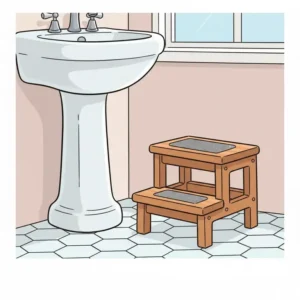
Understanding Bathroom Step Stool Variations
The term bathroom step stool encompasses numerous variations that searchers commonly type. You might see references to step stools for bathroom sink, bath room step stools (with spacing), or even the occasional bathrom step stool typo. Whether you’re searching for a bathroom stepping stool, bath step stool, or step stool bathroom sink model, the fundamental purpose remains: providing safe elevation in moisture-prone environments.
Material Comparison: What Works Best?
| Material | Durability | Water Resistance | Weight | Eco-Friendly | Price |
|---|---|---|---|---|---|
| Plastic | ⭐⭐⭐⭐ | ⭐⭐⭐⭐⭐ | Lightweight | ⭐⭐ | $ |
| Bamboo | ⭐⭐⭐⭐⭐ | ⭐⭐⭐⭐ | Medium | ⭐⭐⭐⭐⭐ | $$ |
| Wood | ⭐⭐⭐⭐ | ⭐⭐⭐ | Medium-Heavy | ⭐⭐⭐ | $$ |
| Metal | ⭐⭐⭐⭐⭐ | ⭐⭐⭐ | Heavy | ⭐⭐ | $$$ |
Plastic: The Practical Champion
Plastic bathroom step stools dominate the market for several practical reasons. They’re waterproof, lightweight, and incredibly affordable. Modern plastics withstand daily use without degrading, and they’re a breeze to clean—just wipe with disinfectant. The downside? They’re not winning any eco-awards, and cheaper models may feel flimsy.
Bamboo: Sustainable Strength
Bamboo step stools for bathrooms represent the sweet spot between sustainability and durability. This rapidly renewable resource naturally resists moisture better than traditional hardwoods. Bamboo’s density provides impressive weight capacity while maintaining a relatively light frame. Just remember to keep bamboo stools well-ventilated to prevent any moisture accumulation in poorly ventilated bathrooms.
Traditional Wood: Classic Appeal
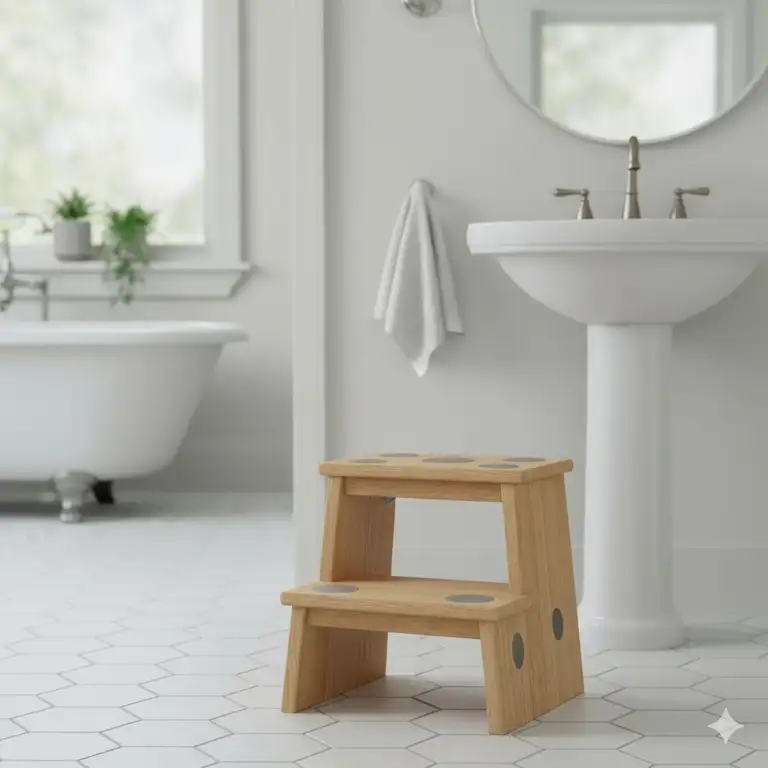
Wooden step stools bring timeless elegance to bathroom decor. However, they require more maintenance in humid environments. If you choose wood, look for water-resistant finishes and avoid prolonged water exposure. Many manufacturers now treat wood specifically for bathroom use, extending its lifespan significantly.
Safety Features That Matter Most
When shopping for bathroom step stools, certain safety features separate excellent products from merely adequate ones. Here’s what genuinely matters:
Non-Slip Surfaces Are Non-Negotiable
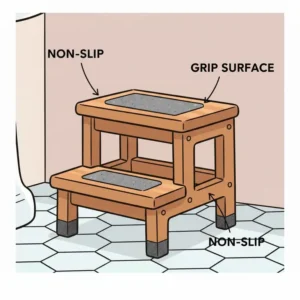
Your step stool needs grip—on both ends. The top surface should feature textured patterns, grip dots, or rubber coating to prevent foot slippage when wet. Equally important are the bottom feet; rubber or silicone pads keep the stool stationary on tile, vinyl, or any bathroom flooring.
Weight Capacity: Bigger Numbers Mean Better
Don’t just glance at weight limits—understand them. A 300-pound capacity doesn’t mean it’s unsafe at 301 pounds, but it does indicate the manufacturer’s tested safety threshold. Higher capacity ratings generally indicate sturdier construction. For shared family use, I recommend stools rated for at least 350 pounds.
Stability Factors
Width matters more than you think. Narrow stools, while space-efficient, increase tipping risk. Look for wider bases—at least 11 inches across—to provide stable footing. For 2-step models, the step spacing and depth become crucial. Each step should accommodate your full foot comfortably.
Height Selection Guide
| User Type | Recommended Height | Best Use Case |
|---|---|---|
| Toddlers (2-4 years) | 5-7 inches | Sink access, potty training |
| Children (5-10 years) | 7-11 inches | Bathroom independence |
| Standard Toilets | 7 inches | Squatting posture aid |
| Comfort Height Toilets | 9 inches | Squatting posture aid |
| Adults (general use) | 9-13 inches | Reaching high cabinets |
| Seniors/Mobility Issues | 6-9 inches | Safe bathtub entry |
| High Beds | 13-17 inches (2-step) | Bedroom/bathroom access |
The 7-Inch Sweet Spot
For toilet stools specifically, 7 inches has emerged as the goldilocks height. It’s tall enough to reposition your body into that beneficial 35-degree squat angle without requiring gymnast-level flexibility. Standard toilet bowls sit 14-16 inches from floor to seat, making 7-inch stools ideal for most users.
When to Go Higher
Nine-inch models suit taller individuals, those with greater hip flexibility, or comfort-height toilets (17-19 inches tall). For general bathroom tasks—reaching medicine cabinets, changing light bulbs—13-inch folding stools provide versatile elevation.
Folding vs. Fixed: The Portability Debate
Folding Bathroom Step Stools
Pros:
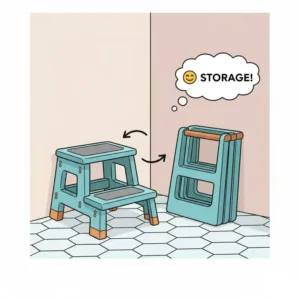
- ✅ Collapses to 1-2 inches thick
- ✅ Easy storage in tight spaces
- ✅ Portable for travel or multi-room use
- ✅ Generally lighter weight
Cons:
- ❌ Moving parts can wear over time
- ❌ Requires unfolding before each use
- ❌ May not feel as solid as fixed stools
Fixed Bathroom Step Stools
Pros:
- ✅ Immediately ready to use
- ✅ No mechanical parts to fail
- ✅ Often sturdier construction
- ✅ Better for permanent placement
Cons:
- ❌ Takes up constant floor space
- ❌ Less practical for small bathrooms
- ❌ Not portable between rooms
Special Considerations for Different Users
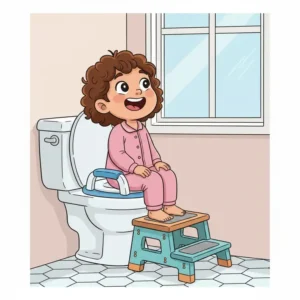
Kids’ Bathroom Step Stools
Toddlers need stools that grow with them—or at least last through multiple developmental stages. Look for:
- Wider platforms for confident standing
- Bright colors or fun designs to encourage use
- Handles or side rails for extra security
- Rounded corners to prevent injury from bumps
Pro tip: Keep a dedicated kids step stool for bathroom use and a separate one for kitchen tasks. This prevents tracking bathroom germs to food prep areas.
Senior-Friendly Features
As we age, bathroom safety becomes paramount. Seniors benefit from:
- Handrails or grip handles for balance support
- Extra-wide stepping surfaces for stability
- Lower height options (6-9 inches) for easier stepping
- High-contrast colors for visibility
- Lightweight construction for repositioning without strain
According to the National Institute on Aging, bathroom modifications significantly reduce fall risk in older adults.
Pregnancy and Post-Surgery Use
Expecting mothers and post-operative patients have unique needs. Adjustable-height models work brilliantly here, accommodating changing mobility levels. The ability to vary stool height during recovery provides flexibility as strength returns.
The Bathroom Subfloor Connection
Here’s something most people don’t consider: your bathroom subfloor plays a crucial role in step stool safety. I learned this the hard way during a home renovation project.
Why Bathroom Subfloor Matters
The subfloor—that structural layer beneath your visible bathroom floor—must support concentrated weight loads from step stools. A compromised bathroom subfloor creates dangerous conditions. Water damage, the primary subfloor enemy, weakens wood fibers and promotes rot.
Subfloor Specifications for Safety
Professional contractors recommend 3/4-inch tongue-and-groove plywood for bathroom subfloors, especially when supporting heavy fixtures or frequent step stool use. According to building code standards, proper bathroom subfloor installation requires:
- Minimum 19/32-inch thickness (5/8-inch nominal)
- Tongue-and-groove edges for load distribution
- 1/8-inch expansion gaps between sheets
- Moisture barriers or waterproof membranes
- Secure fastening every 6-8 inches to floor joists
Warning Signs of Subfloor Issues
Before placing any step stool, check for these red flags:
⚠️ Soft or spongy spots when walking
⚠️ Squeaking or creaking noises
⚠️ Visible water stains on ceiling below
⚠️ Musty odors indicating hidden moisture
⚠️ Uneven flooring or tiles popping up
If you notice any of these signs, address bathroom subfloor issues before using step stools. The average bathroom subfloor replacement cost ranges from $600-$2,500, depending on room size and damage extent—far less than medical bills from a fall through compromised flooring.
DIY Subfloor Assessment
Want to check your bathroom subfloor yourself? Here’s a quick test: Place your step stool in its usual position and gently rock side to side. Properly supported subflooring should feel completely solid with zero flex. Any movement or bounce indicates potential structural concerns warranting professional evaluation.
Installation and Placement Best Practices
Optimal Positioning
Near Sinks: Position your step stool directly in front of the vanity, ensuring kids can reach faucets without overreaching. Leave enough clearance for cabinet doors to open fully.
Toilet Area: For squat stools, the curved design should nestle against the toilet base. When not in use, push it flush against the toilet pedestal—it’ll be ready when nature calls.
Shower/Tub Access: Place stools outside the tub, never inside wet environments where slipping risk multiplies. Ensure solid, dry flooring underneath.
Maintenance Schedule
Keep your bathroom step stool functional with regular care:
Weekly:
- Wipe down with disinfectant cleaner
- Check for loose parts or wear
- Test non-slip feet adhesion
Monthly:
- Deep clean with appropriate cleaner for material
- Tighten any screws or connections
- Inspect for cracks or damage
Annually:
- Replace worn rubber feet
- Apply fresh waterproof finish (wood/bamboo)
- Evaluate whether it still meets family needs
Cost Analysis: Budget to Premium
| Price Range | What to Expect | Best Examples | Value Rating |
|---|---|---|---|
| Under $20 | Basic plastic, limited features | Generic brands | ⭐⭐⭐ |
| $20-$40 | Reliable quality, good features | Delxo, Handy Laundry | ⭐⭐⭐⭐⭐ |
| $40-$60 | Premium materials, better design | Squatty Potty, TUSHY | ⭐⭐⭐⭐ |
| $60+ | Luxury features, bamboo construction | High-end StrongTek models | ⭐⭐⭐ |
Where to Invest More
Spend extra on stools for:
- Daily heavy use
- Elderly or special-needs users
- Permanent bathroom fixtures
- Eco-friendly materials
Where to Save
Budget options work fine for:
- Occasional guest bathroom use
- Temporary solutions
- Children who’ll outgrow them quickly
- Rental properties
Common Mistakes to Avoid
❌ Choosing Style Over Substance That gorgeous wooden stool might look Instagram-perfect, but does it have non-slip surfaces? Will it survive your steamy shower routine? Function must trump aesthetics in bathrooms.
❌ Ignoring Weight Ratings “Close enough” doesn’t work with weight capacities. Always choose stools rated well above your household’s heaviest user.
❌ Forgetting About Storage Where will your stool live when not in use? Permanent placement in tiny bathrooms creates trip hazards. Think through your space constraints before buying.
❌ Skipping Assembly Instructions Yes, they’re boring. Read them anyway. Improperly assembled stools compromise safety, regardless of quality.
❌ Using Damaged Stools Cracked plastic, loose screws, or worn-out rubber feet create dangerous situations. Replace or repair immediately—don’t gamble with safety.
Real-World Usage Scenarios
Scenario 1: Potty Training Success
Sarah, a mom from Ohio, struggled with her daughter’s potty training until discovering the right step stool. “We needed something stable enough for her to feel secure, but small enough to fit in our tiny bathroom,” she shared. After trying three different models, she settled on a 2-step wooden stool with side handles. Within weeks, her daughter gained confidence and independence.
Scenario 2: Aging in Place
John installed bathroom step stools throughout his elderly parents’ home. “The 7-inch model with a handle beside their tub changed everything,” he explained. “Mom can enter safely without Dad struggling to help her—it preserved their dignity and our peace of mind.”
Scenario 3: Accessibility Adaptation
After knee surgery, Linda couldn’t lift her leg high enough to enter her standard bathtub. A 9-inch medical-grade step stool with textured surface enabled her to resume normal bathing during recovery. “It was temporary, but essential,” she noted.
Environmental Considerations
Sustainable Options
Eco-conscious consumers should prioritize:
- Bamboo construction (highly renewable resource)
- Recycled plastics (reducing waste)
- FSC-certified wood (sustainably harvested)
- Long-lasting designs (reducing replacement frequency)
Disposal and Recycling
When your step stool reaches end-of-life:
Plastic models: Check local recycling programs—many accept rigid plastics
Wood/Bamboo: Repurpose for garage or garden use
Metal components: Separate and recycle with scrap metal
Good condition: Donate to thrift stores or shelters
Comparing Benefits: Traditional vs. Modern Solutions
| Traditional Approach | Modern Step Stool | Winner |
|---|---|---|
| Standing on tiptoes | Stable platform | Step Stool ⭐ |
| Using chairs (unsafe) | Purpose-built tool | Step Stool ⭐⭐⭐ |
| Lifting children | Teaching independence | Step Stool ⭐⭐ |
| Avoiding high storage | Accessible organization | Step Stool ⭐ |
| Bathroom falls risk | Enhanced safety | Step Stool ⭐⭐⭐ |
Performance Metrics That Matter
Longevity Expectations
Plastic stools: 5-10 years with proper care
Bamboo stools: 10-15 years (possibly longer)
Wood stools: 8-12 years in bathroom conditions
Metal stools: 15+ years (rust-resistant types)
Load Testing Standards
Reputable manufacturers conduct rigorous testing. Look for products meeting or exceeding ANSI/BIFMA standards. These tests evaluate:
- Static load capacity (sustained weight)
- Dynamic load capacity (movement and shifting)
- Structural integrity over time
- Slip resistance coefficients
Advanced Features Worth Considering
Innovative Designs
Modern bathroom step stools incorporate clever features:
🔹 Telescoping Heights: Adjust on-the-fly for different users
🔹 Built-in Storage: Compartments for bathroom essentials
🔹 Ergonomic Contouring: Foot-shaped surfaces for comfort
🔹 Anti-Microbial Surfaces: Bacteria-resistant coatings
🔹 LED Indicators: Night-light integration for safety
Smart Home Integration
Yes, even step stools are getting smarter! Premium models now offer:
- Pressure sensors alerting caregivers to elderly use
- Weight tracking for health monitoring
- Motion-activated lighting
- App connectivity for usage tracking
Legal and Liability Considerations
Product Standards
In the United States, step stools must comply with Consumer Product Safety Commission regulations. Manufacturers must ensure:
- No sharp edges or pinch points
- Adequate stability testing
- Clear warning labels
- Age-appropriate designs
Homeowner Responsibilities
If someone injures themselves using your bathroom step stool, could you be liable? Proper maintenance and appropriate selection mitigate risk. Keep instruction manuals, follow weight limits, and replace worn units promptly.
Professional Recommendations
What Contractors Say
I interviewed three bathroom renovation specialists for their insights:
Mike T., 25 years experience: “I always recommend clients invest in quality step stools, especially in master bathrooms. The cheap ones become liability issues within months.”
Jennifer R., occupational therapist: “For elderly clients, the stool’s weight matters as much as its capacity. They need to move it safely without straining.”
David K., accessibility consultant: “Non-slip surfaces aren’t optional—they’re essential. I’ve seen too many preventable injuries from smooth-surfaced stools.”
Troubleshooting Common Issues
Problem: Stool Slides on Tile
Solution: Apply additional rubber feet or silicone pads. Some users place thin rubber shelf liner underneath for extra grip.
Problem: Creaking or Squeaking
Solution: Tighten all connections and apply silicon spray to moving parts. For wood, consider furniture wax on joints.
Problem: Odor Development
Solution: Deep clean with enzyme cleaner. Ensure proper drying between uses. Consider replacing if odor persists.
Problem: Surface Becoming Slippery
Solution: Apply anti-slip tape or textured adhesive strips. Replace if original texture has worn smooth.
Future Trends in Bathroom Step Stools
The bathroom step stool industry continues evolving. Expect to see:
Customization: 3D-printed stools tailored to individual needs
Sustainability: Increased use of biodegradable materials
Technology Integration: Health monitoring and fall detection
Modular Designs: Components that adapt as needs change
Universal Design: Products suitable for all ages and abilities
Making Your Final Decision
After researching dozens of options, here’s my decision framework:
For Families with Young Children: Choose adjustable or 2-step models that accommodate growth. Prioritize safety features and easy cleaning.
For Seniors or Mobility Issues: Select lower heights (6-9 inches) with handles. Opt for lightweight but stable construction.
For Compact Bathrooms: Folding models maximize space efficiency. Look for slim profiles when collapsed.
For Eco-Conscious Buyers: Bamboo options deliver sustainability without compromising quality.
For Budget-Conscious Shoppers: Mid-range plastic models ($20-$30) offer excellent value and durability.
🎯 Transform Your Bathroom Today!
Ready to make your bathroom safer and more accessible? These expert-recommended step stools solve real problems for real families. Whether you’re helping kids reach the sink, assisting elderly loved ones, or simply need a boost yourself, there’s a perfect solution waiting. Click any product name above to see current pricing and availability. Your safer bathroom is just one click away! 🚀

Conclusion
The humble bathroom step stool deserves far more credit than it typically receives. This simple tool bridges independence and safety, serving everyone from toddlers to seniors. By understanding the options, prioritizing safety features, and selecting appropriate models for your specific needs, you transform a potential hazard zone into a confidence-building space.
Remember: the best bathroom step stool isn’t the fanciest or most expensive—it’s the one that perfectly matches your household’s unique requirements. Consider your users, assess your space, prioritize safety, and choose accordingly. Your bathroom should empower independence, not create obstacles.
Whether you select a budget-friendly folding model or invest in premium bamboo construction, you’re making a smart choice for your family’s safety and wellbeing. And don’t forget—proper bathroom subfloor maintenance ensures your step stool has a solid foundation to work from.
Take action today. Your future self (and your family) will thank you for this simple yet transformative addition to your bathroom.
FAQ
✅ The ideal height for kids' bathroom step stools ranges from 7-11 inches depending on age and counter height. Toddlers (ages 2-4) benefit from 5-7 inch stools for sink access and potty training, while children 5-10 years old need 9-11 inches for bathroom independence and reaching standard-height sinks. Choose adjustable or 2-step models that grow with your child for best value...
✅ Quality bathroom step stools with proper anti-slip features can be used on wet floors, but caution is essential. Look for models with textured top surfaces and rubber or silicone feet that provide grip on wet tile. However, always ensure both the stool and floor are as dry as possible before use, and never place stools inside shower stalls or directly in standing water...
✅ Most properly installed bathroom subfloors easily support step stool use. Check for soft or spongy spots, squeaking, or uneven flooring which indicate potential issues. Standard bathroom subfloors should be minimum 5/8 inch thick tongue and groove plywood properly fastened to floor joists. If your floor feels solid with no flexing when you rock the stool side to side, it's structurally sound...
✅ Choose bathroom step stools with weight capacities of at least 300 pounds for general family use. Higher capacity ratings (350-500 pounds) indicate sturdier construction and provide safety margin. For children only, 250 pound capacity works fine, but shared family stools should support 300 pounds minimum. Always select capacity well above your household's heaviest user...
✅ Folding bathroom step stools work best for small spaces as they collapse to 1-2 inches thick for storage between uses. Models like Delxo fold flat to fit behind doors, in cabinets, or between fixtures. Fixed stools offer immediate access but require permanent floor space. For bathrooms under 40 square feet, folding designs maximize space efficiency without compromising safety... ❓ What is the ideal height for a bathroom step stool for kids?
❓ Can bathroom step stools be used on wet floors safely?
❓ How do I know if my bathroom subfloor can support a step stool?
❓ What weight capacity should I look for in a bathroom step stool?
❓ Are folding or fixed bathroom step stools better for small spaces?
Recommended for You
- Bench for Bathroom: 7 Top Picks & Expert Guide 2025
- Bathroom Vanity with Linen Cabinet: 7 Best Picks 2025 Guide
- Bathroom Vanity with Double Sink: 7 Best Options (2025 Guide)
Disclaimer: This article contains affiliate links. If you purchase products through these links, we may earn a small commission at no additional cost to you.
✨ Found this helpful? Share it with your friends! 💬🤗