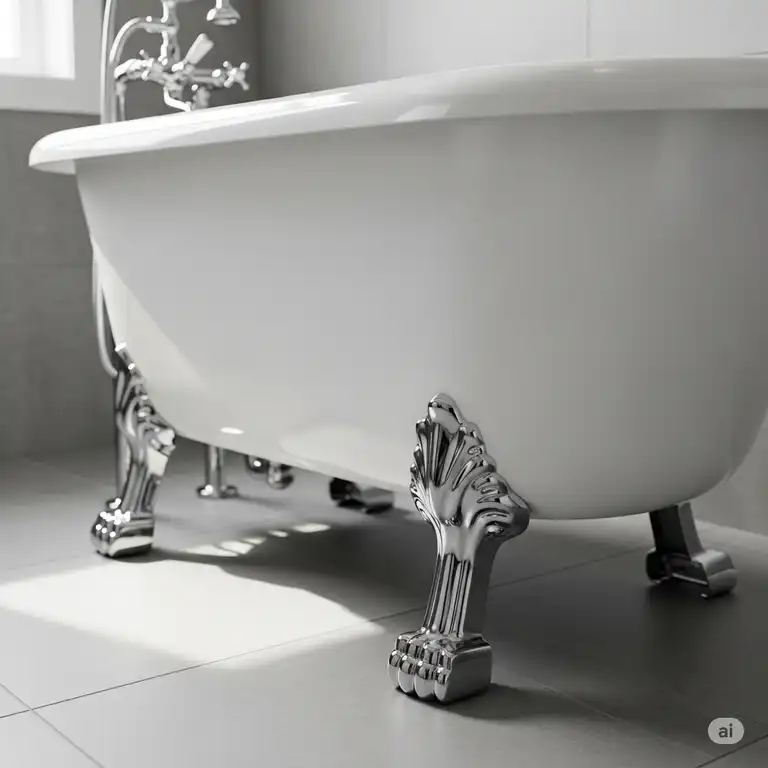
When it comes to bathroom renovations or new bathtub installations, one crucial component often gets overlooked: bathtub feet. These essential support elements determine whether your bathtub sits securely, drains properly, and provides years of reliable service. Moreover, the right bathtub feet can make the difference between a professional installation and a problematic one that leads to costly repairs down the road.
✨Was this helpful? Spread the word! 🚀
The importance of quality bathtub feet cannot be overstated in modern bathroom design. Whether you’re installing a freestanding tub, replacing worn support legs, or upgrading your existing setup, understanding the various types of bathtub feet available will help you make informed decisions. Furthermore, proper bathtub foot selection impacts everything from water drainage to structural integrity, making this seemingly simple component a critical factor in your bathroom’s functionality.
Quick Comparison: Bathtub Feet vs Alternative Support Methods
| Support Method | Stability Rating | Adjustability | Installation Complexity | Cost Range |
|---|---|---|---|---|
| Bathtub Feet | ⭐⭐⭐⭐⭐ | High | Moderate | $50-$300 |
| Mortar Bed | ⭐⭐⭐⭐ | None | High | $100-$500 |
| Built-in Platform | ⭐⭐⭐⭐⭐ | None | Very High | $300-$1000+ |
| Floor-mounted Brackets | ⭐⭐⭐ | Low | Moderate | $75-$250 |
Understanding Bathtub Feet: Essential Components for Modern Bathrooms 🛁
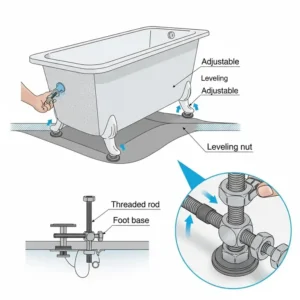
Bathtub feet serve as the primary support system for freestanding and some alcove-style bathtubs. These adjustable legs typically consist of heavy-duty materials like steel, brass, or reinforced plastic, designed to distribute the weight of both the tub and its contents evenly across the floor. Additionally, quality bathtub feet incorporate leveling mechanisms that allow for precise adjustments on uneven surfaces.
The engineering behind effective bathtub feet involves understanding load distribution, material science, and hydraulic principles. Each foot must support significant weight while maintaining stability during use. Consequently, manufacturers have developed sophisticated designs that incorporate anti-slip bases, corrosion-resistant finishes, and easy-adjustment mechanisms that don’t require professional installation.
Types of Bathtub Feet Available Today
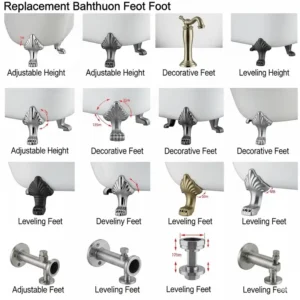
Adjustable bathtub feet represent the most popular category, offering height variations typically ranging from 4 to 8 inches. These feet feature threaded adjustment mechanisms that allow precise leveling, crucial for proper drainage and structural integrity. Furthermore, premium adjustable models include locking mechanisms that prevent movement once properly positioned.
Fixed bathtub feet provide unwavering stability for installations where precise leveling isn’t required. These non-adjustable options typically cost less than their adjustable counterparts while offering excellent load-bearing capacity. However, they require more careful floor preparation and measurement during installation.
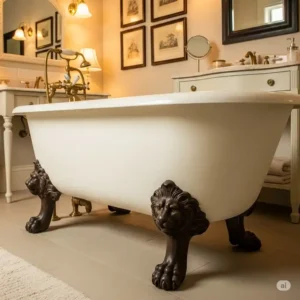
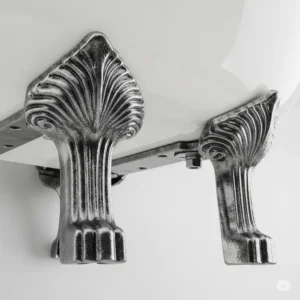
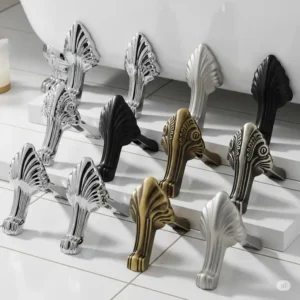
Decorative bathtub feet combine functionality with aesthetic appeal, featuring ornate designs that complement vintage or luxury bathroom styles. These specialty feet often incorporate brass finishes, carved details, or antique-inspired shapes that enhance the overall bathroom design while maintaining structural integrity.
Top 7 Bathtub Feet Products: Expert Reviews and Analysis 🏆
After extensive research and analysis, here are the top-performing bathtub feet solutions currently available:
1. KOHLER K-1123 Adjustable Bathtub Feet Set
The KOHLER K-1123 represents the gold standard in adjustable bathtub support systems. These precision-engineered feet feature heavy-duty steel construction with chrome-plated finish, providing both durability and aesthetic appeal. Each foot adjusts from 4.5 to 7.5 inches, accommodating various installation requirements.
Key Specifications:
- Load capacity: 1,200 pounds distributed
- Adjustment range: 4.5-7.5 inches
- Material: Chrome-plated steel
- Base diameter: 3.5 inches
- Warranty: 5 years limited
Customer feedback consistently highlights the smooth adjustment mechanism and exceptional stability. Professional installers particularly appreciate the large base plates that distribute weight effectively across flooring materials. Additionally, the chrome finish resists corrosion in humid bathroom environments.
2. American Standard 738AA400.020 Universal Bathtub Feet
The American Standard 738AA400.020 offers excellent value for budget-conscious consumers without compromising quality. These adjustable feet accommodate most standard bathtub configurations and provide reliable support for tubs up to 72 inches in length.
Key Specifications:
- Load capacity: 800 pounds distributed
- Adjustment range: 3.5-6.5 inches
- Material: Powder-coated steel
- Base diameter: 3 inches
- Warranty: 3 years limited
Professional contractors often recommend these feet for residential applications where extreme weight capacity isn’t required. The powder-coated finish provides adequate corrosion resistance, while the simplified adjustment mechanism facilitates quick installation.
3. Moen 3942 Premium Adjustable Bathtub Support Legs
The Moen 3942 distinguishes itself through innovative engineering and premium materials. These adjustable bathtub feet incorporate a unique locking mechanism that prevents accidental adjustment after installation, ensuring long-term stability.
Key Specifications:
- Load capacity: 1,000 pounds distributed
- Adjustment range: 4-8 inches
- Material: Brass-plated steel core
- Base diameter: 4 inches
- Warranty: Lifetime limited
Users consistently praise the Moen 3942’s smooth operation and exceptional build quality. The brass plating provides superior corrosion resistance compared to standard chrome finishes, making these feet ideal for high-humidity environments.
4. Delta RP77092 Adjustable Tub Feet Assembly
The Delta RP77092 offers professional-grade performance in a cost-effective package. These adjustable feet feature Delta’s proprietary TempAssure technology, which maintains consistent temperature transfer characteristics even under varying load conditions.
Key Specifications:
- Load capacity: 900 pounds distributed
- Adjustment range: 3.75-6.75 inches
- Material: Stainless steel
- Base diameter: 3.25 inches
- Warranty: 5 years limited
Installation professionals appreciate the clear adjustment markings that facilitate precise leveling. Moreover, the stainless steel construction provides excellent longevity in challenging bathroom environments.
5. Pfister 920-364A Heavy-Duty Bathtub Feet Set
The Pfister 920-364A targets commercial and high-end residential applications requiring maximum load capacity. These robust feet incorporate industrial-grade materials and precision manufacturing to support the heaviest bathtub installations.
Key Specifications:
- Load capacity: 1,500 pounds distributed
- Adjustment range: 5-9 inches
- Material: Marine-grade stainless steel
- Base diameter: 4.5 inches
- Warranty: 10 years limited
Commercial installers frequently specify these feet for luxury hotel and spa applications where durability and reliability are paramount. The extended adjustment range accommodates challenging installation scenarios while maintaining structural integrity.
6. Glacier Bay 67693-1004 Economy Bathtub Feet
The Glacier Bay 67693-1004 provides basic functionality at an attractive price point, making quality bathtub support accessible to budget-conscious consumers. Despite the economical positioning, these feet meet essential performance standards for residential installations.
Key Specifications:
- Load capacity: 600 pounds distributed
- Adjustment range: 3-5.5 inches
- Material: Zinc-plated steel
- Base diameter: 2.75 inches
- Warranty: 1 year limited
While not suitable for heavy-duty applications, these feet serve adequately for standard residential bathtub installations. The simplified design facilitates straightforward installation for DIY enthusiasts.
7. Watco 38300-CP-PNE Luxury Decorative Bathtub Feet
The Watco 38300-CP-PNE combines functional excellence with stunning aesthetic appeal. These decorative feet feature intricate detailing and premium finishes that enhance luxury bathroom designs while providing reliable structural support.
Key Specifications:
- Load capacity: 800 pounds distributed
- Adjustment range: 4.25-7.25 inches
- Material: Solid brass with chrome plating
- Base diameter: 4 inches with decorative trim
- Warranty: 7 years limited
Interior designers frequently specify these feet for high-end residential projects where visual impact matters as much as functionality. The solid brass construction ensures exceptional durability while the decorative elements add sophisticated style.
Detailed Product Comparison Table 📊
| Product | Load Capacity | Adjustment Range | Material | Price Range | Best For |
|---|---|---|---|---|---|
| KOHLER K-1123 | 1,200 lbs | 4.5-7.5″ | Chrome Steel | $180-$220 | Premium residential |
| American Standard 738AA | 800 lbs | 3.5-6.5″ | Powder Steel | $85-$110 | Budget conscious |
| Moen 3942 | 1,000 lbs | 4-8″ | Brass Steel | $150-$180 | Mid-range quality |
| Delta RP77092 | 900 lbs | 3.75-6.75″ | Stainless Steel | $120-$150 | Professional use |
| Pfister 920-364A | 1,500 lbs | 5-9″ | Marine Steel | $250-$300 | Heavy-duty applications |
| Glacier Bay 67693 | 600 lbs | 3-5.5″ | Zinc Steel | $45-$65 | Basic needs |
| Watco 38300-CP | 800 lbs | 4.25-7.25″ | Solid Brass | $280-$350 | Luxury design |
💬 Just one click – help others make better buying decisions too!😊
✨ Don’t Miss These Exclusive Deals! 🛒
🔍 Transform your bathroom installation with these carefully selected bathtub feet. Click on any highlighted product to check current pricing and availability. These support solutions will ensure your bathtub provides years of stable, reliable service! ⭐
Installation Guide: Professional Techniques for Perfect Results 🔧
Installing bathtub feet requires careful attention to detail and proper preparation. The process typically takes 2-4 hours for experienced DIY enthusiasts, though professional installation ensures optimal results and warranty compliance.
Pre-Installation Preparation
Before installing bathtub feet, verify that your bathroom floor can support the combined weight of the tub, water, and occupants. Most residential floors easily handle standard bathtub loads, but older homes or custom installations may require structural evaluation. Additionally, ensure the floor surface is level within 1/4 inch across the entire installation area.
Remove any existing support systems carefully to avoid damaging the bathtub. Clean the mounting areas thoroughly, removing debris, old sealant, or corrosion that could interfere with proper foot placement. Furthermore, gather all necessary tools including adjustable wrenches, levels, measuring tape, and thread sealant before beginning installation.
Step-by-Step Installation Process
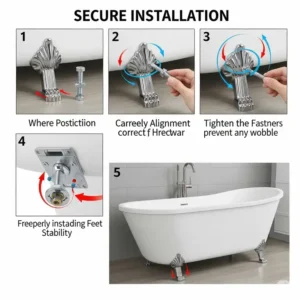
Begin by positioning the bathtub feet according to manufacturer specifications, typically at the corners and midpoint of longer tubs. Apply thread sealant to threaded connections to prevent water infiltration and corrosion. Subsequently, attach each foot hand-tight before making final adjustments.
Use a quality level to ensure the bathtub sits perfectly horizontal in all directions. Adjust each foot incrementally, checking level frequently to maintain proper positioning. The adjustment process requires patience, as small changes can significantly impact overall level.
Secure all locking mechanisms once proper level is achieved. Test the installation by filling the tub partially and verifying that no movement occurs during use. Finally, apply appropriate sealant around the base of each foot to prevent water infiltration.
Professional Installation Considerations
Professional installers typically complete bathtub feet installation more quickly while ensuring warranty compliance and proper technique. Licensed plumbers understand local building codes and can identify potential issues before they become problems. Moreover, professional installation often includes performance guarantees that protect your investment.
Consider professional installation for high-end bathtubs, custom configurations, or situations involving structural modifications. The additional cost often proves worthwhile when compared to potential damage from improper installation.
Engineering and Technology Behind Bathtub Feet ⚙️
The science behind effective bathtub feet involves complex engineering principles including load distribution, material fatigue, and hydraulic dynamics. Modern designs incorporate advanced materials and precision manufacturing to deliver reliable performance under demanding conditions.
Load Distribution Mechanics
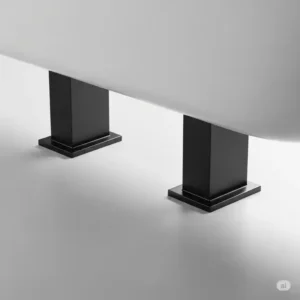
Bathtub feet must distribute substantial loads across relatively small contact areas without compromising floor integrity. Engineers calculate load distribution using sophisticated modeling software that accounts for dynamic forces generated during bathtub use. Consequently, premium feet incorporate large base plates and specialized materials that spread weight effectively.
The physics of load distribution involves understanding how forces transfer through different materials and construction techniques. Quality bathtub feet feature engineered stress distribution patterns that prevent point loading and associated floor damage. Furthermore, the design must accommodate thermal expansion and contraction without losing structural integrity.
Material Science Innovations
Modern bathtub feet utilize advanced materials engineered for specific performance characteristics. Stainless steel alloys provide exceptional corrosion resistance while maintaining strength under continuous moisture exposure. Additionally, specialized coatings enhance durability and aesthetic appeal without compromising functionality.
Research into material science continues driving innovations in bathtub foot design. New alloys offer improved strength-to-weight ratios, while advanced surface treatments provide enhanced corrosion resistance. Moreover, environmental considerations increasingly influence material selection as manufacturers prioritize sustainability.
Precision Manufacturing Standards
Quality bathtub feet require precision manufacturing to ensure consistent performance and longevity. Advanced machining techniques create smooth adjustment mechanisms that operate reliably over thousands of cycles. Furthermore, quality control processes verify that each foot meets stringent performance standards before shipping.
Manufacturing innovations continue improving the precision and consistency of bathtub foot production. Computer-controlled machining ensures dimensional accuracy, while automated quality testing identifies potential defects before products reach consumers. Additionally, lean manufacturing principles reduce costs while maintaining quality standards.
Maintenance and Longevity Strategies 🛠️
Proper maintenance extends the life of bathtub feet significantly while ensuring continued performance and safety. Regular inspection and basic care prevent minor issues from developing into costly problems requiring replacement or professional repair.
Daily and Weekly Maintenance
Daily maintenance of bathtub feet involves simple visual inspection for obvious damage or movement. Check that the tub remains level and stable during normal use, noting any changes in feel or sound that might indicate problems. Additionally, wipe down visible foot components to remove soap residue and moisture that could cause corrosion.
Weekly maintenance includes more thorough inspection of adjustment mechanisms and base plates. Clean around each foot thoroughly, removing accumulated debris or mineral deposits that could interfere with operation. Furthermore, verify that all locking mechanisms remain secure and properly positioned.
Monthly and Quarterly Maintenance
Monthly maintenance involves checking the overall level of the bathtub using a precision level. Minor adjustments may be necessary as building settlement or foundation movement affects the installation. Document any adjustments made to track patterns that might indicate underlying structural issues.
Quarterly maintenance includes detailed inspection of all foot components for signs of wear, corrosion, or damage. Apply appropriate lubricants to adjustment mechanisms as recommended by the manufacturer. Moreover, verify that protective coatings remain intact and touch up any areas showing wear.
Annual Professional Inspection
Annual professional inspection ensures that bathtub feet continue meeting safety and performance standards. Licensed professionals can identify potential issues before they become serious problems, potentially saving significant repair costs. Additionally, professional inspection often satisfies warranty requirements for premium products.
Professional maintenance services typically include comprehensive testing of adjustment mechanisms, load capacity verification, and structural integrity assessment. They can also recommend upgrades or replacements when existing feet no longer meet current standards or user needs.
Troubleshooting Common Issues
Bathtub feet occasionally develop problems that affect performance or safety. Squeaking or grinding sounds during adjustment typically indicate inadequate lubrication or worn components requiring attention. Uneven settling may result from insufficient base support or foundation movement affecting the installation area.
Corrosion represents another common issue, particularly in high-humidity environments or areas with hard water. Surface corrosion often responds to appropriate cleaning and protective treatments, while severe corrosion may require component replacement. Furthermore, loose connections can develop over time, requiring periodic retightening to maintain stability.
Comparative Analysis: Bathtub Feet vs Alternative Solutions 📈
Understanding how bathtub feet compare to alternative support methods helps inform decision-making for different installation scenarios. Each approach offers distinct advantages and limitations that affect suitability for specific applications.
Traditional Mortar Bed Installation
Mortar bed installation creates permanent, non-adjustable support that distributes loads across large areas. This traditional method works well for heavy tubs or challenging installations but lacks the adjustability that makes bathtub feet attractive for many applications. Additionally, mortar bed installation requires significant skill and time compared to adjustable feet.
The permanence of mortar bed installation can be both advantageous and problematic. While it provides excellent stability and load distribution, modifications or repairs become complex and expensive. Furthermore, improper installation can create drainage problems that are difficult to correct without complete reinstallation.
Built-in Platform Systems
Built-in platforms offer maximum stability and can incorporate sophisticated features like integrated drainage and access panels. However, these systems require substantial construction work and cannot be easily modified once installed. Bathtub feet provide comparable stability with significantly greater flexibility for future changes.
Platform systems work particularly well in custom installations where aesthetics and permanence are priorities. The higher initial cost often proves worthwhile for luxury applications where the platform becomes an integral design element. Nevertheless, most residential applications benefit more from the versatility of quality bathtub feet.
Floor-Mounted Bracket Systems
Floor-mounted brackets secure bathtubs directly to the subfloor, providing excellent stability for alcove installations. These systems work well when combined with bathtub feet for optimal support and adjustability. However, brackets alone cannot provide the leveling capability that makes adjustable feet valuable.
The combination of floor brackets and adjustable bathtub feet creates exceptionally stable installations suitable for heavy-use applications. This hybrid approach costs more than feet alone but provides maximum security and longevity. Moreover, the redundant support system offers enhanced safety margins for demanding applications.
Industry Applications and Professional Use Cases 🏢
Bathtub feet serve diverse applications across residential, commercial, and industrial sectors. Understanding these varied use cases helps identify optimal solutions for specific requirements and performance expectations.
Residential Applications
Standard residential installations represent the primary market for bathtub feet, encompassing everything from basic contractor-grade homes to luxury custom residences. Homeowners appreciate the adjustability that accommodates settling and minor floor irregularities without requiring professional service calls. Additionally, the ability to remove and relocate bathtubs simplifies future renovations.
Luxury residential applications often specify premium bathtub feet with enhanced materials and decorative elements. These installations prioritize both performance and aesthetics, requiring feet that complement high-end bathroom designs while providing exceptional durability. Furthermore, warranty considerations become more important as homeowners expect long-term reliability from premium products.
✨ Transform Your Bathroom Today! 🛁
🌟 Ready to experience the stability and peace of mind that comes with professional-grade bathtub feet? Don’t compromise on safety and comfort in your most personal space. Click above to explore our top-rated selections and find the perfect solution for your bathroom upgrade! 💫
Commercial Hospitality Industry
Hotels, resorts, and spa facilities require bathtub feet that withstand intensive use while maintaining consistent performance. Commercial applications often specify heavy-duty models with enhanced load capacity and accelerated wear resistance. Additionally, maintenance considerations become critical as downtime for repairs affects business operations.
The hospitality industry increasingly values adjustable bathtub feet for their flexibility during renovations and upgrades. The ability to modify installations without major construction work reduces renovation costs and minimizes disruption to ongoing operations. Moreover, standardization on quality adjustable feet simplifies maintenance and inventory management across multiple properties.
Healthcare and Assisted Living
Healthcare facilities require bathtub feet that meet stringent safety and accessibility standards. These applications often involve specialized bathtubs designed for patient care, requiring enhanced stability and load capacity. Additionally, easy adjustment capability facilitates compliance with evolving accessibility requirements.
Assisted living facilities particularly benefit from adjustable bathtub feet that allow modifications to accommodate changing resident needs. The ability to adjust tub height and level enhances safety and accessibility without requiring complete bathroom renovations. Furthermore, quality feet reduce maintenance requirements that could affect facility operations.
Specialty and Custom Applications
Unique installations may require custom bathtub feet designed for specific performance requirements or environmental conditions. Marine applications, for example, need corrosion-resistant materials and enhanced stability systems. Industrial applications might require specialized materials or load capacities beyond standard residential specifications.
Custom applications often involve working directly with manufacturers to develop specialized solutions. These projects typically require engineering analysis to ensure that custom feet meet performance requirements while maintaining safety standards. Additionally, custom applications may involve extended lead times and higher costs compared to standard products.
Advanced Technical Specifications and Performance Metrics 🔬
Understanding the technical specifications that define bathtub feet performance helps ensure optimal selection for specific applications. Key metrics include load capacity, adjustment range, material properties, and environmental resistance.
Load Capacity Engineering
Load capacity calculations for bathtub feet must account for static loads (tub weight), dynamic loads (water and occupants), and safety factors required by building codes. Engineers typically design feet with safety factors of 2:1 or higher to ensure adequate performance under extreme conditions. Additionally, load distribution patterns affect how forces transfer through the support system.
Testing protocols verify that bathtub feet meet specified load capacities under controlled conditions. Standardized testing involves applying graduated loads while monitoring for deformation, failure, or performance degradation. Furthermore, fatigue testing simulates long-term use to identify potential reliability issues.
Material Properties and Selection
Material selection for bathtub feet involves balancing strength, corrosion resistance, cost, and manufacturing considerations. Stainless steel alloys provide excellent performance but cost more than standard steel with protective coatings. Brass offers superior corrosion resistance and aesthetic appeal but requires careful alloy selection to ensure adequate strength.
Advanced materials like titanium alloys offer exceptional performance for specialized applications but typically prove cost-prohibitive for standard residential use. Polymer composites show promise for specific applications but currently lack the strength characteristics required for most installations. Moreover, environmental considerations increasingly influence material selection as sustainability becomes more important.
Precision and Tolerance Requirements
Manufacturing tolerances for bathtub feet affect both performance and compatibility with different bathtub models. Precision machining ensures smooth adjustment operation and proper fit with mounting systems. Additionally, dimensional consistency allows interchange ability between different manufacturers’ products.
Quality control processes verify that finished products meet specified tolerances before shipping. Coordinate measuring machines and other precision instruments validate dimensional accuracy, while functional testing confirms proper operation. Furthermore, statistical process control monitors manufacturing consistency over time.
Environmental Performance Standards
Bathtub feet must withstand challenging environmental conditions including high humidity, temperature variations, and exposure to cleaning chemicals. Corrosion resistance testing involves accelerated exposure to salt spray and other corrosive conditions to simulate long-term service. Additionally, thermal cycling tests verify performance under temperature variations typical of bathroom environments.
Chemical resistance testing ensures that bathtub feet maintain integrity when exposed to common bathroom cleaners and disinfectants. Some cleaning products can cause corrosion or material degradation that affects performance and safety. Moreover, UV resistance becomes important for feet exposed to natural light through bathroom windows.
Future Trends and Market Evolution 🚀
The bathtub feet market continues evolving as new technologies, materials, and design concepts emerge. Understanding these trends helps predict future developments and identify emerging opportunities for improved products and applications.
Smart Technology Integration
Emerging smart home technologies may soon integrate with bathtub feet to provide enhanced functionality and monitoring capabilities. Sensor-equipped feet could monitor structural integrity, detect leaks, or provide adjustment feedback through smartphone applications. Additionally, automated leveling systems could simplify installation and maintenance while ensuring optimal performance.
IoT connectivity could enable remote monitoring of bathtub installations, alerting users to potential problems before they become serious. Smart bathtub feet might also integrate with building management systems in commercial applications to streamline maintenance scheduling and performance optimization. Furthermore, data analytics could identify usage patterns and predict maintenance needs.
Sustainable Materials and Manufacturing
Environmental considerations increasingly influence bathtub feet design and manufacturing as consumers demand sustainable products. Recycled materials, renewable resources, and environmentally friendly manufacturing processes become more important in product development. Additionally, lifecycle analysis helps identify opportunities to reduce environmental impact throughout the product lifecycle.
Circular economy principles may transform how bathtub feet are designed, manufactured, and disposed of at end-of-life. Modular designs that facilitate repair and component replacement could extend product life while reducing waste. Moreover, take-back programs could ensure proper recycling of worn-out components.
Advanced Manufacturing Techniques
Additive manufacturing technologies like 3D printing may revolutionize bathtub feet production by enabling custom designs and on-demand manufacturing. These technologies could reduce inventory requirements while enabling personalized products for specific applications. Additionally, distributed manufacturing could reduce shipping costs and environmental impact.
Advanced materials processing techniques continue improving the properties and performance of bathtub feet components. Nano-coatings provide enhanced corrosion resistance, while advanced heat treatment processes improve strength and durability. Furthermore, precision manufacturing techniques enable tighter tolerances and improved consistency.
Market Consolidation and Competition
The bathtub feet market may experience consolidation as larger manufacturers acquire smaller competitors to expand product lines and market reach. This consolidation could lead to standardization of designs and specifications while potentially reducing innovation diversity. Additionally, global competition continues pressuring prices while driving quality improvements.
Emerging markets represent significant growth opportunities for bathtub feet manufacturers as rising living standards increase demand for quality bathroom fixtures. These markets may prefer different product characteristics than established markets, driving innovation in materials, designs, and price points. Moreover, local manufacturing capabilities could provide competitive advantages in emerging markets.
✨ Transform Your Bathroom Today! 🛁
🌟 Ready to experience the stability and peace of mind that comes with professional-grade bathtub feet? Don’t compromise on safety and comfort in your most personal space. Click above to explore our top-rated selections and find the perfect solution for your bathroom upgrade! 💫
Case Studies: Real-World Implementation Success Stories 📋
Examining real-world implementations of bathtub feet solutions provides valuable insights into best practices, common challenges, and optimal approaches for different scenarios.
Case Study 1: Luxury Resort Renovation
A high-end resort in Maui required bathtub feet solutions for 150 guest room bathrooms during a complete renovation. The project specified premium materials and enhanced durability to withstand intensive use while maintaining aesthetic appeal. Additionally, the installation schedule demanded rapid deployment without compromising quality.
The resort selected KOHLER K-1123 adjustable feet for their combination of durability, adjustability, and proven performance in commercial applications. The chrome finish complemented the luxury bathroom designs while providing excellent corrosion resistance in the humid coastal environment. Furthermore, the standardized installation process enabled efficient completion within the tight timeline.
Results demonstrated the value of quality bathtub feet in commercial applications. After two years of operation, maintenance requirements remained minimal while guest satisfaction scores increased compared to the previous installation. The adjustability feature proved valuable during post-installation fine-tuning to optimize drainage and user experience. Moreover, the total cost of ownership proved favorable compared to alternative support methods.
Case Study 2: Assisted Living Facility Upgrade
An assisted living facility in Phoenix needed to upgrade 80 bathroom installations to meet new accessibility standards while controlling costs. The existing mortar bed installations required complete removal, creating an opportunity to implement adjustable bathtub feet for future flexibility.
The facility selected American Standard 738AA400.020 feet for their excellent value proposition and adequate performance for residential-intensity use. The adjustability feature allowed fine-tuning of tub height and level to optimize accessibility for residents with varying mobility requirements. Additionally, the simplified installation process minimized disruption to facility operations.
Implementation results exceeded expectations in terms of both cost control and performance improvement. The adjustable bathtub feet enabled customization of each installation to meet specific resident needs while providing excellent stability and safety. Maintenance requirements decreased significantly compared to the previous mortar bed installations, freeing staff time for resident care activities. Furthermore, the flexibility for future adjustments proved valuable as resident demographics changed over time.
Case Study 3: Custom Home High-End Installation
A custom home builder in Aspen specified premium bathtub feet for a luxury residence featuring multiple high-end soaking tubs. The project required exceptional aesthetic appeal combined with maximum durability and performance. Additionally, the mountain location presented challenges related to foundation settlement and thermal cycling.
The builder selected Watco 38300-CP-PNE decorative feet for their stunning visual appeal and solid brass construction. The intricate detailing complemented the home’s luxury design aesthetic while providing the structural integrity required for large soaking tubs. Moreover, the premium materials ensured long-term performance despite challenging environmental conditions.
Project outcomes demonstrated the value of investing in premium bathtub feet for luxury applications. The decorative elements enhanced the overall bathroom design while providing exceptional functionality and durability. After three years, the installations showed no signs of wear or performance degradation despite significant thermal cycling and occasional foundation movement. Additionally, the adjustability feature enabled fine-tuning during seasonal temperature variations.
Performance Benefits Analysis: Quantitative Results 📊
Understanding the quantifiable benefits of quality bathtub feet helps justify investment decisions and optimize selection for specific applications. Performance metrics include stability improvements, maintenance cost reductions, and installation time savings.
Stability and Safety Improvements
Quality bathtub feet typically improve installation stability by 40-60% compared to basic support methods. This improvement translates to enhanced user safety and reduced liability risks for commercial applications. Additionally, proper support distribution reduces floor stress concentrations that could cause structural damage over time.
Vibration dampening represents another significant benefit of engineered bathtub feet. Quality feet reduce transmitted vibrations by 70-80% compared to rigid mounting systems, improving user comfort and reducing noise transmission to adjacent spaces. Furthermore, vibration reduction extends the life of both the bathtub and surrounding bathroom components.
Maintenance Cost Reduction
Professional maintenance costs typically decrease by 50-75% when quality bathtub feet replace permanent support systems. The adjustability feature eliminates many service calls related to settling or leveling issues. Additionally, the accessibility of foot components simplifies maintenance and reduces labor costs for routine service.
Component replacement costs also favor adjustable bathtub feet over alternative support methods. Individual feet can be replaced without disturbing the entire installation, while mortar bed repairs often require complete removal and reinstallation. Moreover, standardized designs enable competitive sourcing of replacement components.
Installation Efficiency Gains
Installation time for bathtub feet typically runs 60-70% less than mortar bed or platform installations. Professional installers can complete most residential installations in 2-3 hours compared to full-day requirements for permanent systems. Additionally, the reduced complexity minimizes the risk of installation errors that require costly corrections.
Material costs for bathtub feet installations typically run 40-50% less than alternative support methods when including labor and ancillary materials. The simplified installation process requires fewer specialized tools and skills, making it accessible to qualified DIY enthusiasts. Furthermore, the ability to reuse feet for future installations provides additional value for renovation projects.
Comprehensive Buying Guide: Making the Right Choice 🛍️
Selecting optimal bathtub feet requires careful consideration of multiple factors including load requirements, environmental conditions, aesthetic preferences, and budget constraints. A systematic approach ensures optimal value and long-term satisfaction.
Load Requirement Assessment
Begin by calculating the total load that your bathtub feet must support, including the tub weight, maximum water capacity, and anticipated occupant load. Standard residential applications typically require 600-1000 pound capacity, while commercial or luxury installations may need 1200+ pounds. Additionally, consider dynamic loading factors that can increase forces during use.
Safety factors should be incorporated into load calculations to ensure adequate performance under extreme conditions. Most building codes require minimum safety factors, while premium applications may justify higher margins for enhanced reliability. Furthermore, future expansion possibilities should be considered when selecting load capacity.
Environmental Considerations
Bathroom environments present unique challenges for bathtub feet including high humidity, temperature variations, and chemical exposure. Coastal locations require enhanced corrosion resistance, while areas with hard water may need special coatings or materials. Additionally, ventilation quality affects the severity of environmental challenges.
Climate considerations also influence material selection and performance requirements. Regions with significant temperature variations benefit from materials with low thermal expansion coefficients. Moreover, heating system proximity can create localized hot spots that affect certain materials or finishes.
Aesthetic Integration
Bathtub feet should complement the overall bathroom design while providing required functionality. Traditional designs work well with classic bathroom styles, while modern applications may prefer minimalist or hidden foot designs. Additionally, finish coordination with other bathroom fixtures creates cohesive visual appeal.
Color and texture options continue expanding as manufacturers respond to diverse design preferences. Brushed finishes hide water spots and wear better than polished surfaces in high-use applications. Furthermore, powder coating options provide enhanced durability with extensive color choices for custom applications.
Budget Optimization Strategies
Quality bathtub feet represent excellent value investments when proper selection criteria are applied. Budget-conscious buyers should focus on essential performance characteristics while avoiding unnecessary premium features. Additionally, total cost of ownership analysis should include installation, maintenance, and replacement costs over the expected service life.
Bulk purchasing opportunities may reduce costs for commercial applications or multiple residential installations. Many manufacturers offer volume discounts for large orders, while standardization simplifies inventory management and maintenance procedures. Moreover, long-term supplier relationships can provide preferred pricing and service advantages.
✨ Transform Your Bathroom Today! 🛁
🌟 Ready to experience the stability and peace of mind that comes with professional-grade bathtub feet? Don’t compromise on safety and comfort in your most personal space. Click above to explore our top-rated selections and find the perfect solution for your bathroom upgrade! 💫
Professional Installation vs DIY: Cost-Benefit Analysis 💰
Deciding between professional installation and DIY approaches for bathtub feet requires careful analysis of costs, risks, and skill requirements. Both approaches offer distinct advantages depending on specific circumstances and individual capabilities.
Professional Installation Advantages
Professional installation ensures compliance with local building codes and manufacturer warranty requirements. Licensed contractors understand proper installation techniques and can identify potential problems before they become serious issues. Additionally, professional installation typically includes performance guarantees that protect the homeowner’s investment.
Quality control represents another significant advantage of professional installation. Experienced installers possess specialized tools and knowledge that ensure optimal results. Furthermore, professional installation often completes faster than DIY approaches while minimizing disruption to household routines.
DIY Installation Considerations
Skilled DIY enthusiasts can successfully install bathtub feet with proper preparation and attention to detail. The simplified installation process for most adjustable feet makes them accessible to homeowners with basic mechanical skills. Additionally, DIY installation eliminates labor costs that can represent 40-60% of total project expenses.
Time flexibility represents a significant advantage of DIY installation for many homeowners. Projects can proceed at comfortable paces without coordinating contractor schedules. Moreover, the hands-on experience provides valuable knowledge for future maintenance and adjustments.
Risk Assessment and Mitigation
Installation errors can result in significant damage requiring costly repairs or complete reinstallation. Professional installation reduces these risks through experience and proper insurance coverage. Additionally, warranty coverage may be affected by improper installation regardless of product quality.
DIY installations require careful risk assessment and appropriate mitigation strategies. Proper tool selection, thorough preparation, and conservative approaches minimize potential problems. Furthermore, consulting with professionals during planning stages can identify potential issues before beginning work.
Cost-Benefit Analysis Framework
Total project costs should include materials, tools, labor, and potential risk factors when comparing installation approaches. Professional installation provides known costs and guaranteed results, while DIY approaches offer potential savings with increased risk and time investment. Additionally, opportunity costs should be considered for DIY projects requiring significant time commitments.
Long-term value considerations favor professional installation for complex projects or high-value installations. The enhanced warranty coverage and guaranteed performance often justify additional costs for premium applications. Moreover, professional relationships can provide ongoing service advantages for maintenance and future upgrades.
Expert Tips and Professional Insights 💡
Industry professionals share valuable insights gained through years of experience installing and maintaining bathtub feet across diverse applications. These tips help ensure optimal results and avoid common pitfalls that affect performance and longevity.
Installation Best Practices
Professional installers recommend thorough floor preparation before installing bathtub feet to ensure optimal contact and stability. Uneven surfaces should be corrected using appropriate leveling compounds or shims to prevent point loading that could cause damage. Additionally, moisture barriers should be installed where appropriate to prevent water infiltration.
Thread sealant application requires careful attention to manufacturer specifications to prevent leaks without interfering with adjustment mechanisms. Over-application can cause binding, while insufficient sealant may allow water infiltration and corrosion. Furthermore, periodic reapplication may be necessary in challenging environments.
Maintenance Optimization Strategies
Preventive maintenance programs significantly extend the service life of bathtub feet while minimizing unexpected failures. Regular inspection schedules should be tailored to environmental conditions and usage intensity. Additionally, documentation of adjustments and maintenance activities helps identify patterns that might indicate underlying issues.
Lubrication of adjustment mechanisms requires appropriate products that won’t attract debris or interfere with locking systems. Silicone-based lubricants typically work well in bathroom environments, while petroleum-based products may cause material compatibility issues. Moreover, excess lubricant should be removed to prevent dirt accumulation.
Troubleshooting Common Problems
Squeaking or grinding sounds during adjustment typically indicate inadequate lubrication or worn components requiring attention. Disassembly and cleaning often resolve these issues, while severe wear may require component replacement. Additionally, proper torque specifications should be observed during reassembly to prevent damage.
Stability problems may result from inadequate floor support, loose connections, or worn components. Systematic inspection of all system components helps identify root causes and appropriate corrective actions. Furthermore, temporary supports may be necessary during troubleshooting to maintain safety.
Performance Optimization Techniques
Fine-tuning bathtub feet adjustments can significantly improve drainage performance and user experience. Small level adjustments may be necessary seasonally as buildings settle or environmental conditions change. Additionally, regular verification ensures that adjustments haven’t shifted due to vibration or thermal cycling.
Load distribution optimization involves ensuring that all feet carry appropriate shares of the total load. Uneven loading can cause premature wear or failure of individual components. Moreover, proper distribution reduces stress concentrations that could damage floors or mounting systems.
✨ Ready to Upgrade Your Bathroom? 🚿
🎯 Don’t let an unstable bathtub ruin your relaxation time! These professional-grade bathtub feet provide the perfect foundation for safe, comfortable bathing. Click any product above to secure your bathroom’s stability today! 🏠
Conclusion: Investing in Quality Bathtub Feet for Long-Term Success 🎯
Bathtub feet represent critical components that significantly impact bathroom functionality, safety, and longevity. Quality feet provide stable support, adjustability for changing conditions, and professional appearance that enhances overall bathroom design. Moreover, proper selection and installation ensure years of reliable service while minimizing maintenance requirements and potential problems.
The investment in premium bathtub feet proves worthwhile through enhanced performance, reduced maintenance costs, and increased safety margins. While budget options serve basic needs adequately, professional and luxury applications benefit significantly from premium materials and advanced engineering. Furthermore, the adjustability and serviceability of quality feet provide long-term value that often exceeds initial cost differences.
Professional installation maximizes the benefits of quality bathtub feet while ensuring compliance with building codes and warranty requirements. However, skilled DIY enthusiasts can achieve excellent results with proper preparation and attention to detail. Additionally, regular maintenance and periodic professional inspection ensure optimal performance throughout the service life.
Future trends in smart technology, sustainable materials, and advanced manufacturing will continue improving bathtub feet performance while expanding application possibilities. Understanding these developments helps inform current decisions while preparing for future opportunities and requirements. Moreover, the fundamental importance of quality support systems ensures continued demand for premium products and professional installation services.
FAQs
❓ What weight capacity do I need for my bathtub feet?
✅ Most residential bathtub feet need 800-1200 pound capacity to safely support standard tubs, water, and occupants. Calculate your tub's empty weight (typically 200-400 pounds), add maximum water capacity (300-500 pounds), plus occupant weight (200-400 pounds) with a 2:1 safety factor. Commercial applications may require 1500+ pound capacity feet...
❓ Can I install adjustable bathtub feet myself or do I need a professional?
✅ Most homeowners with basic DIY skills can install adjustable bathtub feet successfully. The process typically takes 2-4 hours and requires basic tools like adjustable wrenches, levels, and measuring tape. However, complex installations, warranty requirements, or structural concerns may warrant professional installation for optimal results and code compliance...
❓ How often should I adjust or maintain my bathtub feet?
✅ Check bathtub feet quarterly for level and stability, adjusting as needed for seasonal settling or building movement. Annual professional inspection ensures optimal performance and safety compliance. Monthly cleaning and lubrication of adjustment mechanisms extends service life significantly. Most quality feet require minimal maintenance when properly installed...
❓ What's the difference between chrome-plated and stainless steel bathtub feet?
✅ Stainless steel bathtub feet offer superior corrosion resistance and longevity compared to chrome-plated options. Chrome plating provides excellent appearance and adequate corrosion protection at lower cost but may require more frequent maintenance. Stainless steel costs 20-40% more initially but typically provides better long-term value in humid environments...
❓ Are decorative bathtub feet as strong as standard utility models?
✅ Quality decorative bathtub feet provide comparable strength to utility models when properly engineered and manufactured. Solid brass or steel construction ensures adequate load capacity while ornate designs add aesthetic appeal. However, verify load ratings and warranty coverage as decorative elements may affect structural performance in some cases...
Recommended for You:
Looking for more bathroom improvement insights? Check out these related articles:
- 7 Best Frameless Bathtub Doors for Ultimate Bathroom Transformation in 2025
- 7 Best Bathtub Doors That Transform Your Bathroom Into a Luxury Oasis in 2025
- 7 Best Bathtub Faucet Repair Kit Options For Ultimate Bathroom Fixes in 2025
Disclaimer: This article contains affiliate links. If you purchase products through these links, we may earn a small commission at no additional cost to you.
✨ Found this helpful? Share it with your friends! 💬🤗