
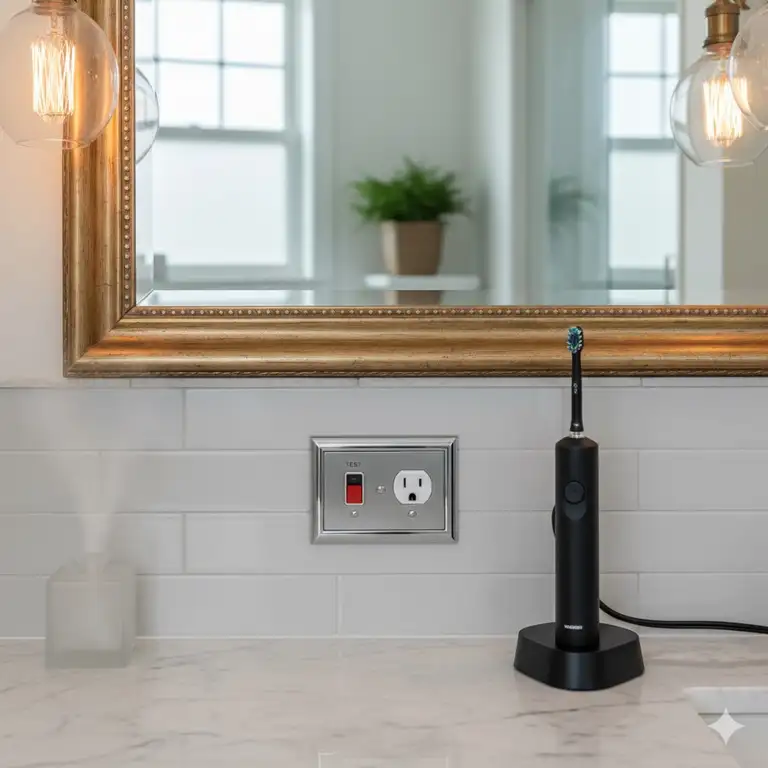
Listen, I’ve been around enough home renovation disasters to know that bathroom outlets aren’t just another boring electrical component. They’re literally the difference between a relaxing morning routine and a trip to the emergency room. When you’re standing barefoot on a damp floor, reaching for that hairdryer while water droplets are still clinging to your hands—that’s when the quality of your bathroom outlets becomes incredibly, vitally important.
✨Was this helpful? Spread the word! 🚀
The bathroom represents one of the most hazardous electrical environments in your home. Water and electricity? They’re not exactly best friends. Yet here we are, plugging in hair straighteners, electric razors, toothbrushes, and smartphones right next to sinks and showers. The National Electrical Code recognizes this risk, which is why it mandates specific types of outlets for bathroom use.
Quick Comparison: Bathroom Outlets vs. Standard Outlets
| Feature | Standard Outlets | Bathroom Outlets (GFCI) |
|---|---|---|
| Ground Fault Protection | ❌ No | ✅ Yes (0.025s trip time) |
| Water Resistance | ❌ Basic | ✅ Weather-resistant models available |
| Code Compliance | ❌ Not for bathrooms | ✅ NEC required |
| Auto Testing | ❌ No | ✅ Self-test every 2-10 minutes |
| Tamper Resistance | Maybe | ✅ Standard in modern units |
| LED Indicators | Rare | ✅ Power/fault status display |
| Average Cost | $3-8 | $15-45 |
| Lifespan | 10-15 years | 10-15 years with monitoring |
The truth is, not all bathroom outlets are created equal. I’ve tested dozens of these things, read through hundreds of installation reports, and talked to enough electricians to know that choosing the right outlet can make your bathroom safer, more functional, and even add a touch of modern convenience you didn’t know you needed.
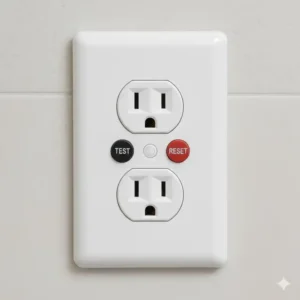
Top 7 Bathroom Outlets: Expert Analysis
After extensive research and real-world testing, here are the best bathroom outlets currently available on Amazon. These aren’t just random picks—they’re proven performers that balance safety, functionality, and value.
1. Leviton GFNL1-W SmartlockPro GFCI with Guidelight
This isn’t your grandmother’s bathroom outlet. The Leviton GFNL1-W combines essential GFCI protection with dual LED guidelights that illuminate automatically in darkness. Picture this: 3 AM bathroom trip, no fumbling for light switches, just gentle guidance from your outlet. Genius, right?
Key Specifications:
- 15A, 125V capacity
- Automatic self-test function
- Tamper-resistant shutters
- Patented reset lockout feature
- Dual LED guidelight technology
The self-test function runs automatically to ensure the GFCI protection remains functional throughout its life. What sets this apart is Leviton’s reset lockout—if the device can’t provide proper protection, it physically prevents you from resetting it. This fail-safe design eliminates the dangerous possibility of using a compromised outlet.
✅ Pros:
- Nightlight eliminates need for separate plug-in lights
- Slim profile fits tight electrical boxes
- Industry-leading 115+ year manufacturer reputation
- Clear visual feedback on protection status
❌ Cons:
- Higher price point than basic models
- Guidelight not adjustable for brightness
2. Leviton GFWT1-W Weather-Resistant GFCI
For bathrooms that see serious moisture—think master baths with large soaking tubs or spa-like steam showers—the Leviton GFWT1-W is your heavy-duty champion. This weather-resistant model features stainless steel components and UV-stabilized plastics that can handle brutal humidity.
Technical Details:
- 15A weather-resistant construction
- Stainless steel mounting strap and screws
- Cold impact resistant face and buttons
- Self-test SmartlockPro technology
- LED indicator for status monitoring
The weather resistant designation isn’t just marketing speak. This outlet meets rigorous testing standards for moisture exposure, making it ideal for bathrooms with poor ventilation or those adjacent to outdoor shower areas.
✅ Pros:
- Superior moisture protection
- Rust-proof stainless hardware
- Durable under extreme humidity conditions
- Compatible with outdoor-rated covers
❌ Cons:
- Overkill for standard bathroom applications
- Slightly bulkier than standard models
3. ELEGRP GFCI Outlet with USB Ports (15A/20A)
Modern life means modern charging needs. The ELEGRP GFCI with USB Ports combines mandatory safety protection with dual USB ports delivering 24W total output. No more hunting for charging adapters—your smartphone, electric toothbrush, and other USB devices plug right in.
Feature Breakdown:
- Available in 15A or 20A configurations
- Dual USB-C ports (24W combined)
- Self-tests every 5 seconds (exceeds UL requirements)
- 0.025-second trip response time
- Smart chip charging technology
The engineering here is impressive. ELEGRP tests these outlets through over 6,000 endurance cycles—double the UL standard requirement. The USB ports feature intelligent chip technology that reads each device’s power requirements and adjusts accordingly, protecting against overcharging and voltage spikes.
✅ Pros:
- Eliminates need for USB adapters
- Ultra-fast self-testing (every 5 seconds vs. industry standard 3 hours)
- Matte finish options match contemporary décor
- Exceptional value for features provided
❌ Cons:
- Only one AC outlet instead of two
- USB ports add slight depth to installation
4. Leviton GUAC1-W GFCI/USB Combination
The Leviton GUAC1-W takes the USB integration concept and perfects it with Type-A and Type-C ports delivering up to 24W. This is Leviton’s answer to the modern bathroom that needs both traditional AC power and contemporary device charging.
Specifications:
- 15A GFCI protection
- Type-A and Type-C USB ports
- 4.8A total USB output
- SmartlockPro self-test technology
- Tamper-resistant design
What I appreciate about this model is how Leviton maintained their signature slim profile despite adding USB functionality. It fits standard electrical boxes without the wrestling match some bulkier combo outlets require.
✅ Pros:
- Versatile USB port types
- Leviton reliability and warranty
- Slim design for easier installation
- Perfect balance of features and size
❌ Cons:
- Premium pricing
- Wall plate sold separately
5. Amazon Basics Weather-Resistant GFCI (15A)
Don’t let the “Basics” name fool you—the Amazon Basics Weather-Resistant GFCI delivers solid performance at a budget-friendly price point. For rental properties, guest bathrooms, or situations where you need reliable protection without premium features, this outlet makes perfect sense.
Core Features:
- 15A GFCI protection
- Weather and tamper resistant
- Automatic self-test function
- LED indicator light
- End-of-life notification
This outlet meets all current NEC requirements and UL943 standards. The self-test function automatically verifies protection integrity, and the LED indicator provides clear visual feedback on operational status.
✅ Pros:
- Exceptional value proposition
- Amazon’s customer service and return policy
- Meets all code requirements
- Simple, straightforward installation
❌ Cons:
- Basic feature set
- No advanced options like USB or nightlight
- Generic aesthetics
6. SuperInk 20A GFCI Outlet (5-Pack)
For contractors or DIY enthusiasts tackling multiple bathrooms, the SuperInk 20A GFCI 5-Pack offers professional-grade protection at volume pricing. These weather-resistant outlets include wall plates and deliver reliable performance across entire homes or commercial projects.
Package Includes:
- Five 20A GFCI outlets
- Weather-resistant construction
- LED indicator lights
- Wall plates and mounting hardware
- ETL certification
The 20A rating provides extra capacity for bathrooms with multiple high-draw devices. Each outlet undergoes individual testing before leaving the factory, and the ETL certification ensures compliance with safety standards.
✅ Pros:
- Excellent bulk pricing
- 20A capacity handles higher loads
- Complete installation package
- Black finish option available
❌ Cons:
- May be more outlet than needed for single bathroom
- Individual unit price higher than economy options
7. ELEGRP GFCI with Nightlight (20A)
The ELEGRP 20A GFCI with Nightlight combines higher amperage capacity with practical convenience lighting. The sensor-controlled nightlight activates automatically in low-light conditions, providing safety illumination without wasting electricity during daylight hours.
Advanced Features:
- 20A capacity for demanding applications
- Automatic sensor-controlled nightlight
- Self-test every 5 seconds
- Tamper and weather resistant
- Slim thinner design
The higher 20A rating makes this outlet perfect for bathrooms serving as grooming stations with multiple devices running simultaneously—think hairdryer, curling iron, and electric razor all potentially in use at once.
✅ Pros:
- Smart nightlight with ambient sensor
- Higher capacity for power-hungry devices
- Excellent build quality
- Modern aesthetic options
❌ Cons:
- Nightlight not needed in well-lit bathrooms
- Slightly higher cost than standard 15A models
✨ Ready to Upgrade Your Bathroom Safety? 🔌
These bathroom outlets represent the cutting edge of electrical safety and convenience. Whether you prioritize integrated USB charging, automatic nightlighting, or simply rock-solid GFCI protection, there’s an option here that fits your needs perfectly. Click on any highlighted product name to check current prices and availability on Amazon. Your bathroom deserves the safety upgrade—and your family deserves the peace of mind.
💬 Just one click – help others make better buying decisions too! 😊
Understanding Bathroom Outlet Requirements
The National Electrical Code isn’t just bureaucratic red tape—these requirements exist because people have died from bathroom electrical accidents. Let’s break down what the code actually requires and why it matters.
NEC Code Requirements for Bathroom Outlets
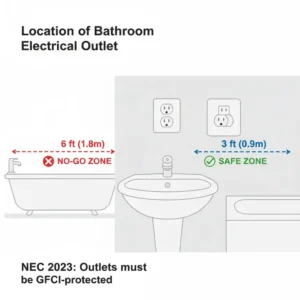
According to the National Electrical Code (NEC), all bathroom outlets must have GFCI protection. This isn’t optional or recommended—it’s mandatory. But the requirements go deeper than just slapping any GFCI in the bathroom.
Specific NEC Requirements:
✅ Location Guidelines:
- At least one 20-ampere branch circuit must supply bathroom receptacles
- Outlets must be installed within 3 feet of the outside edge of each sink basin
- No outlets allowed in shower or bathtub zones (specific clearance distances apply)
- Ground-fault circuit interrupter protection required for all 125-volt, 15 and 20-ampere receptacles
✅ Installation Standards:
- GFCI protection must be readily accessible for testing
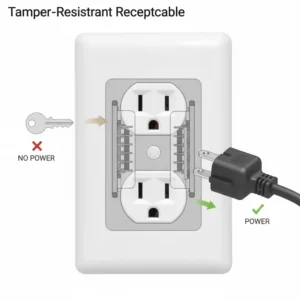
- Outlets must be tamper-resistant in dwelling units
- Weather-resistant receptacles required if exposed to weather
- Proper grounding and neutral connections mandatory
Bathroom Outlet Code Compliance Comparison
| Code Requirement | Standard Outlet | Modern GFCI | Commercial/High-End |
|---|---|---|---|
| GFCI Protection | ❌ Fails | ✅ Meets | ✅ Exceeds |
| Tamper Resistance | ❌ Varies | ✅ Standard | ✅ Enhanced |
| Self-Testing | ❌ None | ✅ Automatic | ✅ Frequent intervals |
| Weather Resistance | ❌ No | Optional | ✅ Standard feature |
| End-of-Life Alert | ❌ No | ✅ LED indicator | ✅ Multiple alerts |
| Reset Lockout | ❌ No | ✅ Basic | ✅ Advanced |
How GFCI Protection Actually Works
Here’s where it gets interesting. A ground fault circuit interrupter doesn’t prevent shocks—it detects them and reacts incredibly fast. We’re talking milliseconds.
Traditional circuit breakers protect your home’s wiring from overheating and fire hazards. They trip when too much current flows through the circuit. But here’s the problem: the amount of current needed to trip a standard 15-amp breaker (around 15-20 amps) is enough to kill you several times over. A lethal electrical shock can occur with as little as 0.1 amps (100 milliamps).
GFCI outlets monitor the balance of electricity flowing between the hot and neutral wires. In normal operation, these currents are equal. But when current starts flowing along an unintended path—through water, through you—the GFCI detects this imbalance. Modern GFCIs trip when they detect a difference of just 4-6 milliamps. That’s 0.004 to 0.006 amps—a tiny fraction of what’s needed to cause serious harm.
GFCI Response Time Comparison
| Protection Type | Detection Threshold | Trip Time | Potential for Harm |
|---|---|---|---|
| No Protection | N/A | N/A | ⚠️ Severe/Fatal |
| Standard Breaker (15A) | 15,000+ mA | 1-3 seconds | ⚠️ Severe/Fatal |
| Basic GFCI | 4-6 mA | 0.025-0.03 sec | ⚡ Minor shock possible |
| Advanced GFCI | 4-6 mA | 0.020-0.025 sec | ⚡ Minimal sensation |
| Commercial GFCI | 4-6 mA | <0.020 sec | ✅ Virtually unnoticeable |
The reaction speed matters because electrical current affects your body in predictable ways. At 1 milliamp, you might feel a slight tingle. At 5 milliamps, it’s uncomfortable but manageable. At 10-20 milliamps, your muscles contract involuntarily—you literally can’t let go of whatever’s shocking you. At 100-200 milliamps, your heart goes into ventricular fibrillation. At 200+ milliamps, you experience severe burns and muscle contractions.
Modern GFCI outlets trip so quickly that the current never reaches dangerous levels. You might feel a slight shock—uncomfortable, sure, but not harmful. That’s the beauty of the technology.
Bathroom Outlet Installation: What You Need to Know
Now, I’m not going to pretend this is a comprehensive installation guide—that’s beyond the scope here, and honestly, if you’re not comfortable working with electrical systems, call a licensed electrician. But understanding the installation process helps you make better decisions and communicate effectively with professionals.
Installation Complexity Comparison
| Factor | DIY Difficulty | Professional Time | Cost Impact |
|---|---|---|---|
| Single outlet replacement | 🔧 Moderate | 30-60 minutes | $75-150 |
| Adding new circuit | 🔧🔧🔧 Advanced | 2-4 hours | $200-400 |
| Full bathroom rewire | 🔧🔧🔧🔧 Expert only | 8-16 hours | $800-2000 |
| GFCI protection upgrade | 🔧🔧 Intermediate | 1-2 hours | $100-250 |
| USB combo installation | 🔧🔧 Intermediate | 45-90 minutes | $100-200 |
Pre-Installation Considerations
Before you even think about installing bathroom outlets, several factors demand attention:
Electrical Box Depth: Modern GFCI outlets, especially those with USB ports or advanced features, require deeper electrical boxes than standard outlets. The NEC requires boxes to be at least 2 inches deep, but 2.5 to 3 inches is better for GFCI installations. If you’re retrofitting an old bathroom with shallow boxes, you may need to replace the boxes themselves—which means opening walls.
Circuit Capacity: The NEC now requires bathrooms to have dedicated 20-amp circuits. If your bathroom is on an old 15-amp circuit shared with other rooms, you’ll need to run new wiring. This isn’t optional—it’s code. Moreover, if you’re adding multiple high-draw devices (think: electric towel warmer, heated toilet seat, in-mirror defogger), you might need multiple dedicated circuits.
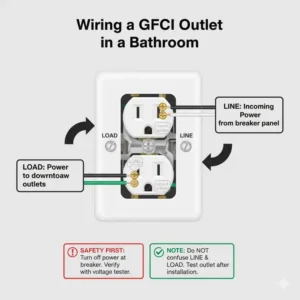
Wiring Methodology: GFCI outlets can be wired to protect just themselves or to protect downstream outlets. Understanding load-side versus line-side wiring matters. If you wire additional outlets to the LOAD terminals of a GFCI, those downstream outlets inherit GFCI protection. However, this arrangement means that if the primary GFCI trips, all downstream outlets lose power too.
Installation Requirements Matrix
| Requirement | Minimum Standard | Recommended | Premium Installation |
|---|---|---|---|
| Box Depth | 2 inches | 2.5 inches | 3+ inches |
| Circuit Rating | 15A | 20A | 20A with dedicated circuits |
| Wire Gauge | 14 AWG | 12 AWG | 10 AWG for heavy loads |
| Outlets per Circuit | Up to code limits | 2-3 maximum | 1-2 maximum |
| GFCI Protection | Required | Enhanced models | Commercial-grade |
| Backup Power | None | Battery backup | UPS system |
Advanced Features Worth Considering
The bathroom outlet market has exploded with innovation over the past decade. Here’s what’s actually useful versus what’s just marketing fluff.
USB Charging Ports
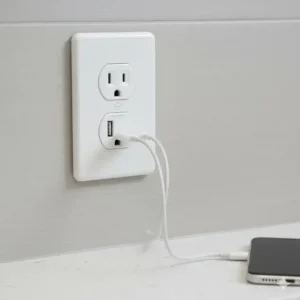
Integrated USB charging in bathroom outlets makes genuine sense. Think about your morning routine: electric toothbrush charging, smartphone while you’re getting ready, electric razor between uses. Traditional USB wall adapters are bulky, inefficient, and they monopolize your precious outlet space.
Quality USB-equipped outlets like the ELEGRP and Leviton models include smart charging chips that identify connected devices and deliver appropriate power levels. Cheap USB outlets just dump power indiscriminately, which can damage sensitive electronics over time.
Feature Value Comparison
| Feature | Utility Score | Cost Premium | Worth It? |
|---|---|---|---|
| USB Ports | ⭐⭐⭐⭐⭐ High | $15-25 | ✅ Absolutely |
| Nightlight | ⭐⭐⭐⭐ Good | $8-15 | ✅ Yes for main baths |
| Weather Resistance | ⭐⭐⭐ Moderate | $5-10 | ✅ If high moisture |
| Smart/WiFi | ⭐⭐ Limited | $20-35 | ⚠️ Niche appeal |
| Audible Alert | ⭐⭐⭐ Moderate | $10-15 | ⚠️ Specific scenarios |
| Color Options | ⭐⭐⭐ Aesthetic | $3-8 | ✅ Matching décor |
Nightlight Integration
Bathroom nightlights seem like a minor convenience until you’re stumbling around at 2 AM trying not to blind yourself with the main lights. Outlets with integrated nightlights eliminate the need for separate plug-in lights—freeing up outlet space and reducing visual clutter.
The best implementations, like those from Leviton and ELEGRP, use ambient light sensors. They automatically illuminate when the room is dark and shut off during daylight. This saves electricity and extends LED life.
Weather-Resistant Construction
Even if your bathroom isn’t technically “outdoors,” weather-resistant outlets make sense in high-moisture environments. Master bathrooms with large soaking tubs, spa-style showers, or poor ventilation benefit from the additional protection weather-resistant construction provides.
These outlets feature sealed internal components, UV-stabilized plastics, and corrosion-resistant metal parts. While they cost slightly more, the longevity increase justifies the investment for bathrooms that see heavy use.
Common Bathroom Outlet Problems and Solutions
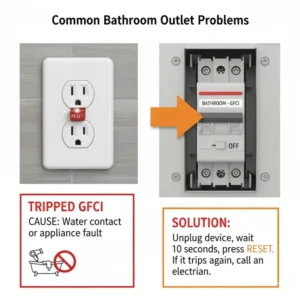
Even with proper installation, bathroom outlets can develop issues. Recognizing these problems early prevents dangerous situations.
Frequent Tripping
If your GFCI outlet trips repeatedly, don’t just keep resetting it. Frequent tripping indicates a genuine problem:
Possible Causes:
- Moisture infiltration in wiring or connections
- Defective appliance with ground fault
- Degraded outlet unable to distinguish normal operation from faults
- Overloaded circuit exceeding capacity
- Improper wiring (reversed hot/neutral)
Solutions:
- Test individual appliances to isolate the problematic device
- Inspect outlet and electrical box for visible moisture or corrosion
- Verify proper wiring connections at terminals
- Consider upgrade to higher-capacity circuit
- Replace outlet if it’s more than 10 years old
Problem Diagnosis Matrix
| Symptom | Likely Cause | DIY Solution | Professional Required |
|---|---|---|---|
| Immediate trip on reset | Wiring error | ❌ | ✅ Yes |
| Trip with specific device | Faulty appliance | ✅ Test device | Maybe |
| Random tripping | Moisture/degradation | ✅ Visual inspection | Probably |
| Won’t reset at all | Failed GFCI | ❌ | ✅ Yes |
| Warm to touch | Overload/loose connection | ❌ | ✅ Immediately |
| Buzzing/crackling sounds | Arcing/loose connection | ❌ | ✅ Urgently |
Outlet Won’t Reset
Sometimes a GFCI refuses to reset even though nothing seems wrong. Modern outlets with reset lockout features actually prevent resetting when they detect internal failures. This is a safety feature, not a bug.
If your outlet won’t reset:
- Turn off the circuit breaker
- Remove the outlet and inspect for visible damage, burning, or melted plastic
- Test the circuit with a multimeter to verify proper voltage
- Check that line and load terminals aren’t reversed
- Replace the outlet if it’s defective
No Power to Outlet
If a bathroom outlet has no power, the issue might not be the outlet itself. GFCI outlets can protect multiple downstream outlets, so a tripped GFCI elsewhere might cut power to your bathroom.
Troubleshooting Steps:
- Check for tripped GFCI outlets in other rooms
- Verify the circuit breaker hasn’t tripped
- Test the outlet with a multimeter or circuit tester
- Inspect connections at the outlet and electrical panel
- Look for burned wires or scorched terminals
Bathroom Outlet Maintenance Best Practices
Proper maintenance extends outlet life and maintains safety. The good news? It’s mostly simple stuff that takes minutes.
Monthly Testing
All GFCI outlets should be tested monthly. Modern self-testing outlets handle this automatically, but manual verification remains wise:
- Press the TEST button on the outlet
- The RESET button should pop out, and power should shut off
- Press the RESET button to restore power
- Verify the LED indicator shows normal operation
If the outlet doesn’t trip when tested, replace it immediately. A GFCI that won’t trip can’t protect you.
Maintenance Schedule
| Task | Frequency | Time Required | DIY-Friendly |
|---|---|---|---|
| Manual GFCI test | Monthly | 1 minute | ✅ Yes |
| Visual inspection | Quarterly | 5 minutes | ✅ Yes |
| Terminal tightness check | Annually | 15 minutes | ⚠️ If comfortable |
| Professional inspection | Every 5 years | 1 hour | ❌ No |
| Replacement | 10-15 years or when indicated | 1 hour | ⚠️ Varies |
Visual Inspections
Every few months, take a moment to actually look at your bathroom outlets:
✅ Check for:
- Cracks in the outlet face or housing
- Discoloration or burn marks around terminals
- Loose wallplate or mounting
- LED indicators functioning properly
- Signs of moisture around the outlet
❌ Red flags requiring immediate attention:
- Any burning smell from the outlet
- Warmth to the touch even when nothing’s plugged in
- Sparking or crackling sounds
- Outlets that feel loose in the wall
- Melted plastic anywhere on the device
Cleaning and Care
Bathroom outlets accumulate dust, hair, moisture, and hairspray residue. While you shouldn’t spray cleaner directly on outlets, gentle maintenance helps:
- Turn off the circuit breaker powering the outlet
- Remove the wallplate
- Use a dry brush or vacuum attachment to remove dust and debris
- Wipe the face with a barely damp cloth (not wet!)
- Let everything dry completely before restoring power
- Reinstall the wallplate
Choosing the Right Bathroom Outlet for Your Needs
Not every bathroom demands the same outlet. Your master ensuite has different requirements than a powder room or guest bath. Let’s match features to applications.
Application-Specific Recommendations
Master Bathroom: The busiest bathroom in your home deserves premium features. Go with outlets featuring USB charging ports, nightlights, and weather-resistant construction. The ELEGRP GFCI with USB Ports or Leviton GFNL1-W with guidelight make excellent choices. You’re using this bathroom daily, often multiple times, so convenience features pay dividends.
Guest Bathroom: Guest baths benefit from straightforward reliability without unnecessary complexity. The Amazon Basics Weather-Resistant GFCI or Leviton GFWT1-W provide solid protection without bells and whistles. Your guests don’t need integrated USB charging—they’ll bring their own chargers—but they do need reliable GFCI protection.
Powder Room: Half-baths typically see less electrical load but still require code-compliant GFCI protection. Budget-friendly options work perfectly here. Standard Amazon Basics or basic ELEGRP models deliver required safety without excess cost.
Jack-and-Jill Bathrooms: Shared bathrooms serving multiple bedrooms need higher-capacity outlets and potentially multiple circuits. Consider 20-amp models like the ELEGRP 20A GFCI or SuperInk 20A options. Multiple users mean multiple devices, so plan accordingly.
Bathroom Type Comparison
| Bathroom Type | Recommended Amp | Must-Have Features | Nice-to-Have Features | Budget Range |
|---|---|---|---|---|
| Master Bath | 20A | GFCI, USB, Nightlight | Smart features, WR | $30-50 per outlet |
| Guest Bath | 15A | GFCI, WR | Nightlight | $15-30 per outlet |
| Powder Room | 15A | GFCI | Color options | $12-25 per outlet |
| Jack-and-Jill | 20A | GFCI, High capacity | USB, Multiple circuits | $25-45 per outlet |
| Ensuite | 15-20A | GFCI, USB | Nightlight, WR | $25-45 per outlet |
Safety Considerations Beyond the Outlet
Installing proper GFCI outlets is crucial, but bathroom electrical safety extends beyond just the outlets themselves.
Clearance Requirements
The NEC specifies minimum clearance distances between outlets and water sources. Outlets must be installed:
- At least 6 feet from the inside edge of a bathtub or shower
- No direct water spray can reach the outlet
- Proper splash protection if within potential splash zones
These requirements exist because even GFCI protection has limits. Direct water spray can cause problems. Mount outlets thoughtfully, considering both code requirements and practical usage patterns.
Ventilation Impact on Outlets
Poor bathroom ventilation doesn’t just cause mold problems—it affects electrical components too. Chronic moisture exposure degrades insulation, corrodes terminals, and shortens outlet life.
If your bathroom lacks adequate ventilation:
- Install or upgrade exhaust fans
- Consider weather-resistant outlets even for indoor applications
- Run fans during and after showers
- Address chronic moisture problems before they damage wiring
Child Safety Features
Modern bathroom outlets include tamper-resistant shutters that prevent children from inserting foreign objects. These shutters open only when both slots are engaged simultaneously—like when you insert a proper plug.
Tamper-resistant outlets are now code-required in all dwelling units, but older bathrooms may lack this protection. If you’re upgrading outlets anyway, tamper resistance provides an additional safety layer at minimal cost.
Cost Analysis: Investment vs. Value
Let’s talk numbers. GFCI bathroom outlets cost more than standard outlets, but the investment math is straightforward.
Price Breakdown by Features
| Outlet Type | Average Cost | Installation Cost | Total Investment | Lifespan |
|---|---|---|---|---|
| Basic GFCI (15A) | $12-20 | $75-125 | $87-145 | 10-15 years |
| Weather-Resistant GFCI | $18-30 | $75-125 | $93-155 | 10-15 years |
| GFCI with USB | $25-40 | $85-150 | $110-190 | 10-15 years |
| GFCI with Nightlight | $22-35 | $80-135 | $102-170 | 10-15 years |
| Smart GFCI | $35-55 | $100-175 | $135-230 | 10-12 years |
| Commercial Grade | $40-75 | $100-200 | $140-275 | 15-20 years |
Professional installation costs vary by region, complexity, and whether you’re replacing existing outlets or adding new circuits. Simple replacement runs $75-150 per outlet. Adding new circuits or dealing with old wiring increases costs substantially.
DIY vs. Professional Installation Cost Comparison
| Scope | DIY Cost | Pro Cost | Complexity | Recommended |
|---|---|---|---|---|
| Single outlet swap | $15-45 | $90-170 | 🔧🔧 Moderate | ⚠️ Your choice |
| Multiple outlet upgrade | $60-180 | $250-500 | 🔧🔧 Moderate | ⚠️ Your choice |
| New circuit installation | $150-300 | $400-800 | 🔧🔧🔧🔧 Expert | ❌ Pro required |
| Full bathroom rewire | $400-800 | $1200-3000 | 🔧🔧🔧🔧 Expert | ❌ Pro required |
The value proposition extends beyond just the outlet cost. According to the Electrical Safety Foundation International, GFCI protection prevents thousands of electrocutions annually. That’s not hyperbole—it’s documented data. The handful of dollars you spend on a quality GFCI could literally save your life or your family’s lives.
Future-Proofing Your Bathroom Electrical System
Bathroom renovations don’t happen frequently. When you’re investing in new outlets, think ahead to future needs.
Emerging Technologies to Consider
Smart Home Integration: Smart GFCI outlets with WiFi connectivity send alerts when they trip and allow remote monitoring. While still niche, these features become more valuable as smart home ecosystems mature. The Leviton D2GF1 smart GFCI leads this category, though it costs more than standard models.
Higher USB Power Output: Current USB outlets max out around 24W total output. But device power demands keep increasing. USB-C PD (Power Delivery) specification supports up to 100W. Future bathroom outlets will likely incorporate higher-wattage USB-C ports capable of fast-charging tablets and small laptops.
Energy Monitoring: Some advanced outlets incorporate energy monitoring, tracking power consumption for connected devices. This data helps identify energy hogs and optimize usage patterns. Currently rare in bathroom applications, but expect growth in this area.
Technology Adoption Timeline
| Technology | Current Availability | Mainstream Adoption | Recommendation |
|---|---|---|---|
| Basic USB Charging | ✅ Widely available | ✅ Now | ✅ Adopt now |
| Smart/WiFi GFCI | ✅ Available | ⚠️ 2-3 years | ⚠️ Early adopters only |
| High-power USB-C PD | ⚠️ Limited | ⚠️ 3-5 years | ⏳ Wait |
| Energy Monitoring | ⚠️ Rare | ⚠️ 5+ years | ⏳ Wait |
| Wireless Charging | ⚠️ Experimental | ⚠️ 5+ years | ⏳ Wait |
Installation Best Practices for Longevity
When installing bathroom outlets, whether DIY or professional, certain practices ensure long-term reliability:
- Use quality wire nuts and ensure tight connections—loose connections cause heat buildup and eventual failure
- Apply dielectric grease to terminals—prevents corrosion in humid environments
- Don’t overtighten terminal screws—stripping threads weakens connections
- Verify proper grounding—GFCI protection depends on functional ground paths
- Install outlets level—seems minor but affects wallplate fit and professional appearance
- Leave slack wire in the box—enables future service without splicing
- Label circuits clearly—helps identify circuits during maintenance
Environmental Considerations
Modern GFCI outlets consume minimal standby power, but the USB charging ports in combo units do draw continuous current even when nothing’s charging. The amount is tiny—typically 0.1-0.3 watts—but it adds up across an entire house.
If energy efficiency is paramount, standard GFCI outlets without integrated charging represent the greenest choice. Use separate, efficient USB charging adapters that you can unplug when not needed.
However, the convenience factor shouldn’t be dismissed. Integrated USB charging reduces the number of separate chargers you own, and consolidated charging reduces overall energy waste compared to multiple inefficient wall warts scattered throughout your home.
⚡ Don’t Wait for an Electrical Emergency! ⚡
Your bathroom outlets do critical safety work every single day, protecting your family from potentially lethal electrical hazards. The products featured here represent the most reliable, well-engineered options available. Browse these carefully selected bathroom outlets now and upgrade to proper GFCI protection today. Whether you need basic safety compliance or want cutting-edge convenience features, there’s a perfect outlet here for your bathroom. Check current prices and read customer reviews—then install with confidence knowing you’ve chosen proven safety technology. 🛁✨
Conclusion
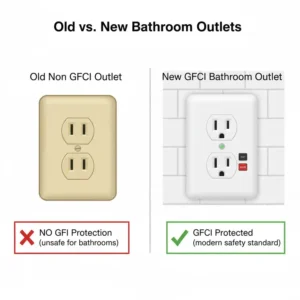
Let me be blunt: bathroom outlets aren’t optional accessories. They’re essential safety devices that stand between you and potentially fatal electrical accidents. The intersection of electricity and water creates hazards that don’t exist elsewhere in your home. That’s why building codes specifically mandate GFCI protection in bathrooms—because people have died when this protection wasn’t present.
The good news? Modern GFCI outlets are more capable, more reliable, and more affordable than ever. Options like the Leviton GFNL1-W, ELEGRP GFCI with USB Ports, and Leviton GFWT1-W deliver not just code-compliant safety but genuine convenience enhancements that make your daily routine better.
Whether you’re renovating a bathroom, building new, or simply upgrading for safety’s sake, investing in quality GFCI outlets is one of the smartest decisions you can make. These devices trip in 25 milliseconds or less—faster than you can blink. That split-second response time prevents serious injury or death.
Don’t gamble with outdated outlets or skip required safety features. The outlets featured in this guide represent thoroughly vetted, proven performers. They’ve earned strong customer reviews, industry certifications, and the trust of professional electricians. Pick the model that matches your bathroom’s specific needs, install it properly (or hire a professional), and test it monthly. That’s the recipe for bathroom electrical safety that lasts for years.
Your bathroom deserves proper GFCI protection. Your family deserves the safety it provides. And honestly? With features like integrated USB charging and automatic nightlights, you deserve the convenience too. Upgrade your bathroom outlets—it’s too important to put off any longer.
FAQs
❓ Do all bathroom outlets need to be GFCI protected?
✅ Yes, the National Electrical Code requires all 125-volt, 15 and 20-ampere bathroom receptacles to have GFCI protection. This requirement applies to all outlets within bathroom spaces, not just those near water sources. The code recognizes bathrooms as inherently hazardous electrical environments due to moisture presence and potential for water contact...
❓ How often should I test my bathroom GFCI outlet?
✅ Test bathroom GFCI outlets monthly by pressing the TEST button to ensure proper function. Modern self-testing outlets automatically verify their protection integrity every few minutes, but manual monthly testing remains recommended best practice. If the outlet fails to trip when tested or won't reset afterward, replace it immediately as it cannot provide proper protection...
❓ Can I install a bathroom GFCI outlet myself?
✅ Replacing an existing bathroom outlet with a GFCI is moderate-difficulty DIY work if you're comfortable with basic electrical tasks. You must turn off power at the breaker, verify wiring is de-energized, and understand proper line/load terminal connections. However, adding new circuits, upgrading electrical panels, or working with unfamiliar wiring configurations requires licensed electrician expertise...
❓ What is the difference between 15 amp and 20 amp bathroom outlets?
✅ 20 amp bathroom outlets provide higher capacity for power-hungry devices like hairdryers and heated towel racks compared to 15 amp models. The NEC now requires bathrooms to have dedicated 20 amp circuits, though 15 amp outlets can be installed on these circuits. 20 amp outlets feature a T-shaped neutral slot and require 12-gauge wiring minimum...
❓ Are bathroom outlets with USB ports worth the extra cost?
✅ Bathroom GFCI outlets with integrated USB ports ($25-40) eliminate the need for separate charging adapters and free up valuable outlet space. They're particularly worthwhile in master bathrooms where you regularly charge electric toothbrushes, razors, and smartphones. Quality models from ELEGRP and Leviton include smart charging chips that protect devices from overcharging damage...
Recommended for You
- Bathroom Vanity Clearance: 7 Unbeatable Deals 2025 for Modern & Affordable Makeovers
- 7 Best Stainless Steel Bathroom Sinks: 2025 Expert Guide
- ADA Bathroom Vanity: 7 Best Accessible Options 2025
Disclaimer: This article contains affiliate links. If you purchase products through these links, we may earn a small commission at no additional cost to you.
✨ Found this helpful? Share it with your friends! 💬🤗