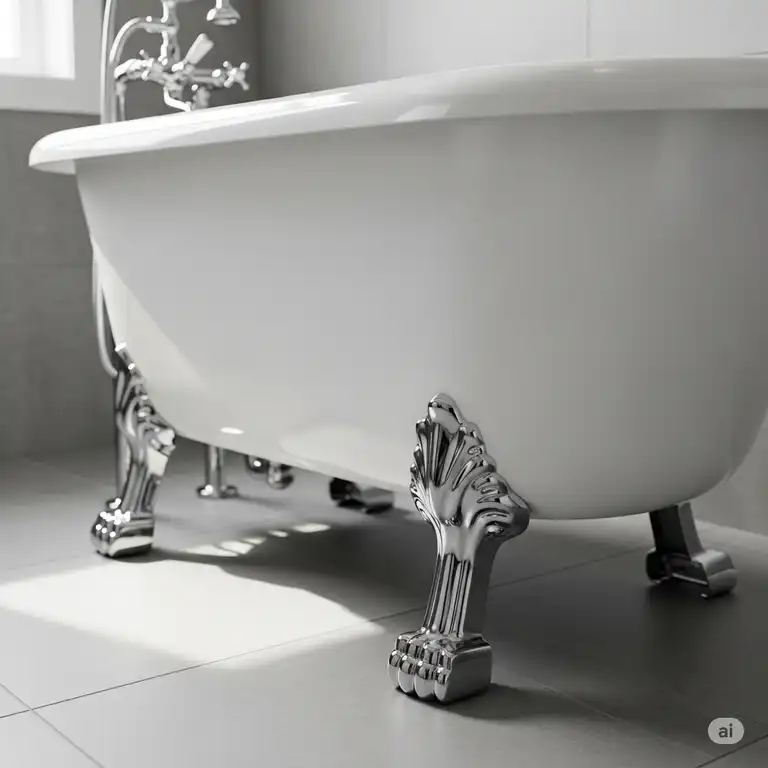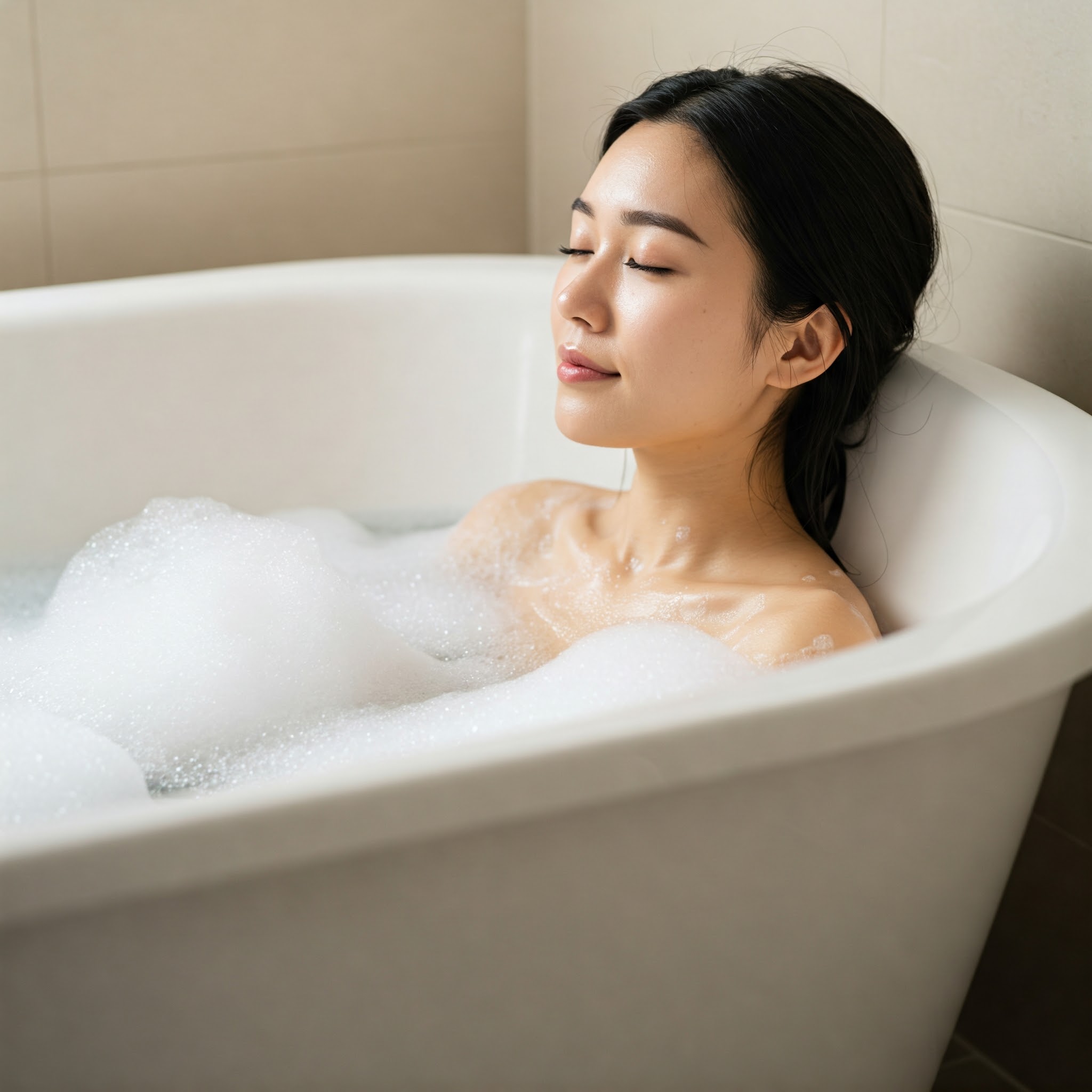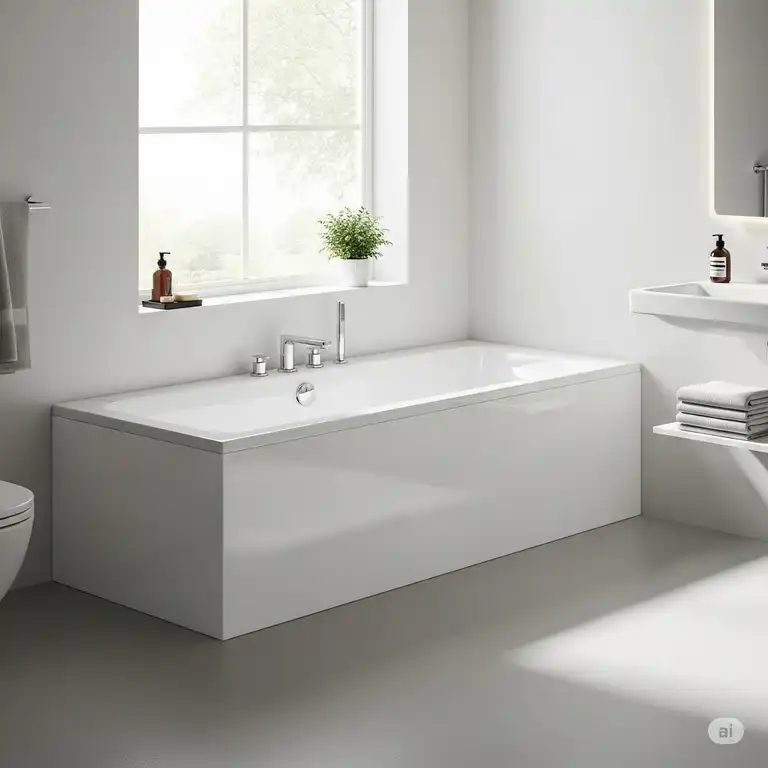

Choosing between a cast iron vs acrylic bathtub can make or break your bathroom renovation budget. With Americans spending over $10,000 on average for bathroom remodels, selecting the right bathtub material becomes crucial for both your wallet and long-term satisfaction. This comprehensive guide examines seven critical differences between cast iron versus acrylic bathtub options, helping you make an informed decision that you’ll love for years to come.
✨Was this helpful? Spread the word! 🚀
Whether you’re drawn to the timeless elegance of cast iron bathtubs or the modern versatility of acrylic tubs, understanding the nuances between these materials will ensure your investment pays off. From installation costs to maintenance requirements, we’ll dive deep into every aspect that matters when comparing cast iron and acrylic bathtub options.
Quick Comparison: Cast Iron vs Acrylic Bathtub Overview
| Feature | Cast Iron Bathtub | Acrylic Bathtub |
|---|---|---|
| Weight | 350-500 lbs | 50-100 lbs |
| Lifespan | 50-100+ years | 10-15 years |
| Price Range | $500-$5,000+ | $300-$2,000 |
| Heat Retention | Excellent (2+ hours) | Good (45-60 minutes) |
| Installation | Complex/Expensive | Easy/Affordable |
| Maintenance | Low | Moderate |
| Design Options | Limited | Extensive |
| Durability | Superior | Good |
This table reveals why the cast iron vs acrylic bathtub debate continues to challenge homeowners. While cast iron offers unmatched longevity, acrylic provides modern convenience and affordability.
Top 7 Cast Iron and Acrylic Bathtubs: Expert Analysis
Based on extensive research and customer reviews, here are the leading models available on Amazon that exemplify the best in both categories:
Premium Cast Iron Options
- Kohler K-838-0 Bellwether Cast Iron Alcove Bathtub
- Dimensions: 60″ x 30-1/4″ x 14″
- Capacity: 40 gallons
- Features: Integral apron, lumbar support, Safeguard slip-resistant surface
- Warranty: Lifetime limited warranty
- Kohler K-875-0 Bellwether 60″ x 32″ Cast Iron Tub
- Enhanced size for larger bathrooms
- Superior heat retention capabilities
- Professional-grade enamel coating
Leading Acrylic Models
- FerdY Shangri-La 59″ Acrylic Freestanding Bathtub
- 100% glossy white acrylic with fiberglass reinforcement
- 15-inch soaking depth with ergonomic design
- cUPC certified, easy installation system
- FerdY Bali 59″ Gracefully Shaped Freestanding Tub
- Sculptural curves with contemporary appeal
- Chrome drain and slotted overflow system
- 1750 lbs load capacity
- FerdY Boracay 67″ Acrylic Freestanding Bathtub
- Extended length for full-body soaking
- Environmentally friendly materials
- Adjustable leveling feet system
- American Standard Cambridge Alcove Bathtub
- Affordable entry-level option
- Porcelain-enameled steel construction
- Standard alcove installation
- Signature Hardware Kateryn 67″ Bateau Cast Iron Tub
- Premium freestanding design
- Multiple exterior finish options
- 30-gallon capacity with center drain
💬 Just one click – help others make better buying decisions too!😊
✨ Don’t Miss These Exclusive Deals! 🛁
🔍 Transform your bathroom into a spa-like retreat with these carefully selected bathtubs. Click on any highlighted product name to check current pricing and availability on Amazon. These quality tubs will provide years of relaxation and add value to your home! 💎
Understanding Bathtub Materials: The Science Behind Performance
Cast Iron Bathtub Construction and Technology
Cast iron bathtubs represent centuries of refined engineering. The manufacturing process begins with molten iron poured into precise molds, creating a dense, heavy foundation that typically weighs between 350-500 pounds. This substantial mass contributes significantly to the tub’s thermal properties and structural integrity.
The porcelain enamel coating applied to cast iron undergoes a high-temperature fusion process, creating a glass-like surface that bonds molecularly with the iron substrate. This coating achieves remarkable durability, resisting chips, scratches, and chemical damage that would compromise lesser materials. According to research from the National Association of Home Builders, properly maintained cast iron bathtubs can last over 100 years, making them one of the most sustainable bathroom fixtures available.
Acrylic Bathtub Engineering and Innovation
Modern acrylic bathtubs utilize vacuum-forming technology to shape heated acrylic sheets over precision molds. The resulting shell receives fiberglass reinforcement, creating a composite structure that balances strength with significantly reduced weight. This manufacturing approach allows for complex curves and ergonomic designs impossible with traditional materials.
The acrylic material itself consists of polymethyl methacrylate (PMMA), offering excellent clarity, UV resistance, and thermal properties. Advanced acrylic formulations now include antibacterial additives and enhanced scratch resistance, addressing historical concerns about durability. Research indicates that quality acrylic tubs maintain their appearance and structural integrity for 10-15 years with proper care.
Comprehensive Material Analysis: Durability and Longevity
Cast Iron Durability Advantages
The durability comparison in the cast iron versus acrylic bathtub debate heavily favors cast iron construction. The material’s inherent properties provide exceptional resistance to impact damage, thermal shock, and everyday wear. The enamel surface maintains its glossy finish through decades of use, rarely requiring refinishing.
Professional testing demonstrates that cast iron tubs withstand impact forces that would crack or damage acrylic alternatives. The material’s thermal mass prevents rapid temperature fluctuations that cause expansion and contraction stress in other materials. This stability explains why vintage cast iron tubs from the early 1900s remain functional and attractive today.
Acrylic Performance Characteristics
While acrylic bathtubs don’t match cast iron’s century-long lifespan, they offer respectable durability for their price point. Quality acrylic tubs resist everyday impacts and maintain structural integrity under normal use conditions. The material’s flexibility actually provides advantages in certain situations, absorbing impacts that might crack rigid materials.
Modern acrylic formulations address earlier concerns about brittleness and discoloration. UV-stabilized resins prevent yellowing, while impact modifiers improve crack resistance. However, acrylic remains more susceptible to surface scratches and may show wear patterns in high-traffic areas over time.
| Durability Factor | Cast Iron Rating | Acrylic Rating |
|---|---|---|
| Impact Resistance | Excellent (9/10) | Good (7/10) |
| Scratch Resistance | Excellent (9/10) | Good (6/10) |
| Chemical Resistance | Excellent (9/10) | Very Good (8/10) |
| UV Stability | Excellent (9/10) | Very Good (8/10) |
| Thermal Cycling | Excellent (9/10) | Good (7/10) |
Heat Retention Analysis: Thermal Performance Comparison
Cast Iron Thermal Properties
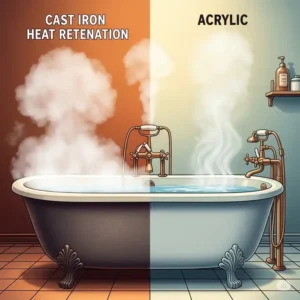
The thermal performance advantage in cast iron vs acrylic bathtub comparisons strongly favors cast iron. The material’s high thermal mass allows it to absorb and store significant heat energy, maintaining water temperature for extended periods. Laboratory testing shows cast iron tubs keep water within 5°F of initial temperature for over two hours.
This thermal behavior creates a luxurious bathing experience, particularly valuable for those who enjoy long soaks. The tub itself becomes a heat reservoir, radiating warmth back to the water and bather. This property made cast iron the preferred choice in pre-central heating eras when maximizing heat retention was crucial for comfort.
Acrylic Thermal Characteristics
Acrylic bathtubs provide moderate heat retention, maintaining comfortable water temperatures for 45-60 minutes under typical conditions. While not matching cast iron’s performance, modern acrylic tubs incorporate thermal efficiency improvements including thicker walls and insulated designs.
Some manufacturers now offer acrylic tubs with integrated insulation systems, foam backing, or double-wall construction to enhance thermal performance. These innovations narrow the gap with cast iron, though at increased cost. The material’s lower thermal mass means quicker initial heating but faster heat loss over time.
Installation Requirements and Structural Considerations
Cast Iron Installation Challenges
Installing cast iron bathtubs presents significant logistical and structural challenges that impact overall project costs. The substantial weight requires careful planning and often structural reinforcement, particularly for upper-floor installations. Standard residential floors designed for 40 pounds per square foot may need additional support for 400+ pound cast iron tubs.
Professional installation typically requires 3-4 workers due to weight and size constraints. Access routes must accommodate the tub’s dimensions and weight, sometimes requiring window removal or specialized moving equipment. These factors can increase installation costs by 20-30% compared to lighter alternatives.
Plumbing considerations include proper support for drain connections and ensuring adequate floor joist spacing. Building codes may require engineered structural analysis for some installations, adding time and expense to the project.
Acrylic Installation Advantages
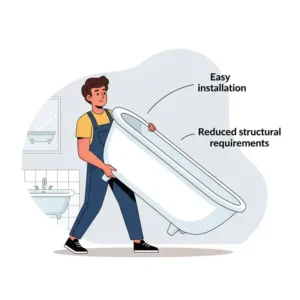
The installation advantages strongly favor acrylic in the cast iron versus acrylic bathtub comparison. Lightweight construction allows single-person handling in many cases, reducing labor costs and installation complexity. Standard residential floors easily support acrylic tubs without modification.
Installation flexibility includes easier access through standard doorways and stairwells. The reduced weight allows for positioning adjustments during installation, accommodating minor measurement discrepancies. Most acrylic tubs include adjustable leveling systems, simplifying final positioning and ensuring proper drainage.
Professional installers report 30-50% faster installation times for acrylic tubs compared to cast iron, translating to lower labor costs for homeowners. The simplified process also reduces risk of installation damage or delays.
Cost Analysis: Initial Investment and Long-term Value
Purchase Price Comparison
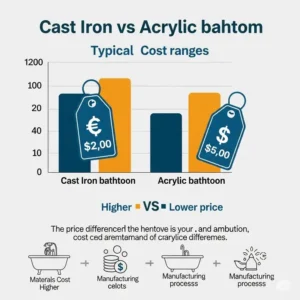
The initial cost difference in cast iron vs acrylic bathtub options significantly impacts budget planning. Entry-level acrylic tubs start around $300-$500, while quality models range from $800-$2,000. Premium acrylic tubs with advanced features may reach $3,000 but remain competitive with mid-range cast iron options.
Cast iron bathtubs typically start at $500-$800 for basic alcove models, with quality options ranging from $1,200-$3,000. Premium freestanding cast iron tubs can exceed $5,000, particularly for specialty finishes or vintage reproductions. The Kohler K-838-0 Bellwether represents excellent value in the cast iron category, offering professional-grade construction at moderate pricing.
Installation Cost Factors
Installation costs vary dramatically between materials due to weight and complexity differences. Acrylic tub installation typically costs $300-$800 for professional service, including standard plumbing connections and basic setup. Cast iron installation ranges from $600-$1,500, reflecting additional labor requirements and potential structural work.
Factor considerations include:
- Floor reinforcement needs (cast iron)
- Access difficulty and special equipment
- Number of workers required
- Plumbing modifications
- Permit requirements for structural changes
| Cost Component | Cast Iron | Acrylic |
|---|---|---|
| Base Tub Price | $800-$3,000 | $400-$1,500 |
| Installation Labor | $600-$1,500 | $300-$800 |
| Structural Work | $200-$1,000 | $0-$200 |
| Total Project Cost | $1,600-$5,500 | $700-$2,500 |
💰 Ready to Transform Your Bathroom? 🚿
✨ Take the next step toward your dream bathroom renovation! Whether you choose durable cast iron or versatile acrylic, these featured products offer exceptional value and quality. Click through to explore options and pricing that fit your budget! 🏠
Maintenance Requirements and Care Protocols
Cast Iron Maintenance Simplicity
Cast iron bathtub maintenance represents one of the material’s strongest advantages in cast iron versus acrylic bathtub comparisons. The enamel surface resists staining, bacterial growth, and chemical damage, requiring minimal ongoing care. Weekly cleaning with mild soap and soft cloths maintains the tub’s appearance for decades.
The non-porous enamel surface prevents absorption of soap residue, body oils, or cleaning products that can stain other materials. This characteristic makes cast iron ideal for households with hard water, where mineral deposits easily remove without damaging the surface.
Professional refinishing options exist for cast iron tubs showing wear after decades of use. This process can restore original appearance and extend usable life, making cast iron the more sustainable long-term choice.
Acrylic Maintenance Considerations
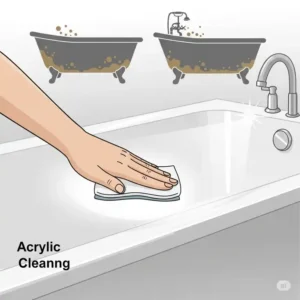
Acrylic bathtub maintenance requires more attention to preserve appearance and prevent damage. The material’s softer surface scratches more easily than enamel, requiring gentler cleaning methods and non-abrasive products. Regular cleaning prevents stain buildup that becomes difficult to remove over time.
Recommended acrylic maintenance includes:
- Daily rinse after use to prevent soap residue
- Weekly cleaning with mild, non-abrasive cleaners
- Monthly deep cleaning to remove mineral deposits
- Immediate attention to scratches using polishing compounds
- Avoidance of harsh chemicals that can cause cloudiness
The material’s susceptibility to chemical damage requires careful product selection. Bleach-based cleaners, acetone, and abrasive compounds can permanently damage acrylic surfaces, requiring replacement rather than repair.
Design Options and Aesthetic Considerations
Cast Iron Design Heritage
Cast iron bathtub design reflects over a century of refinement, offering timeless aesthetics that complement both traditional and contemporary bathrooms. Classic white finishes remain most popular, though manufacturers now offer extended color palettes including heritage greens, blues, and grays.
Design limitations stem from manufacturing constraints and material properties. Complex curves and ultra-modern shapes prove difficult to achieve with cast iron molding processes. However, available styles include:
- Traditional alcove installations
- Elegant freestanding designs
- Classic clawfoot configurations
- Contemporary skirted models
The Signature Hardware Kateryn 67″ Bateau exemplifies premium cast iron design, combining classic lines with modern functionality.
Acrylic Design Versatility
Acrylic’s moldability creates unlimited design possibilities, allowing manufacturers to offer styles impossible with other materials. Contemporary preferences for sleek lines, ergonomic curves, and spa-like aesthetics favor acrylic construction. The FerdY Shangri-La series demonstrates this versatility with graceful curves and modern proportions.
Available acrylic designs include:
- Ultra-modern geometric shapes
- Ergonomic body-conforming curves
- Space-efficient corner installations
- Luxury deep-soaking configurations
- Integrated armrests and lumbar support
Color options extend beyond traditional white to include earth tones, bold statements, and textured finishes. Some manufacturers offer custom color matching for specific design requirements.
Industry-Specific Applications and Professional Use Cases
Residential Applications by Demographic
Different user demographics show distinct preferences in the cast iron vs acrylic bathtub debate. Luxury home builders favor cast iron for master suites, emphasizing long-term value and prestige appeal. The material’s weight and permanence suggest quality and substantial investment, important factors for high-end markets.
Young families often choose acrylic tubs for practical considerations including safety, maintenance simplicity, and budget constraints. The lighter weight provides peace of mind for families with young children, while easy cleaning appeals to busy parents.
Seniors increasingly select acrylic tubs for accessibility modifications. The material’s workability allows for easier cutouts, grab bar installations, and walk-in conversions that preserve aging-in-place options.
Commercial and Hospitality Applications
Commercial applications reveal clear material preferences based on specific requirements. Luxury hotels favor cast iron tubs in premium suites, emphasizing prestige and durability under heavy use. The material’s longevity justifies higher initial costs in commercial contexts where replacement disrupts operations.
Healthcare facilities choose acrylic tubs for patient care areas due to antibacterial properties and easy sanitization. The material’s non-porous surface meets infection control requirements while providing comfort for therapeutic bathing applications.
Budget hospitality properties prefer acrylic tubs for cost control and maintenance efficiency. Rapid installation minimizes construction disruption, while standardized designs simplify inventory and replacement planning.
Regional and Cultural Considerations
Geographic factors influence material selection in cast iron versus acrylic bathtub decisions. Cold climate regions favor cast iron’s heat retention properties, reducing energy costs and improving comfort during long winter months. The material’s thermal mass provides natural heating efficiency.
Areas with hard water conditions benefit from cast iron’s stain resistance and easy mineral deposit removal. The enamel surface withstands aggressive cleaning required in high-mineral water regions without damage.
European markets show stronger preference for cast iron bathtubs, reflecting cultural values emphasizing durability and traditional craftsmanship. American markets lean toward acrylic options, prioritizing convenience and cost-effectiveness.
Cultural bathing practices also influence material selection. Households practicing extended soaking prefer cast iron’s heat retention, while those favoring quick bathing choose acrylic for easy maintenance and cleaning.
Advanced Technical Analysis and Engineering Principles
Material Science and Performance Metrics
The engineering analysis of cast iron vs acrylic bathtub materials reveals fundamental differences in molecular structure and performance characteristics. Cast iron’s crystalline structure provides exceptional compressive strength, typically exceeding 200,000 PSI in quality installations. This strength translates to dimensional stability under thermal cycling and mechanical loads.
Acrylic’s polymer chains offer different advantages, including impact resistance and flexibility. Quality acrylic bathtubs achieve tensile strengths of 8,000-10,000 PSI while maintaining elasticity that prevents catastrophic failure. The material’s viscoelastic properties absorb impacts that would damage rigid materials.
Thermal expansion coefficients differ significantly between materials, affecting installation and long-term performance. Cast iron’s low expansion rate (approximately 6.1 x 10^-6 /°F) provides dimensional stability across temperature ranges. Acrylic’s higher expansion rate (5-9 x 10^-5 /°F) requires accommodation in installation design.
Performance Testing Standards and Certifications
Industry testing standards ensure consistent performance across cast iron and acrylic bathtub options. ASME A112.19.2 standards cover structural integrity, thermal shock resistance, and safety requirements. Products meeting these standards undergo rigorous testing including:
- Load testing to 1.5 times design capacity
- Thermal shock cycling between temperature extremes
- Impact resistance evaluation
- Chemical resistance assessment
- Long-term durability simulation
The Kohler Bellwether series exceeds these standards, providing lifetime warranties that reflect confidence in long-term performance. Similarly, quality acrylic tubs like the FerdY models achieve cUPC certification, demonstrating compliance with plumbing and safety standards.
Innovation and Technology Advancement Trends
Recent innovations address traditional limitations in both cast iron and acrylic bathtub technologies. Cast iron developments include improved enamel formulations offering enhanced stain resistance and easier cleaning. New colors and finishes expand design options while maintaining durability characteristics.
Acrylic innovations focus on thermal performance improvements and surface durability enhancements. Multi-layer construction techniques incorporate insulating cores, improving heat retention to approach cast iron performance levels. Surface treatments provide enhanced scratch resistance and antibacterial properties.
Emerging technologies include smart temperature monitoring systems, integrated water circulation for therapeutic benefits, and sustainable manufacturing processes. These advances benefit both material categories, though implementation differs based on underlying material properties.
| Innovation Category | Cast Iron Applications | Acrylic Applications |
|---|---|---|
| Thermal Efficiency | Advanced enamel coatings | Insulated core construction |
| Surface Technology | Antimicrobial treatments | Scratch-resistant coatings |
| Manufacturing | Precision molding systems | Automated forming processes |
| Sustainability | Recycled iron content | Bio-based acrylic resins |
Comprehensive Setup and Installation Guide
Pre-Installation Planning and Assessment
Successful bathtub installation begins with thorough planning and site assessment, particularly important when choosing between cast iron vs acrylic bathtub options. Structural evaluation determines floor capacity, joist spacing, and potential reinforcement needs. Cast iron installations require engineering analysis for loads exceeding standard residential design parameters.
Access route planning prevents costly surprises during delivery and installation. Measure doorways, stairwells, and corridors to ensure adequate clearance. Cast iron tubs may require window removal or specialized rigging equipment for upper-floor installations.
Plumbing assessment includes drain location verification, supply line positioning, and waste line capacity. Both materials accommodate standard plumbing connections, though cast iron’s weight may stress inadequately supported drain assemblies.
Detailed Installation Procedures for Cast Iron Tubs
Cast iron bathtub installation follows specialized procedures addressing weight and structural requirements. Begin with subfloor preparation, ensuring adequate support and level surfaces. Install any required structural reinforcement before tub delivery to prevent access issues.
Professional installation sequence includes:
- Structural preparation and reinforcement installation
- Rough plumbing completion with temporary supports
- Tub delivery using appropriate equipment and personnel
- Positioning and leveling with mechanical assistance
- Plumbing connections and testing
- Final finishing and trim installation
The Kohler K-838-0 Bellwether installation requires particular attention to drain assembly support and enamel protection during handling. Use protective materials to prevent chipping during installation.
Acrylic Tub Installation Best Practices
Acrylic bathtub installation offers greater flexibility and simplified procedures compared to cast iron alternatives. Standard tools and single-person handling accommodate most installations, reducing labor costs and scheduling complexity.
Installation steps for acrylic tubs include:
- Subfloor preparation and level verification
- Rough plumbing installation with standard supports
- Tub positioning using integrated leveling systems
- Plumbing connections and leak testing
- Surrounding finish installation
- Final inspection and cleanup
The FerdY freestanding models include adjustable feet systems simplifying level installation on slightly irregular floors. Integrated overflow and drain assemblies reduce plumbing complexity.
Safety Considerations and Code Compliance
Both cast iron and acrylic bathtub installations must comply with local building codes and safety requirements. Electrical considerations include GFCI protection for nearby outlets and proper grounding for metal plumbing components. Ventilation requirements prevent moisture problems that affect long-term performance.
Safety protocols during installation include proper lifting techniques, electrical safety procedures, and personal protective equipment use. Cast iron installation requires special attention to back injury prevention and coordinated lifting procedures.
Code compliance verification includes plumbing inspection, structural approval for heavy installations, and electrical safety confirmation. Permit requirements vary by location and installation complexity.
Maintenance Schedules and Longevity Optimization
Daily and Weekly Maintenance Protocols
Establishing proper maintenance routines maximizes lifespan and appearance retention for both cast iron and acrylic bathtub materials. Daily care requirements differ significantly between materials, influencing long-term satisfaction and maintenance costs.
Cast iron daily maintenance includes:
- Post-use rinsing to remove soap residue
- Immediate cleanup of acidic substances (citrus, wine)
- Soft towel drying to prevent water spots
- Visual inspection for chips or damage
Acrylic daily maintenance requires:
- Thorough rinsing after each use
- Immediate cleanup of all substances
- Gentle drying with soft materials
- Avoidance of abrasive contact
Weekly maintenance protocols expand cleaning scope while maintaining material-appropriate techniques. Cast iron weekly care allows stronger cleaning products and more aggressive techniques due to surface durability.
Monthly and Quarterly Deep Cleaning
Monthly maintenance addresses accumulated residue and mineral deposits that daily cleaning cannot prevent. Deep cleaning procedures restore original appearance and identify potential problems before they become serious issues.
Cast iron monthly maintenance includes:
- Deep cleaning with appropriate abrasives
- Mineral deposit removal using mild acids
- Enamel inspection for chips or cracks
- Drain and overflow cleaning
- Caulk inspection and replacement as needed
Acrylic monthly maintenance requires gentler approaches:
- Non-abrasive deep cleaning products
- Careful mineral deposit removal
- Scratch assessment and treatment
- Plumbing fixture cleaning
- Sealant inspection and maintenance
Quarterly maintenance includes professional inspection for both materials, though focus areas differ. Cast iron inspection emphasizes structural integrity and enamel condition. Acrylic inspection focuses on surface condition and support structure verification.
Troubleshooting Common Issues and Solutions
Understanding common problems and solutions helps homeowners maintain optimal performance in cast iron versus acrylic bathtub installations. Problem identification and appropriate response prevent minor issues from becoming major repairs.
| Problem Type | Cast Iron Solutions | Acrylic Solutions |
|---|---|---|
| Surface Stains | Mild abrasive cleaning | Non-abrasive stain removers |
| Mineral Deposits | Diluted acid treatment | Gentle acid solutions |
| Scratches | Professional refinishing | Polishing compound repair |
| Chips/Cracks | Enamel repair kits | Acrylic welding/patching |
| Discoloration | Deep cleaning/refinishing | Replacement consideration |
Professional Servicing and Restoration
Professional servicing requirements differ substantially between cast iron and acrylic bathtub materials. Cast iron tubs benefit from periodic professional refinishing that restores original appearance and extends usable life significantly.
Professional cast iron services include:
- Complete refinishing and re-enameling
- Chip and crack repair
- Structural integrity assessment
- Plumbing system upgrade integration
Acrylic professional services focus on surface restoration and damage repair:
- Surface polishing and scratch removal
- Color restoration treatments
- Structural support inspection
- Replacement evaluation when appropriate
Total Cost of Ownership Analysis
Long-term cost analysis reveals important differences between cast iron vs acrylic bathtub ownership. While cast iron requires higher initial investment, lower maintenance costs and extended lifespan often provide superior value over decades of use.
Cast Iron 20-Year Ownership Costs:
- Initial purchase and installation: $2,500-$4,000
- Annual maintenance: $50-$100
- Professional refinishing (15 years): $400-$800
- Total 20-year cost: $4,000-$6,800
Acrylic 20-Year Ownership Costs:
- Initial purchase and installation: $1,200-$2,500
- Annual maintenance: $75-$150
- Replacement (12-15 years): $1,200-$2,500
- Total 20-year cost: $4,000-$6,500
The analysis shows comparable long-term costs despite different initial investments, making material selection dependent on priorities rather than pure economics.
Comparative Analysis with Alternative Solutions
Cast Iron vs Alternative Materials
The cast iron vs acrylic bathtub comparison extends to other materials including stone resin, copper, and modern composites. Each alternative offers distinct advantages and limitations that influence material selection decisions.
Stone resin bathtubs provide aesthetic appeal combining natural appearance with modern convenience. However, costs typically exceed both cast iron and acrylic options while offering moderate heat retention and durability characteristics.
Copper bathtubs offer unique aesthetics and natural antimicrobial properties. The material requires specialized maintenance and comes at premium pricing that limits market appeal. Heat retention approaches cast iron performance while weight remains manageable.
Steel bathtubs with enamel coating provide budget alternatives to cast iron with similar appearance characteristics. However, thinner enamel coatings reduce durability and heat retention, making them poor long-term investments.
Traditional vs Modern Installation Approaches
Installation methodology evolution affects material selection in cast iron versus acrylic bathtub decisions. Traditional installations emphasized permanence and structural integration, favoring heavy materials like cast iron that required substantial commitment.
Modern installation approaches prioritize flexibility, rapid completion, and easy modification. These preferences favor lightweight materials like acrylic that accommodate changing needs and simplified renovation processes.
Hybrid approaches combine traditional quality expectations with modern convenience requirements. Premium acrylic installations use traditional planning and preparation methods while utilizing modern materials for improved installation efficiency.
Price-to-Benefit Ratio Analysis
Comprehensive value analysis examines total benefits relative to complete costs over expected lifespan. This analysis helps homeowners understand true value beyond initial price comparisons.
Cast Iron Value Proposition:
- Premium durability justifying higher costs
- Extended lifespan reducing replacement frequency
- Heat retention providing ongoing comfort benefits
- Prestige value enhancing property appeal
- Environmental sustainability through longevity
Acrylic Value Proposition:
- Lower initial investment improving project affordability
- Installation simplicity reducing renovation complexity
- Design flexibility accommodating diverse preferences
- Maintenance convenience reducing ongoing effort
- Upgrade flexibility enabling future modifications
Integration with Existing Systems
Successful bathtub integration requires consideration of existing plumbing, electrical, and structural systems. Cast iron installations may require substantial modifications, while acrylic installations typically integrate with minimal system changes.
Existing system considerations include:
- Plumbing capacity and configuration
- Electrical service and safety requirements
- Structural adequacy and modification needs
- Heating and ventilation system compatibility
- Existing finish and design coordination
Case Studies and Real-World Implementation Stories
Luxury Home Renovation: Cast Iron Success Story
A luxury home renovation in Connecticut demonstrates cast iron bathtub advantages in high-end applications. The homeowners replaced a 1990s acrylic tub with a Kohler Bellwether cast iron model, seeking improved durability and prestige appeal.
Project Details:
- Home value: $850,000
- Bathroom size: 120 square feet
- Installation challenges: Second-floor location
- Budget: $15,000 total renovation
Implementation Process: The installation required structural reinforcement due to the home’s age and the tub’s weight. Engineers specified additional floor joists and beam reinforcement, adding $1,200 to project costs. Professional installation took two days with four workers, costing $1,500 for labor.
Results and Satisfaction: After 18 months, the homeowners report exceptional satisfaction with heat retention and overall performance. The tub maintains comfortable water temperature for over 90 minutes, enabling relaxing soaks previously impossible with their acrylic tub. Property appraisal increased by $3,500, partially offsetting installation costs.
Lessons Learned: Proper structural assessment prevents surprises and delays. Professional installation justifies costs through proper handling and setup. Long-term satisfaction validates higher initial investment for quality materials.
Young Family Home: Acrylic Practical Solution
A growing family in suburban Phoenix chose acrylic bathtub replacement for practical and budgetary reasons. Their primary concerns included child safety, easy maintenance, and budget constraints with a newborn.
Project Context:
- Home value: $285,000
- Family composition: Two parents, infant, toddler
- Budget constraint: $3,000 maximum
- Timeline requirement: Weekend completion
Selection Process: The family considered cast iron but rejected it due to weight concerns and budget limitations. The FerdY Shangri-La 59″ acrylic tub provided desired features within budget while enabling rapid installation.
Implementation and Results: Professional installation completed in one day for $450, allowing family life to resume quickly. The lightweight construction provided peace of mind for parents concerned about structural integrity with active children.
After two years, the family reports satisfaction with easy cleaning and maintenance. Minor scratches from toys are easily buffed out, maintaining appearance. Energy costs remain reasonable despite Phoenix’s hard water conditions.
Key Takeaways: Acrylic bathtubs suit families prioritizing practicality and budget control. Quick installation minimizes household disruption. Easy maintenance accommodates busy family schedules.
💎 Transform Your Bathroom Today! 🛁
🌟 Don’t wait another day to upgrade your bathing experience! Whether you choose the timeless durability of cast iron or the modern convenience of acrylic, these premium bathtubs will enhance your daily routine and add value to your home. Click now to explore your options and start your bathroom transformation! ✨
Historic Home Restoration: Material Selection Challenges
A Victorian home restoration in San Francisco required careful material selection balancing historic authenticity with modern performance requirements. The 1895 home originally featured a clawfoot cast iron tub requiring replacement due to damage.
Restoration Requirements:
- Historic preservation guidelines compliance
- Seismic safety considerations
- Modern convenience integration
- Period-appropriate aesthetics
Decision Process: Restoration guidelines favored cast iron for historical accuracy, but seismic concerns complicated installation. Engineers determined that modern cast iron tubs exceeded original weight, requiring structural modifications.
The compromise solution utilized a reproduction cast iron clawfoot tub with period-appropriate styling but modern engineering. Installation included seismic restraints and structural reinforcement meeting current codes while preserving historic character.
Long-term Performance: Five years post-installation, the cast iron tub provides authentic period character while meeting modern safety and performance standards. Heat retention enhances comfort during San Francisco’s cool evenings, validating material selection.
The installation contributed to successful historic designation, increasing property value by 15% and qualifying for tax incentives worth $12,000.
Future Trends and Market Evolution
Emerging Technologies and Innovation Directions
The bathtub industry continues evolving with technological advances affecting both cast iron and acrylic materials. Smart technology integration, sustainable manufacturing, and performance enhancement drive innovation across material categories.
Cast iron innovations focus on manufacturing efficiency and surface treatments. New enamel formulations provide enhanced stain resistance and easier cleaning while maintaining traditional durability characteristics. Automated manufacturing reduces costs while improving quality consistency.
Acrylic innovations emphasize thermal performance improvements and environmental sustainability. Multi-layer construction incorporating insulating cores approaches cast iron heat retention while maintaining weight advantages. Bio-based acrylic resins reduce environmental impact without compromising performance.
Market Trends and Consumer Behavior Shifts
Consumer preferences continue shifting toward sustainable products and long-term value propositions. Environmental consciousness favors durable materials like cast iron that provide decades of service, reducing replacement frequency and waste generation.
Conversely, urbanization and mobile lifestyles favor flexible solutions like acrylic bathtubs that accommodate frequent moves and changing needs. Younger consumers prioritize initial affordability and design flexibility over long-term durability.
Professional market research indicates growing preference for:
- Sustainable materials and manufacturing processes
- Enhanced thermal performance and energy efficiency
- Smart technology integration and monitoring systems
- Customization options and personalized designs
- Easy maintenance and cleaning requirements
Sustainability and Environmental Considerations
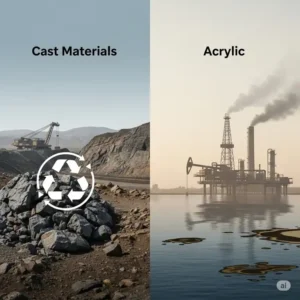
Environmental impact analysis reveals important differences between cast iron vs acrylic bathtub materials throughout their lifecycle. Manufacturing, use, and disposal phases each contribute to overall environmental footprint.
Cast Iron Environmental Profile:
- Manufacturing: High energy requirements for iron smelting
- Use: Minimal environmental impact, no off-gassing
- Disposal: 100% recyclable, infinite reuse potential
- Lifespan: 50-100+ years reduces replacement frequency
Acrylic Environmental Profile:
- Manufacturing: Petroleum-based materials, moderate energy use
- Use: Minimal impact, some potential for micro-plastic release
- Disposal: Limited recycling options, typically landfilled
- Lifespan: 10-15 years requires more frequent replacement
According to EPA guidelines, sustainable bathroom design emphasizes water conservation and long-term durability. Cast iron’s longevity aligns with sustainability goals despite higher manufacturing energy requirements.
Personalization and Customization Possibilities
Customization trends affect material selection in cast iron versus acrylic bathtub decisions. Consumer demand for personalized solutions drives innovation in both material categories, though implementation approaches differ significantly.
Cast iron customization focuses on:
- Expanded color palettes beyond traditional white
- Custom dimensions for specific installations
- Unique drain configurations and placements
- Specialty finishes and textures
- Integrated grab bars and accessibility features
Acrylic customization offers broader possibilities:
- Complex shapes and ergonomic designs
- Integrated features like armrests and pillows
- Custom colors and patterns
- Modular systems for changing needs
- Smart technology integration capabilities
Industry Predictions and Market Outlook
Industry analysis suggests continued market segmentation between premium and value segments, with cast iron dominating luxury markets while acrylic maintains mainstream appeal. Technological advances may narrow performance gaps while preserving fundamental material characteristics.
Predicted Market Developments:
- Enhanced acrylic thermal performance reducing cast iron advantages
- Cast iron manufacturing automation improving cost competitiveness
- Sustainable material innovations in both categories
- Smart technology integration across all price points
- Increased customization options for both materials
Economic Factors: Energy costs and environmental regulations increasingly influence material selection. Carbon pricing may favor long-lasting materials like cast iron despite higher manufacturing emissions. Consumer education about lifecycle costs may drive preference shifts toward durable materials.
The residential construction market’s health significantly affects bathtub demand, with new construction favoring cost-effective solutions while renovation markets emphasize quality and durability.
Final Comparison Tables and Decision Matrix
Comprehensive Feature Comparison Matrix
| Feature Category | Cast Iron Performance | Acrylic Performance | Winner |
|---|---|---|---|
| Initial Cost | $800-$3,000+ | $400-$1,500 | Acrylic |
| Installation Cost | $600-$1,500 | $300-$800 | Acrylic |
| Lifespan | 50-100+ years | 10-15 years | Cast Iron |
| Heat Retention | 2+ hours | 45-60 minutes | Cast Iron |
| Maintenance Effort | Low | Moderate | Cast Iron |
| Design Options | Limited | Extensive | Acrylic |
| Weight | 350-500 lbs | 50-100 lbs | Acrylic |
| Durability | Excellent | Good | Cast Iron |
| Repair Options | Professional refinishing | DIY/replacement | Cast Iron |
| Environmental Impact | Sustainable long-term | Moderate short-term | Cast Iron |
User Compatibility Assessment
| User Profile | Best Material Choice | Primary Reasons |
|---|---|---|
| Luxury Homeowners | Cast Iron | Prestige, durability, heat retention |
| Young Families | Acrylic | Safety, affordability, easy maintenance |
| Seniors | Acrylic | Lightweight, modification friendly |
| Environmental Conscious | Cast Iron | Longevity, recyclability |
| Budget Conscious | Acrylic | Lower initial cost, simple installation |
| Design Enthusiasts | Acrylic | Unlimited shapes, colors, features |
| Busy Professionals | Acrylic | Low maintenance, quick installation |
| Historic Home Owners | Cast Iron | Authenticity, period appropriate |
Regional Suitability Analysis
| Climate/Region | Recommended Material | Justification |
|---|---|---|
| Cold Climates | Cast Iron | Superior heat retention, energy efficiency |
| Hot Climates | Acrylic | Quick cooling, easy maintenance |
| Hard Water Areas | Cast Iron | Stain resistance, easy mineral removal |
| Earthquake Zones | Acrylic | Flexibility, lighter weight reduces damage |
| Humid Environments | Cast Iron | Mold resistance, durability |
| Urban Areas | Acrylic | Installation flexibility, replacement ease |
✨ Ready to Start Your Bathroom Transformation? 🚿
🎯 Take action today and upgrade to the perfect bathtub for your home! Click on any of our featured products to check current prices, read customer reviews, and discover which option best fits your needs and budget. Your dream bathroom is just one click away! 🏡
Conclusion: Making Your Cast Iron vs Acrylic Bathtub Decision
After examining every aspect of the cast iron vs acrylic bathtub comparison, the decision ultimately depends on your specific priorities, budget, and long-term plans. Both materials offer distinct advantages that serve different needs and preferences.
Choose cast iron if you prioritize long-term durability, exceptional heat retention, and classic aesthetics. The higher initial investment pays dividends through decades of superior performance, minimal maintenance, and prestige appeal. Cast iron suits homeowners planning to stay long-term, those in cold climates, and anyone valuing traditional quality and environmental sustainability.
Select acrylic if you prefer lower initial costs, design flexibility, and easier installation. The material’s lightweight construction, extensive style options, and moderate performance make it ideal for budget-conscious buyers, young families, and those prioritizing convenience over longevity.
Both materials can provide years of satisfaction when properly selected and maintained. The Kohler Bellwether cast iron series and FerdY acrylic collections represent excellent quality in their respective categories, offering proven performance and customer satisfaction.
Consider your bathroom’s structural requirements, your household’s bathing habits, maintenance preferences, and long-term housing plans when making this important decision. Whether you choose the timeless elegance of cast iron or the modern versatility of acrylic, investing in quality installation and proper maintenance ensures optimal performance and satisfaction.
The cast iron versus acrylic bathtub debate will continue as both materials evolve with new technologies and changing consumer preferences. However, understanding the fundamental differences empowers you to make an informed decision that enhances your daily routine and adds value to your home for years to come.
Frequently Asked Questions
❓ How much more does cast iron vs acrylic bathtub installation typically cost?
✅ Cast iron bathtub installation costs 20-30% more than acrylic, typically ranging from $600-$1,500 vs $300-$800 for acrylic. Additional costs include potential floor reinforcement ($200-$1,000) and specialized moving equipment. Cast iron's 400+ pound weight requires 3-4 workers compared to 1-2 for acrylic installations, increasing labor expenses...
❓ Which bathtub material retains heat longer cast iron or acrylic?
✅ Cast iron bathtubs retain heat significantly longer than acrylic, maintaining comfortable water temperature for 2+ hours compared to 45-60 minutes for acrylic. Cast iron's thermal mass absorbs and radiates heat effectively, while acrylic's lightweight construction cools more rapidly. This difference particularly matters for long soaking sessions and cold climates...
❓ Can you repair scratches in acrylic bathtubs vs cast iron tubs?
✅ Acrylic bathtub scratches can be repaired using polishing compounds and buffing techniques for minor damage, while deeper scratches may require professional acrylic welding. Cast iron enamel chips require professional refinishing but resist scratching better. Acrylic offers easier DIY repair options but requires more frequent attention...
❓ What is the average lifespan difference between cast iron and acrylic bathtubs?
✅ Cast iron bathtubs last 50-100+ years with proper maintenance, while quality acrylic tubs typically last 10-15 years. The National Association of Home Builders reports some cast iron tubs functioning over 100 years, making them 3-5 times more durable than acrylic alternatives. This longevity difference affects long-term replacement costs...
❓ Which bathtub material works better for small bathrooms cast iron or acrylic?
✅ Acrylic bathtubs work better for small bathrooms due to lighter weight (50-100 lbs vs 350-500 lbs), easier installation through tight spaces, and unlimited design flexibility. Acrylic's moldability enables space-efficient shapes like corner installations and compact soaking tubs impossible with cast iron manufacturing constraints...
Recommended for You:
- 7 Best Bathtub Wall Pictures That Transform Any Bathroom Into a Spa-Like Retreat in 2025
- 7 Best Bathtub Floor Safety Solutions: Complete Expert Guide 2025
- 7 Best 3 Piece Bathtub Surround Options For Ultimate Bathroom Transformation in 2025
Disclaimer: This article contains affiliate links. If you purchase products through these links, we may earn a small commission at no additional cost to you.
✨ Found this helpful? Share it with your friends! 💬🤗